How Fleet Safety Cameras Improve Driver Protection and Reduce Risk
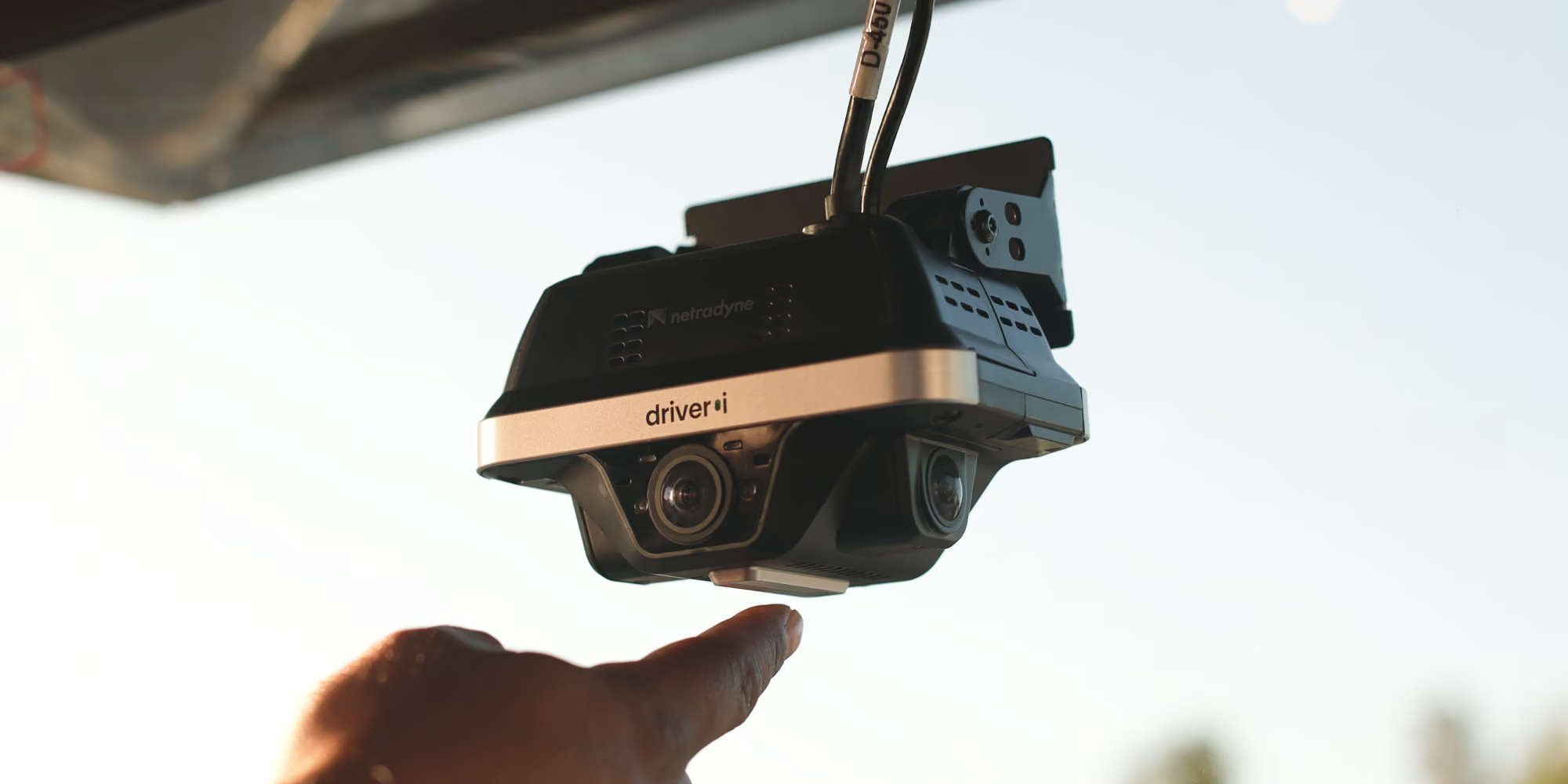
Fleet safety cameras are AI-powered camera systems that help commercial fleets understand what happens on the road and inside the vehicle. They capture video, detect driving risk, and provide context for coaching and incident review. More advanced systems can analyze driving in real time rather than relying only on clips triggered by a hard brake, impact, or other event.
Netradyne goes further by analyzing 100% of driving time with edge AI on Driver•i devices. That continuous intelligence identifies risky and positive driving behavior, provides real-time feedback, and gives managers a more complete view of performance. The result is clearer coaching, stronger evidence, and more opportunities to recognize safe driving.
How Fleet Safety Cameras Reduce Distracted Driving
Commercial drivers spend long hours on the road, where phones, in-cab tasks, and fatigue can pull attention away from driving. In 2024, distracted-driving crashes killed 3,208 people and injured 315,167, according to NHTSA.
AI-powered fleet cameras help you act in the moment, not only after a claim. Driver•i devices can deliver in-cab audio alerts when distracted behavior is detected, such as eyes off the road or phone use. Drivers get an immediate cue without waiting for a manager review. Driver monitoring supports detection of distraction, drowsiness, seat belt status, and mobile phone use so coaching can focus on the behaviors that matter most.
The impact can be measurable. Rumpke Waste & Recycling reduced severe distracted-driving alerts by more than 30% over 12 months with Netradyne. Real-time alerts and clear video context help reduce distraction. You can protect drivers with timely feedback and fair coaching, not a gotcha monitoring culture.
How Fleet Safety Cameras Simplify Driver Coaching
Effective coaching needs visibility into how drivers perform behind the wheel. Multi-camera coverage (forward, side, and interior HD views) plus AI event analysis give safety leaders road and cabin context. You can use that context in virtual, remote, and face-to-face coaching.
Netradyne supports coaching across several channels:
- Real-time in-cab alerts help drivers correct risk while they're still behind the wheel.
- Virtual Coaching gives drivers opportunities to review and improve without requiring a manager-led session every time.
- Manager coaching workflows help safety teams focus their time where direct intervention matters most.
Together, these coaching layers reduce the amount of routine follow-up managers need to handle while giving drivers more ownership of their performance. Veriha Trucking, for example, uses weekly self-coaching to let drivers review events and video, understand their performance, and make improvements independently.
How Fleet Safety Cameras Promote Positive Driving
If drivers only hear about mistakes, motivation drops and performance can slide. Highlighting safe decisions helps drivers stay engaged. Fleets need that balance for safer miles and better retention.
Netradyne automatically recognizes positive driving and incorporates both safe and risky behaviors into the GreenZone® Score, giving drivers a more complete view of their performance. DriverStars add recognition for proactive, safe decisions, so coaching isn't limited to what went wrong.
Recognition and fair scoring help drivers stay engaged. Some Netradyne customers have seen a 15% year-over-year improvement in driver retention when positive coaching and recognition are part of the program. When you balance correction with recognition, cameras support a coaching culture drivers can accept.
How Fleet Safety Cameras Strengthen Claims and Risk Management
Insurance pressure isn't driven by crash frequency alone. ATRI found that liability premiums among responding motor carriers increased 18.6% from 2021 to 2024, while per-mile liability losses rose 33.1%, even as heavy-duty truck crash rates declined.
Fleet cameras give claims and risk teams clearer evidence when an incident occurs. High-detail video and driving context can accelerate claims review, establish what happened, and help exonerate drivers when they were not at fault.
How Fleet Safety Cameras Help Reduce Accident Risk
Preventing accidents requires more than capturing video after an event. Real-time alerts help drivers correct risky behavior in the moment. Coaching helps address patterns before they become habits. Positive recognition reinforces the safe decisions fleets want repeated.
Netradyne's data shows the connection between those behaviors and safety outcomes. Every 50-point improvement in a fleet's GreenZone Score correlates with approximately a 13–15% reduction in accidents per million miles (APMM).
By combining continuous AI analysis, real-time feedback, coaching, and positive recognition, fleet safety cameras can become an active part of accident prevention rather than simply a record of what happened afterward.
Final Thoughts
Fleet safety cameras deliver more value when they do more than record incidents. Continuous edge AI, accurate in-cab alerts, clear video evidence, structured coaching, and positive recognition can help fleets reduce risk while making safety programs easier for managers and fairer for drivers.
When evaluating a fleet camera system, look beyond recording and event capture. Consider how accurately the system understands driving, how quickly it can influence behavior, how much context managers receive, and whether it recognizes safe driving as well as risk. Chat with us to see how the platform fits your safety program.
Fleet Safety Cameras FAQ
1. What Are Fleet Safety Cameras?
Fleet safety cameras are commercial AI-powered camera systems that capture road- and driver-facing video, detect risky and positive behaviors, and support coaching and incident review. They are built for fleet safety programs, not consumer-only recording.
2. How Do AI-Powered Fleet Safety Cameras Improve Safety?
Edge AI analyzes driving in real time, issues in-cab alerts, and feeds coaching workflows with clear video context. Platforms like Netradyne analyze 100% of drive time rather than only triggered events, so you see both risk and strong performance across the full trip.
3. Can Fleet Safety Cameras Help With Insurance and Claims?
High-detail video and behavior data can support risk analytics, claims review, and driver exoneration when the record shows what happened. Industry research such as ATRI's 2026 insurance study links rising liability costs to claims severity. It also notes that safety technologies correlate with lower per-mile liability losses. That isn't a promise of a fixed premium discount.
4. How Do You Coach Drivers in a Trust-Based Safety Culture?
Pair real-time alerts with recognition. GreenZone®, DriverStars, and recognition-based coaching reinforce safe driving so the program isn't only about catching mistakes. Drivers see fair feedback and credit for good decisions.
5. What Should Fleets Look for in a Fleet Safety Camera System?
Look for accurate AI alerts, dual- or multi-camera coverage, edge processing, positive driver recognition, practical coaching workflows, and clear video for incidents. Align the system to safety and operational goals, not feature checklists alone.
Individual results and conditions may vary. Customer outcomes are based on customer data and may differ by fleet, deployment, and program design.


Want to protect drivers & reduce costs?
That’s not a trick question. See for yourself with a demo.