What Is a DVIR? Driver Vehicle Inspection Report Requirements Explained
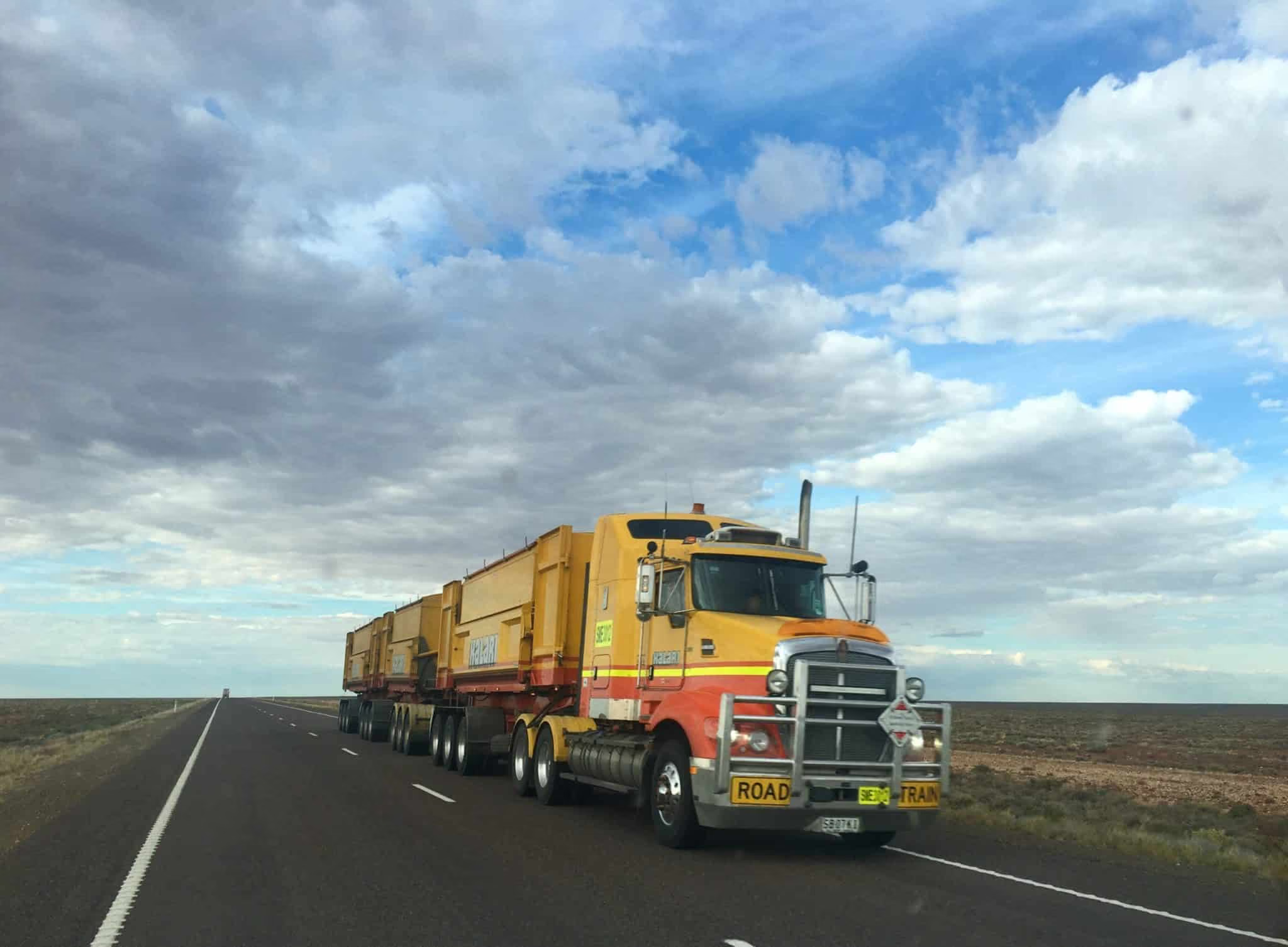
If you maintain or drive commercial motor vehicles, daily inspection discipline is central to fleet safety. Thorough checks help keep equipment roadworthy. They also reduce the chance of crashes, injuries, breakdowns, and failed roadside inspections. Carriers have a clear interest in protecting drivers and everyone else who shares the highway.
To reinforce that standard, the U.S. Department of Transportation (DOT) and FMCSA require carriers to inspect commercial vehicles and document safety-related findings under the Federal Motor Carrier Safety Regulations. Drivers must complete equipment checks around each day's work. When defects or deficiencies apply, they must complete a driver vehicle inspection report (DVIR) under 49 CFR §396.11.
Roadside data shows why inspection quality still matters. Per the FMCSA Motor Carrier Safety Progress Report as of December 31, 2024, partners completed 2,983,684 truck and bus roadside inspections in FY2024. The truck vehicle out-of-service (OOS) rate was 24.2%. During the 2025 International Roadcheck, inspectors completed 56,178 inspections. They placed 18.1% of vehicles out of service. Brakes and tires ranked among the top vehicle OOS categories.
To avoid preventable OOS findings, use a reliable inspection routine. Complete an accurate DVIR when one is required. Repair safety defects promptly.
What Is a DVIR (Driver Vehicle Inspection Report)?
A DVIR is a driver vehicle inspection report. It is a formal written record of defects or deficiencies a driver finds on a commercial motor vehicle. Under 49 CFR §396.11, motor carriers generally require drivers to prepare that report at the completion of each day's work on each vehicle operated. FMCSA enforces the rule with DOT.
The report must identify the vehicle. It must also list any defect or deficiency that would affect safe operation or cause a breakdown. Drivers are required to prepare a written DVIR when a defect or deficiency is discovered by or reported to the driver.
Federal rules set required content, not one mandatory paper template. You can use a carrier form, a vendor template, or an electronic system. Under 49 CFR §396.11, a compliant written DVIR still needs core elements such as:
- A vehicle identifier, such as a unit number or license number
- A listing of defects or damage that could affect safety or contribute to a breakdown
- Signature lines that support the driver, repair, and review workflow in federal rules
How the DVIR Process Works
Federal inspection requirements cover the vehicle check itself, defect reporting, signatures, and corrective action before the vehicle returns to service.
Vehicle inspection checklist
During a DVIR-related inspection, drivers typically walk a "circle check" around the unit. That usually means looking under the hood and checking the body for damage. Drivers also start the engine and test lights and brakes, among other items.
49 CFR §396.11 points drivers to parts and accessories that matter for safe operation. A practical daily checklist often includes:
- Service brakes, including trailer brake connections
- Parking brake
- Steering function
- Lights and reflectors
- Tires
- Horn
- Windshield wipers
- Rear vision mirrors
- Coupling devices
- Wheels and rims
- Emergency equipment
Defect reporting rules
You must report defects or damage that could make the vehicle unsafe or lead to a mechanical breakdown. Under current federal rules, drivers do not file a written no-defect DVIR simply to document a clean inspection.
That change has a clear regulatory history. FMCSA previously required a report even when inspections found no problems. The agency later rescinded the no-defect filing requirement for most operations. FMCSA summarizes that path on its DVIR rule page. Today, the written report focuses on problems that need attention, not paperwork for its own sake.
Signing the DVIR
The driver who completes the required written report must sign it under 49 CFR §396.11. In common fleet practice, start-of-day and end-of-day checks both matter in the inspection workflow. When the report lists a defect, a mechanic or carrier agent must certify repairs—or certify that repair is unnecessary—before the vehicle operates again.
If two drivers operate as a team and agree on the defects or deficiencies identified, only one driver needs to sign the DVIR. After the final driver completes the form, the report goes to the carrier. Carriers must retain the DVIR, repair certification, and driver-review certification for three months from the report date (49 CFR §396.11(a)(4)).
Correcting defects and certifying repairs
When a DVIR identifies a defect likely to affect safe operation, 49 CFR §396.11 requires the carrier to correct it before requiring or permitting the vehicle to operate again. The carrier must also certify on the report that the defect was repaired or that repair is unnecessary. That certification chain turns an inspection finding into a documented return-to-service decision.
How Often Do Commercial Vehicles Need Inspections?
Commercial drivers work with two related duties. One is a pre-trip equipment check. The other is the end-of-day written DVIR when defects apply.
Before driving, 49 CFR §392.7 requires the driver to be satisfied that specified parts and accessories are in good working order. Separately, 49 CFR §396.11 governs the written DVIR at day's end when a defect or deficiency is discovered or reported. Fleets still talk about pre-trip and post-trip inspections in everyday language. The written federal DVIR is not a twice-daily no-defect form requirement.
Before the next trip, 49 CFR §396.13 adds more steps. The driver must be satisfied that the vehicle is safe. The driver must review the last DVIR when one was required. The driver must also sign to acknowledge that review and any repair certification.
What is a pre-trip inspection?
A pre-trip inspection is the look-over you complete before taking the vehicle out for work. Many drivers ask how long a pre-trip should take. In practice, a focused check is short. You observe critical components, cycle lights and other controls, and confirm the unit is safe to move.
That pre-drive duty aligns with §392.7. It is not the same thing as automatically creating a written no-defect DVIR.
What is a post-trip inspection?
Post-trip inspection expectations track the same safety-critical systems as the start-of-day check. At the end of the day, look closely at conditions that changed in service. When a trailer is part of the combination, check items such as tire inflation and coupling security. If you discover or receive a report of a defect or deficiency, that is when the written DVIR under §396.11 applies.
DVIR Exemptions and Carrier Responsibilities
Some operations are excepted from the standard DVIR rules in 49 CFR §396.11. The regulation lists these exception categories:
- Driveaway-towaway operations, where the vehicle or trailer being transported is the commodity
- Motor carriers that operate only one commercial motor vehicle
- Private motor carriers of passengers that are nonbusiness operations
Always confirm the current regulatory text and your operation type before you rely on an exception.
Driver and carrier responsibilities for DVIRs
DVIR duties are federally regulated under 49 CFR §396.11 and 49 CFR §396.13. Weak processes create both safety and compliance exposure. When a DVIR lists a defect, the motor carrier must arrange repairs as required. The carrier must certify that repairs were made, or certify that repair is unnecessary. Before operating the vehicle again, the driver must review that documentation when a report was required and confirm the vehicle is safe to operate.
Carriers must keep the written DVIR, repair certification, and driver-review certification for three months from the date the written report was prepared (49 CFR §396.11(a)(4)). Consistent retention supports audits, roadside inquiries, and internal safety reviews.
DVIR Penalties and Non-Compliance Risks
Civil penalty amounts adjust over time. Use published federal schedules as the source of truth rather than static blog figures. Under the 2025 civil penalty adjustments, FMCSA Appendix B classes include a recordkeeping maximum total of $15,846. Non-recordkeeping penalties can reach $19,246 per violation. Operating a CMV after an out-of-service order can trigger separate driver and carrier penalties. Adjusted Appendix A amounts referenced in that rule reach up to $2,364 for a driver and $23,647 for a carrier.
Dollar fines are only part of the cost. Non-compliance can contribute to vehicles or drivers being placed out of service until issues are fixed and documented. That downtime can mean lost revenue, missed customer commitments, reputational harm, and negative impact to CSA scores. Incomplete defect reporting also leaves real safety risk on the table, including damaged equipment and higher accident potential.
Strong DVIR discipline is both a compliance control and an operational control.
What Is an eDVIR?
Paper DVIRs remain lawful, but many fleets now complete the same workflow electronically. An eDVIR is a driver vehicle inspection report created and maintained in electronic form instead of on a clipboard form.
Electronic reporting is already contemplated in the broader federal framework for electronic documents. 49 CFR §396.11 also addresses electronic driver vehicle inspection reports. FMCSA's Electronic Driver Vehicle Inspection Reports final rule (91 FR 7893) was published February 19, 2026, and takes effect March 23, 2026. It clarifies that electronic format is explicit in Part 396. Paper remains allowed. The agency is not reinstating no-defect DVIR filing.
In short, eDVIR tools digitize and improve a process you already own. They do not create a separate safety standard. They also do not revive abandoned paperwork requirements.
Benefits of eDVIRs for Fleet Compliance
eDVIR applications on phones or tablets help drivers submit reports from the yard or the roadside. Supervisors can review findings in near real time. It also makes it easier to document fluid levels, lights, or tire conditions during the walk-around.
Digital forms reduce errors from illegible handwriting and damaged paper. Many systems let drivers attach photos of issues such as low tread or damaged cables. Maintenance teams can then prioritize repairs with better context. For managers, eDVIR platforms become a searchable archive. You can compare units, spot repeat defects, and retrieve records without digging through filing cabinets.
Those workflow gains matter most when they connect to the rest of your fleet management and safety stack. That includes maintenance response, driver communication, and audit-ready retention for the full three-month window. Many fleets pair electronic inspections with broader fleet compliance tools so DVIR, HOS, and related records stay easier to monitor in one place.
DVIR FAQs
1. What does DVIR stand for?
DVIR stands for driver vehicle inspection report. It is the report used to document vehicle defects or deficiencies under FMCSA inspection, repair, and maintenance rules.
2. Is a DVIR required by law?
Yes, for most motor carriers subject to 49 CFR §396.11. Drivers must prepare a DVIR at day's end on each vehicle when a defect or deficiency is discovered or reported. A report is not required when no defect or deficiency is found.
3. How often must drivers inspect commercial vehicles?
Drivers must be satisfied that required parts and accessories are in good working order before driving (49 CFR §392.7). The written DVIR duty is tied to the end of the work day when defects apply under §396.11. The next driver must review the prior report when one was required (49 CFR §396.13).
4. How long must carriers keep DVIR records?
Carriers must maintain the DVIR, repair certification, and driver-review certification for three months from the date the written report was prepared (49 CFR §396.11(a)(4)).
5. Can you complete a DVIR on paper or only electronically?
Both are allowed. Electronic DVIRs are permitted. FMCSA's 2026 clarification confirms electronic format language in Part 396 while leaving paper available. Choose the method your fleet can execute consistently and retain for audits.
6. What happens if reported defects are not repaired?
Under 49 CFR §396.11, carriers must not put a vehicle back in service with a safety-related defect until it is repaired or certified as not needing repair. Skipping that step creates safety risk. It can also lead to civil penalties, out-of-service exposure, and broader compliance consequences.
Final Thoughts on DVIR Compliance
Commercial drivers carry responsibility for their own safety and for the people who share the road with them. That is why federal vehicle inspection requirements are specific about checks, defect reporting, repair certification, and record retention.
With clear procedures and modern digital workflows, fleets can make DVIR compliance consistent instead of chaotic. Electronic inspection reporting helps with speed, photo evidence, and searchable records. Broader fleet safety platforms add another layer. AI-vision systems such as the Netradyne platform help teams understand driving context, coach with evidence, and recognize safe behavior. They also help keep safety and compliance documentation easier to act on.
Keep building your program with practical fleet management best practices and disciplined inspection habits. Pair those habits with tools that help drivers and managers close the loop from defect to repair.


Want to protect drivers & reduce costs?
That’s not a trick question. See for yourself with a demo.