What Events Trigger AI Dash Cams to Record?
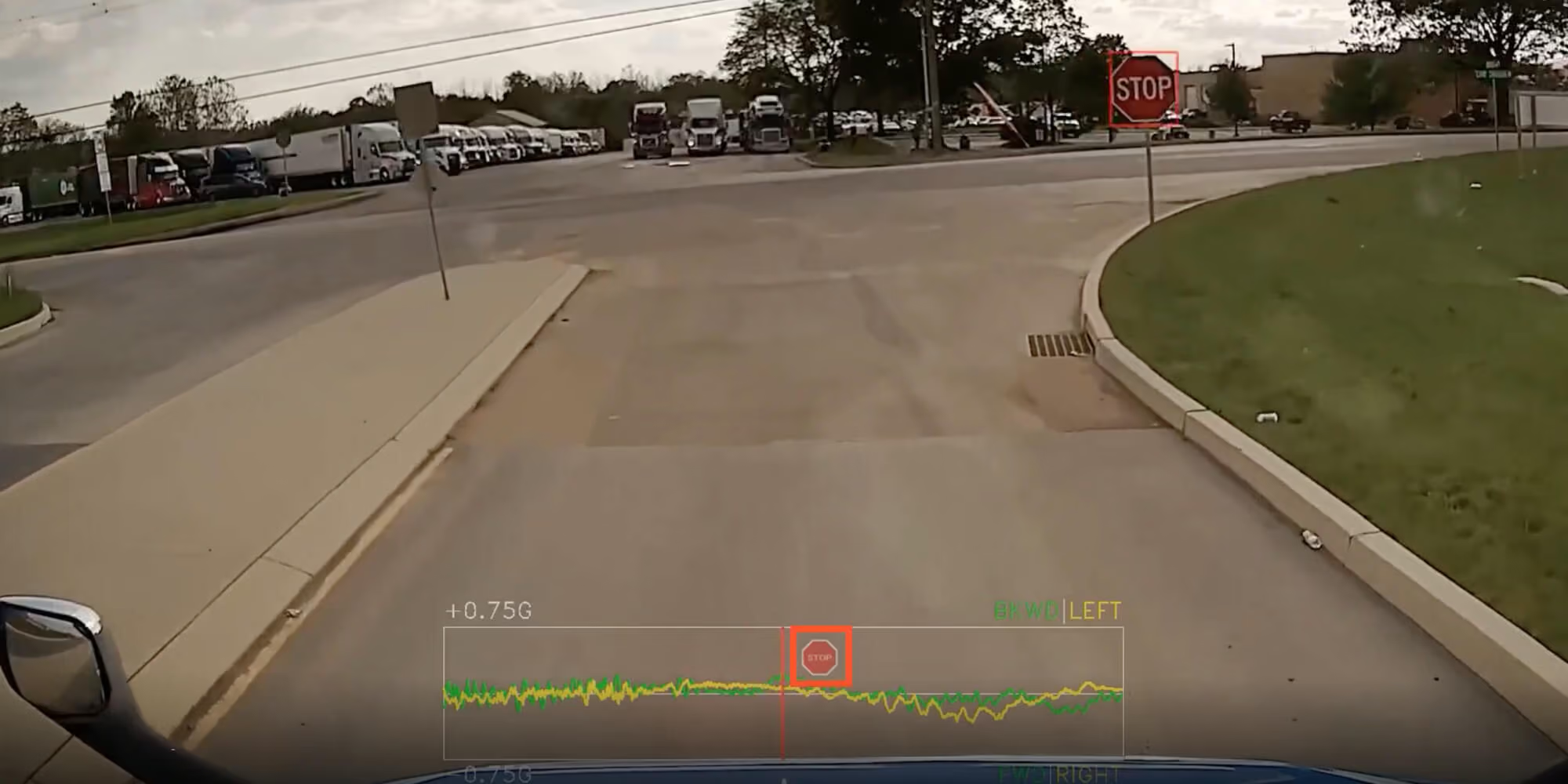
Many high-risk driving behaviors develop before a collision happens. Close following, distraction, speeding, and fatigue can all create moments when a driver still has time to correct course. That changes what it means for an AI dash cam to be “triggered.”
Traditional dash cams often rely on a hard event, such as sudden braking or an impact, to save a video clip. Advanced AI dash cams can analyze the drive continuously, identify risk as it develops, and trigger an in-cab alert, coaching event, or video review without waiting for a collision.
Netradyne analyzes 100% of drive time using edge AI, helping fleets identify both risky and positive driving behaviors with the context managers need for coaching, claims, and recognition. In this article, we’ll look at the events AI dash cams can detect, which behaviors can prompt real-time driver feedback, and how fleets use video after an incident.
What Is an AI Dash Cam?
An AI dash cam is an AI-powered fleet camera system that uses computer vision and edge AI to interpret road conditions, driver behavior, and driving context.
Traditional dash cams primarily record footage for later review. Many rely on G-force events, such as hard braking or an impact, to identify and save important clips. Advanced systems go further by continuously analyzing the drive and identifying safety events as they occur.
Netradyne analyzes 100% of drive time instead of relying only on triggered events. Its edge AI can detect unsafe behaviors, provide real-time driver feedback, and recognize positive driving. Netradyne reports approximately 99% alert accuracy on AI models informed by more than 30 billion miles of driving data.*
That continuous analysis gives fleets more than video. Managers can use objective driving context to coach risky patterns, recognize strong performance, investigate incidents, and support driver self-coaching workflows.
What Events Can Trigger an AI Dash Cam Alert or Video Event?
With advanced AI dash cams, an event does not necessarily trigger the camera to begin recording. The system may already be analyzing or recording the drive.
Instead, a detected behavior or condition can trigger an in-cab alert, create an event for manager review, surface relevant video, or recognize positive driving.
Common event categories include following-distance risk, distraction, speeding, harsh maneuvers, traffic-control violations, drowsiness, seat-belt use, lane departure, and collision risk.
Real-Time In-Cab Safety Alerts
Real-time alerts help drivers respond while a risky situation is still developing. Edge AI can identify specific behaviors and road conditions and provide audio feedback when driver action can reduce risk.
Examples include:
- Unsafe following distance: AI analyzes the relationship between the vehicle and traffic ahead. When following distance becomes unsafe, an audible vehicle alert can prompt the driver to create more space.
- Harsh driving: Hard braking, harsh acceleration, and sharp turns can indicate elevated risk or provide important context around a driving event. These events can be surfaced for review and coaching.
- Speed and traffic-control risk: AI can identify speeding, stop-sign violations, traffic-light violations, and other supported roadway events. Real-time feedback helps drivers correct behavior before the risk escalates.
- Distracted driving: Distraction can occur when a driver’s attention moves away from the road. AI-powered cabin monitoring can identify behaviors such as looking away from the roadway and provide a real-time alert to help the driver refocus. According to NHTSA, distracted driving claimed 3,208 lives and injured 315,167 people in 2024.
- Drowsiness and fatigue: Advanced driver monitoring can identify early indicators of fatigue instead of waiting for a driver to visibly nod off. Netradyne’s DMS Sensor evaluates signals including eye closure, blink characteristics, microsleeps, and head movement, then provides alerts so drivers can respond as fatigue risk develops.
- Seat-belt use: Cabin-facing AI can identify when a driver is not wearing a seat belt, helping fleets reinforce compliance and reduce injury risk.
- Lane departure and collision risk: Lane departure, collision warning, and following-distance intelligence can give drivers earlier awareness of developing road risk instead of only documenting what happened afterward.
- Compound AI alerts: Higher-risk situations can involve more than one unsafe behavior. Compound alerts correlate combinations such as distraction plus hard braking, following distance plus hard braking, or distraction plus close following so fleets can better understand the sequence and severity of an event.
Real-time alerts move coaching closer to the moment when it can make a difference. Drivers can create space, reduce speed, or re-engage their attention while the situation is still unfolding.
Safe Driving Alerts and Positive Recognition
Systems that focus only on mistakes can create one-sided coaching conversations. Recognition-based programs give drivers visibility into what they are doing well while helping managers reinforce the habits they want repeated.
Netradyne’s GreenZone Score provides a shared measure of driver performance over time, while DriverStars recognize positive driving behaviors as they happen. This gives drivers a clearer picture of progress and gives managers a more balanced foundation for coaching.
Based on Netra dyne customer data, every 50-point improvement in GreenZone Score is associated with approximately a 13% to 15% reduction in accidents per million miles.**
How Fleets Use AI Dash Cam Video After an Event
The value of AI dash cam video continues after the alert ends. When a collision or disputed event occurs, time-stamped video can help fleets understand what happened faster. Objective footage can support investigations, help exonerate drivers when they are not at fault, and provide clearer evidence for claims conversations.
Video also improves coaching. Instead of discussing driving behavior based only on a score or alert, managers and drivers can review what happened together. The issue may be following distance, speed discipline, distraction, or another behavior that requires attention.
Continuous AI analysis can also reduce the amount of context managers need to reconstruct manually. Instead of starting with an isolated G-force event and searching for what led to it, safety teams can review the relevant behavior, video, and driving context together. That helps managers spend less time hunting for evidence and more time addressing the behaviors that create risk.
FAQ: AI Dash Cam Recording Triggers
1. What Is an AI Dash Cam?
An AI dash cam is an AI-powered fleet camera system that uses computer vision and edge AI to analyze road conditions and driving behavior. Advanced systems can continuously analyze the drive, identify safety events, provide real-time alerts, and surface video for coaching or claims review.
2. What Events Can Trigger an AI Dash Cam Alert or Video Event?
Common events include unsafe following distance, harsh braking or acceleration, speeding, distraction, drowsiness, seat-belt issues, traffic-control violations, lane departure, and collision risk. Advanced systems can also identify compound events when multiple risky behaviors occur close together.
3. Does an AI Dash Cam Only Record When an Event Happens?
Not necessarily. Traditional event-based dash cams often rely on a hard trigger to save footage. Advanced AI systems can analyze or record continuously and use detected events to determine when to alert a driver, create a coaching event, or surface video for review. Netradyne analyzes 100% of drive time rather than relying only on triggered events.
4. How Is Continuous AI Analysis Different From Event-Only Dash Cams?
Event-only systems primarily identify moments after a hard trigger, such as sudden braking or an impact. Continuous AI analysis examines the full drive. It can identify developing behaviors such as close following, distraction, or speeding and provide context before, during, and after an event. That gives fleets more opportunities to coach proactively instead of relying only on post-event review.
5. How Do In-Cab Safety Alerts Help Before a Crash?
Real-time alerts give drivers an opportunity to correct behavior while risk is still developing. Depending on the event, a driver may be able to increase following distance, reduce speed, or refocus attention before the situation escalates.
6. How Do Fleets Use AI-Captured Video After an Incident?
Fleets use video to investigate incidents, help exonerate drivers when appropriate, support claims, and provide objective context for coaching. Video can help managers and drivers understand not only what happened, but what behaviors or conditions led to the event.
Build a Stronger Fleet Safety Culture
The value of an AI dash cam is not simply whether it records a hard brake or collision. It is how much of the drive the system understands before, during, and after that moment.
By analyzing 100% of drive time, Netradyne helps fleets identify risk earlier, give drivers feedback while they can still act, recognize safe performance, and provide managers with clearer evidence when something does happen.
That means better coaching, stronger driver trust, less time reconstructing events, and a clearer path to reducing preventable risk.
Explore Netradyne fleet safety solutions to see how AI-powered camera systems and recognition-based coaching help you protect drivers and strengthen everyday fleet performance.


Want to protect drivers & reduce costs?
That’s not a trick question. See for yourself with a demo.