The Case for Earlier Drowsy Driving Intervention
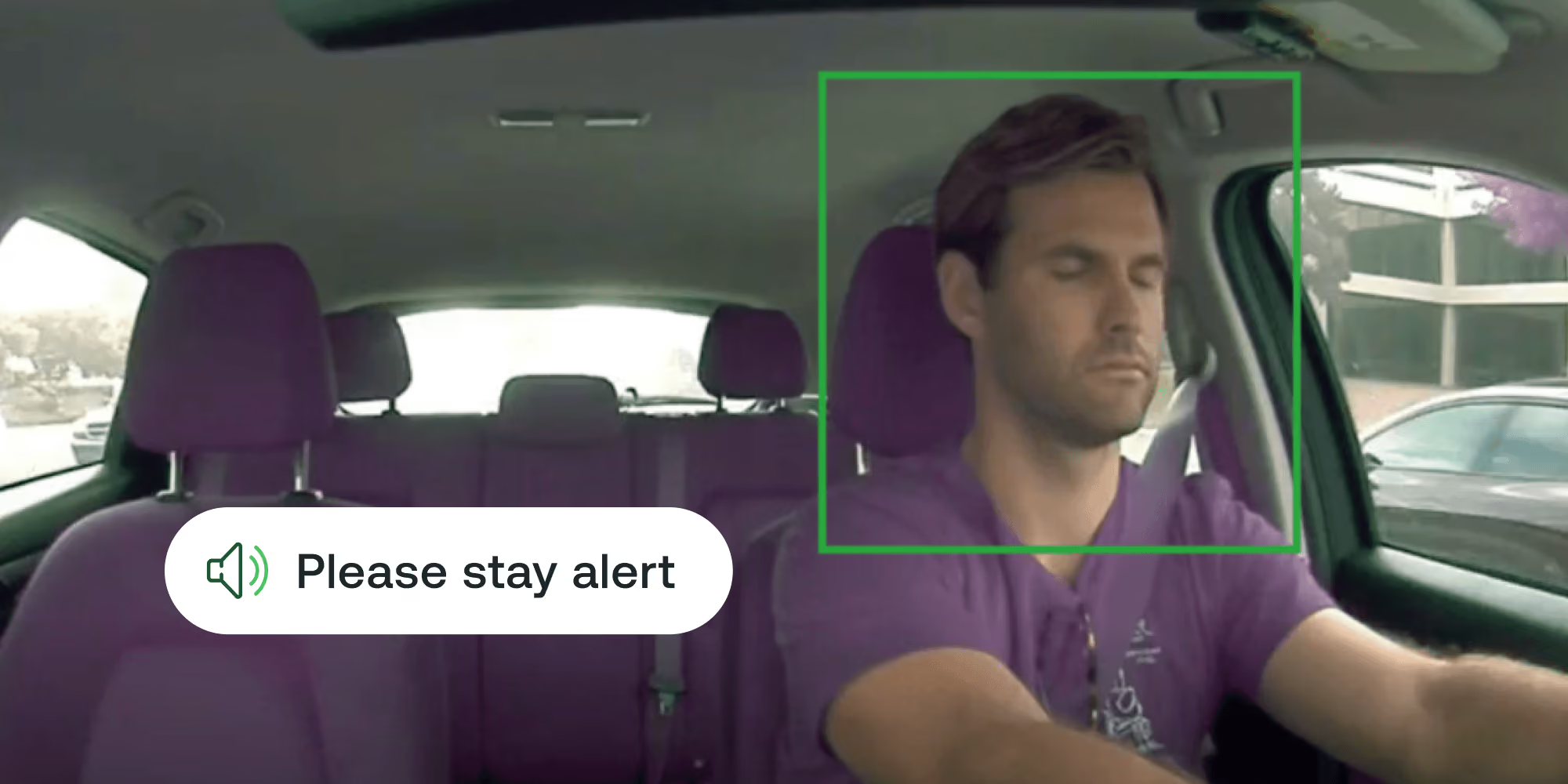
Driver fatigue is one of the hardest risks for fleets to manage because it does not always show up neatly in a log, a checklist, or a post-incident review. As our webinar with the @Commercial Vehicle Safety Alliance’s North American Fatigue Management Program (NAFMP) illustrated, traditional approaches often depend on self-reporting, hours-of-service compliance, or after-the-fact investigation.
The problem is: Fatigue does not always follow the clock.
That’s because drowsy driving is not usually a single event. It is a progression. A driver may start with slower blinks, heavier eyelids, or subtle head movement before performance drops in a more visible way. By the time a vehicle weaves, departs a lane, or narrowly avoids a collision, risk is already building.
Our webinar with the CVSA NAFMP explored our drowsy driving mitigation technology in detail.
Mitigation works best when fleets move upstream
Instead of relying only on Hours of Service rules that govern drive time, fleets need a way to detect the earliest signs of fatigue in the cab, alert the driver in the moment, and give safety teams enough context to act before a microsleep turns into an incident.
This shifts the conversation from compliance alone to intervention.
Our Advanced Driver Drowsiness with DMS Sensor is designed to track eye closure, blink measurements, percent eye closure over time, and head movement, including microsleeps and extended eye closure.
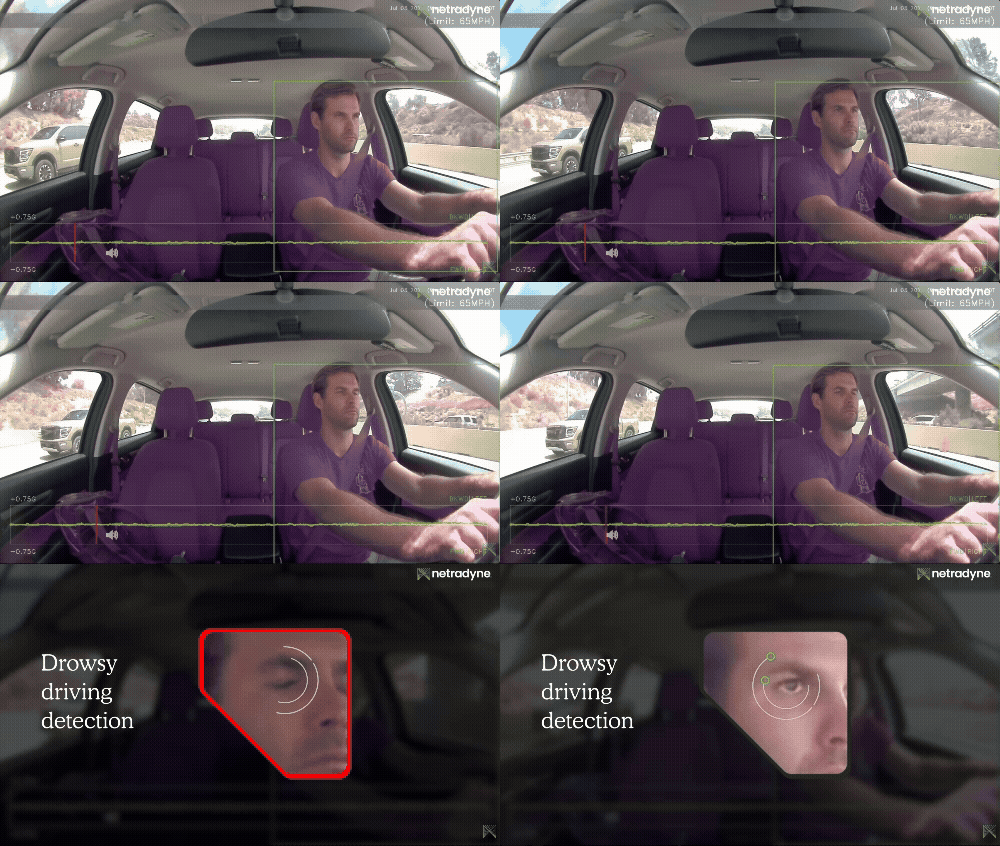
Driver Drowsiness with DMS Sensor tracks real-time fatigue signals.
That distinction matters because not every fatigue indicator carries the same weight. Yawning can be one signal, but it is not definitive on its own. A more effective approach is to evaluate multiple indicators together, including eyelid status, blinking behavior, drooping eyes, closed eyes, and head position.
For fleets, that means drowsiness mitigation should be built around patterns that indicate weak alertness, not single cues taken out of context.
Real-time prevention at the point of risk
Detection alone is not enough. Alerts need to help drivers respond in the moment.
Our approach includes real-time in-cab audio alerts that notify drivers as soon as early signs of drowsiness are detected. That changes fatigue mitigation from passive observation to immediate intervention.
For fleet operators, this is an important distinction. A system that helps interrupt fatigue before an event happens is more useful for drowsy driving prevention.
Safety teams need context, not isolated events
Fleets also need context, not just alerts.
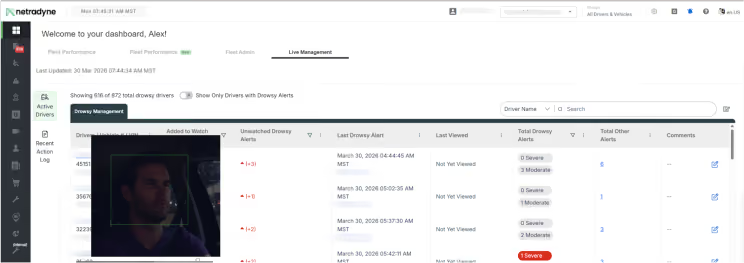
Our broader system combines in-cab visibility with road-facing context and captures the full driving period, which helps safety teams understand the conditions surrounding a drowsiness-related event. Behaviors such as lane departure may add important context when fatigue risk is developing.
Additionally, that context matters for coaching. It allows safety leaders to analyze patterns and circumstances, rather than treating each alert as a standalone issue. It also supports better follow-up conversations with drivers about what happened, what conditions contributed to it, and what needs to change.
Drowsy driving is an operational issue, not just a compliance issue
Hours-of-service rules still matter. Training still matters. But neither one can see a driver’s blink pattern deteriorating in real time. Safety teams need visibility that helps them identify fatigue trends, adjust schedules when needed, and intervene proactively.
That makes fatigue mitigation part of a larger fleet performance strategy. When fleets address fatigue earlier, they are not only working to reduce collisions—they’re also improving the consistency and quality of safety operations.
Better intervention starts with better visibility
The practical question for fleets is no longer whether fatigue is a risk. It is whether they have enough visibility to catch it before it becomes a claim, an injury, or a life-changing event.
In that sense, drowsy driving mitigation is not only about preventing the worst-case scenario. It is about giving drivers a timely warning, giving safety teams better evidence to work with, and building a system that helps intervene before fatigue becomes a collision.
Detect earlier, respond faster, and coach with better context.


Want to protect drivers & reduce costs?
That’s not a trick question. See for yourself with a demo.