5 Benefits of Fleet Dash Cameras for Commercial Fleets
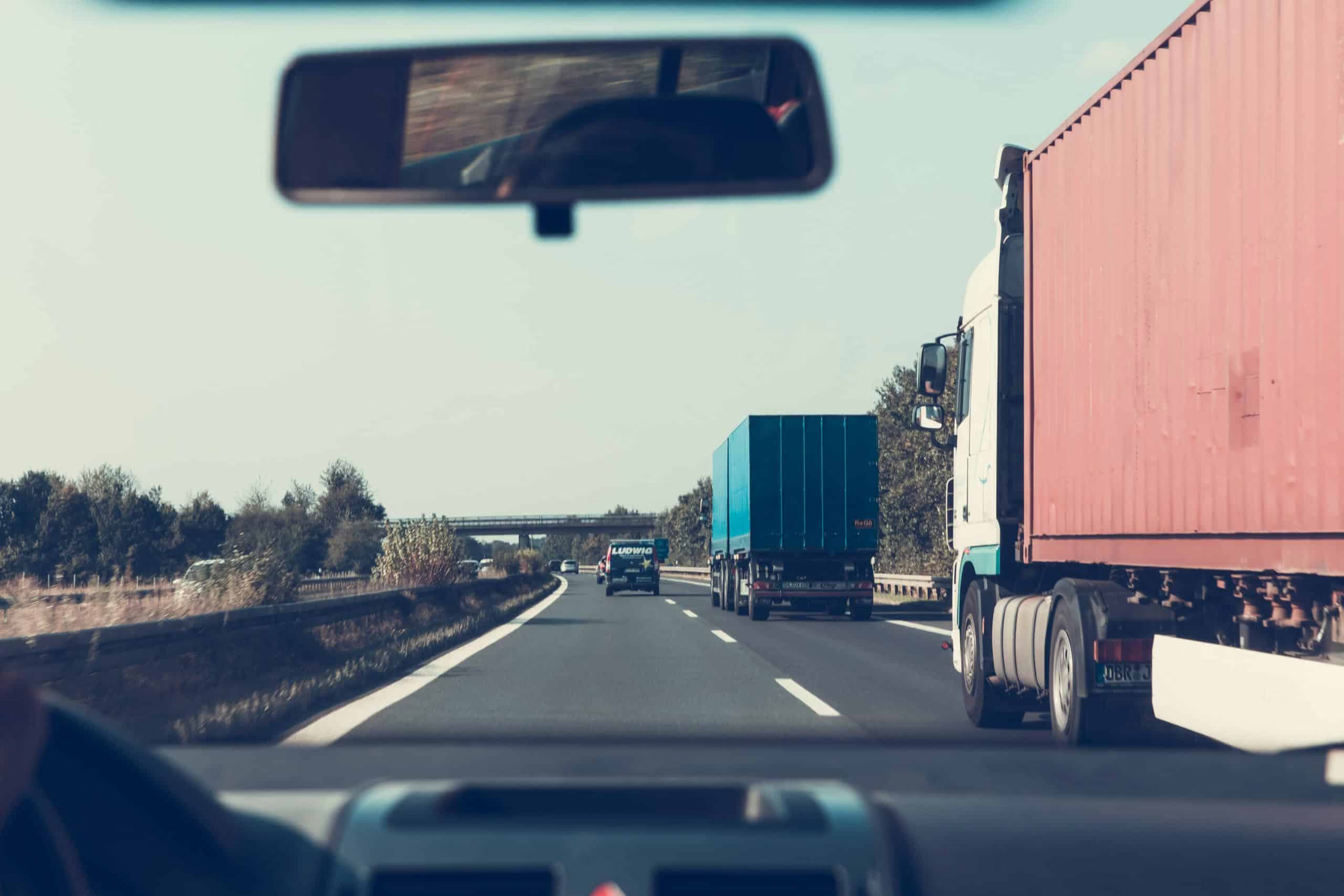
Fleet dash cameras help commercial fleets protect drivers, document what happens on the road, and coach safer habits with timely, objective feedback. But today's AI-powered fleet camera systems can do much more than record what happened after an incident. They can help fleets identify risk as it develops, give drivers feedback in the moment, and provide safety and claims teams with clearer evidence.
That matters as fleets face growing pressure to improve safety while controlling the cost of risk. According to the IIHS Fatality Facts on large trucks, 5,340 people died in large-truck crashes in 2024, accounting for 14% of all U.S. motor vehicle crash deaths. At the same time, ATRI research on motor carrier insurance costs found liability insurance premiums rose 18.6% to 10.2 cents per mile from 2021 to 2024, even as heavy-duty truck-involved crash rates fell 2.6%.
For fleet leaders, the question is no longer simply whether to use cameras. It is what the camera system can help you do before, during, and after a risky event.
Introduction to Fleet Dash Cameras
Fleet dash cameras are AI-capable cameras installed in commercial vehicles to capture the road ahead, activity in the cab, and, on multi-camera setups, surrounding blind spots. Used well, they give fleet managers visibility into risk, strengthen fleet safety programs, and support day-to-day operations with trustworthy video and analytics.
High-quality footage helps protect businesses when incidents and disputes arise. Features such as low-light recording, GPS context, and AI-powered analytics help teams spot unsafe patterns earlier and coach with specifics instead of guesswork. The goal is not surveillance. It is protecting drivers, reducing preventable events, and giving leaders the context they need to run safer fleets.
How Fleet Dash Cameras Work
Standard fleet dash cameras often act as always-on or event-triggered recorders. They store HD video from the windshield or dashboard view, and sometimes from a driver-facing lens, then upload clips to local storage or the cloud when a harsh-driving event or other configured trigger occurs.
AI-powered fleet camera systems go further. Driver•i cameras and related hardware capture dual-facing and quad-camera views, while Netradyne Intelligence analyzes driving context on the edge and in the platform. Instead of waiting only for a trigger, Netradyne is designed to analyze 100% of driving time, surface risky and positive behaviors, and deliver real-time in-cab audio coaching when drivers need a prompt in the moment.
Footage is stored securely and can be reviewed with GPS and telematics data so managers see where and how an event unfolded. When teams need evidence for a claim, coaching session, or compliance review, they can retrieve the right clip quickly rather than scrubbing hours of undifferentiated video.
5 Benefits of a Fleet Dash Camera System
1. Break Risky Habits with AI Fleet Dash Cameras
Today’s AI-powered fleet dash cameras do more than record the lane ahead. Netradyne Intelligence assesses distracted driving, drowsiness, mobile phone use, and other in-cab risks. When cameras and the platform recognize those behaviors, drivers can receive real-time audio alerts that help them correct course.
An advanced driver-facing camera, as part of a broader fleet safety solution, captures both risky and safe maneuvers. Calling out the safest behaviors sets a constructive tone for coaching. Drivers who hear timely recognition are more likely to repeat what worked.
Netradyne also supports driver self-coaching workflows so drivers can review their own performance online. That keeps productive drivers on the road and out of unnecessary office pull-ins. With a mobile experience, drivers keep autonomy over when they learn, which reinforces long-term habits. Alert quality matters here: Netradyne reports about 99% alert accuracy, built on insights from 25+ billion miles analyzed.* Individual results may vary.
2. Help Exonerate Drivers With Clearer Evidence
Clear video from the road, cab and surrounding vehicle can help claims teams reconstruct what happened and establish context when fault is disputed. Multiple angles give drivers and fleet managers a fuller view of what happened inside and outside the vehicle. HD video and audio create durable evidence when the facts are disputed.
Netradyne’s HD fleet dash cameras can capture context around speeding, following distance, harsh braking, and related events. That evidence can help show when a driver operated safely, support responses to questionable tickets, and challenge false claims. Managers need fast access to the right clip so claims and safety teams are not waiting on incomplete stories.
Industry buyers already connect AI video to claim defense. In Verizon Connect’s 2026 Fleet Technology Trends research, 64% of AI-powered video users reported better protection from false claims. Video supports your process; it is not a substitute for legal advice or carrier requirements.
3. Recognize Safe Driving with GreenZone Score
Netradyne recognizes positive driver behavior and reflects it in a driver’s GreenZone Score. The score gives safety leaders a clear way to celebrate strong habits, not only to flag mistakes.
Pair the score with incentive programs such as cash bonuses, public recognition, or preferred routes, and drivers have a concrete reason to keep improving. Based on customer data, a 50-point GreenZone Score improvement is associated with about a 13–15% reduction in accidents per million miles (APMM).** Recognition-based coaching is also linked to roughly 2–3× higher driver engagement and retention.* Individual results and conditions may vary.
When you consistently recognize safe driving, you reinforce habits that last and strengthen retention of your strongest operators.
4. Find Fleet Dash Camera Footage in Seconds
When managers review performance, prepare coaching, or respond to an insurance claim, the problem isn't storing video. It's finding the specific evidence you need without manually searching footage.
On supported configurations, on-demand video access and AI-assisted VideoSearch help surface matching moments across the fleet in seconds. That speed matters when a claims adjuster is waiting or a coach has a narrow window before the next shift. Clear organization of high-quality footage turns cameras into an operational tool, not a backlog of files.
5. Gain Deeper Insights into Driver Behavior
To run a large fleet well, you have to turn raw video and telematics into decisions that improve fleet operations. AI-powered fleet camera systems recognize patterns in how people drive and group those patterns into actionable views.
Because Netradyne analyzes behavior across 100% of drive time, managers see more than isolated hard-brake clips. Multi-camera coverage up to 360° builds a fuller picture of cab activity, the road, and surrounding risk on supported configurations. Safety scorecards and dashboards help you prioritize coaching on the highest-risk behaviors while still reinforcing positive maneuvers. The result is focused training time and fewer generic, one-size-fits-all meetings.
How AI Powers Modern Fleet Dash Cameras
Accuracy matters at the moment of detection, not only after an event reaches a manager. Some systems use human review to validate or filter AI-generated events after they occur. That may improve the event queue a safety manager eventually sees, but it cannot undo an inaccurate alert that already sounded in the cab. Too many irrelevant alerts become noise and can weaken driver trust.
Netradyne uses edge intelligence to interpret driving context and determine when feedback is warranted while the vehicle is in motion. That helps drivers receive more relevant coaching in the moment and gives managers a more accurate view of what happened without depending on post-event human review to clean up the results.
What to Look for in a Fleet Dash Camera System
Selecting the right fleet dash camera system starts with outcomes: fewer severe events, faster claims clarity, stronger coaching, and drivers who feel supported. Use this checklist when you compare vendors:
- Does the system analyze the full drive or primarily triggered events?
- Are alerts generated accurately enough to coach drivers in real time without relying on post-event human review?
- Can it recognize positive behaviors as well as risky ones?
- How quickly can managers find evidence outside predefined safety events?
- Can additional camera views add AI detection, or are they video-only?
- Can the platform combine video, GPS and vehicle data to provide fuller event context?
Choose a system that fits how your safety and operations teams actually work. The right fit helps you protect drivers, clarify liability events, and strengthen fleet safety over the long term.
Fleet Dash Camera FAQs
1. What is a fleet dash camera?
A fleet dash camera is a commercial-grade camera system installed in work vehicles to record the roadway and, in many deployments, the driver and surrounding views. AI-powered fleet camera systems add real-time alerts, behavior analytics, and cloud video management so fleets can coach drivers and document incidents, not only archive footage.
2. How do fleet dash cameras improve driver safety?
They improve safety by detecting risky behaviors early, prompting drivers with in-cab alerts, and giving managers objective clips for coaching. Recognition of safe maneuvers helps good habits stick. Over time, fleets use scorecards and targeted training to reduce repeat risks such as distraction, close following, and drowsiness.
3. How do AI-powered fleet dash cameras differ from standard dash cams?
Standard dash cams mainly record video and save clips when a sensor triggers. AI-powered systems such as Netradyne use Vision AI and edge processing to interpret driving context across 100% of drive time, alert drivers in the moment, recognize positive behavior, and help teams find relevant video faster.
4. What features should fleets look for when choosing a system?
Prioritize dual-facing AI cameras, real-time coaching alerts, full-drive analysis, balanced recognition and risk scoring, fast video retrieval, telematics integration, strong alert accuracy, and the ability to scale across vehicles and software systems your team already uses.
Final Thoughts on Fleet Dash Cameras
The best fleet dash camera systems do more than document risk. They help drivers respond while risk is developing, give managers accurate context for coaching, and provide clear evidence when the facts matter.
That requires more than cameras. Look for a system that combines accurate edge AI, full-drive analysis, real-time driver feedback, positive recognition, and fast access to video.
Book a demo today to see how Netradyne turns fleet video into intelligence that helps protect drivers and improve safety performance.


Want to protect drivers & reduce costs?
That’s not a trick question. See for yourself with a demo.