AI-Powered School Bus Camera Systems: Ensuring Student Safety and Security
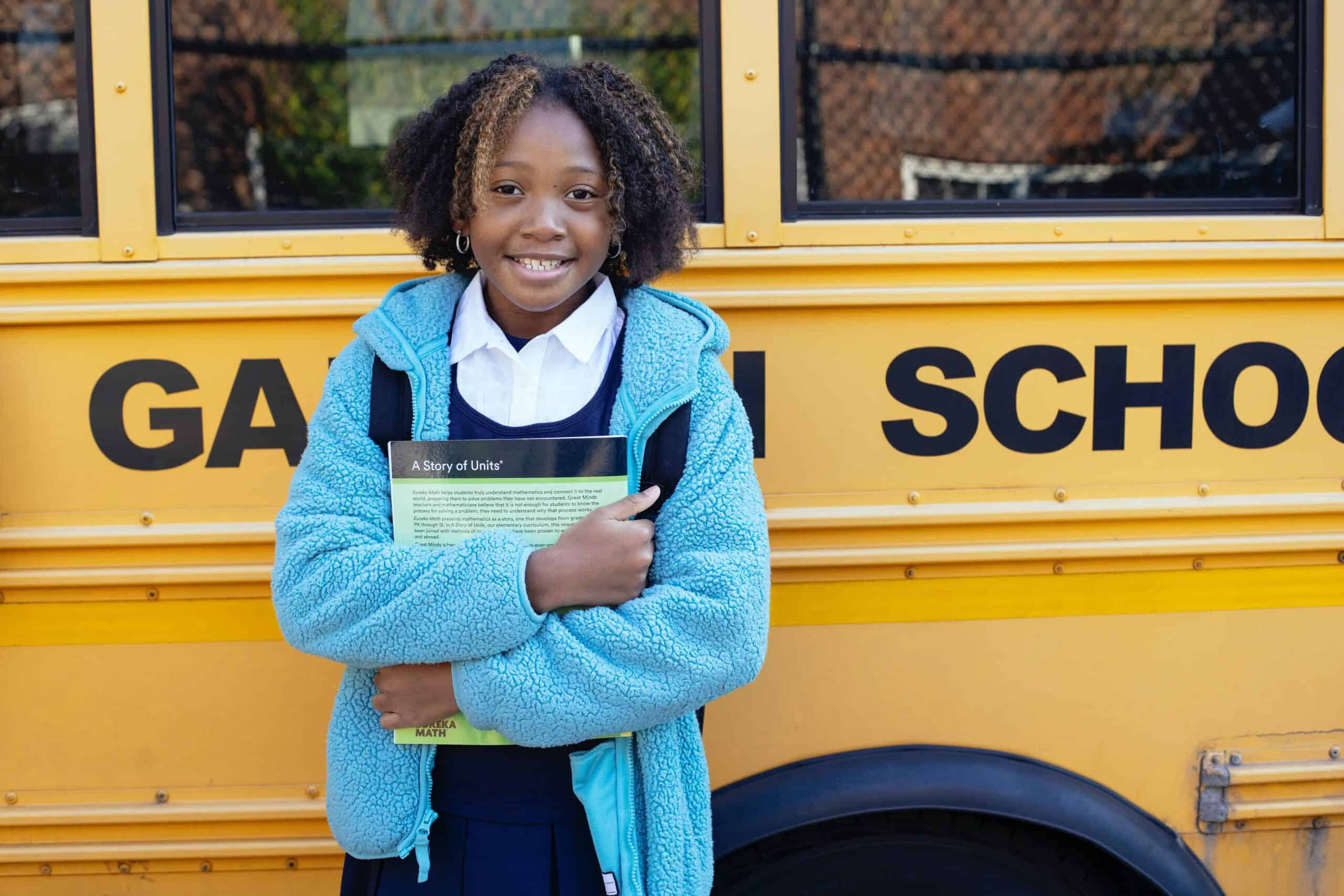
School bus camera systems help transportation leaders protect students, drivers, and buses with multi-camera video and Vision AI. Unlike systems that only archive clips after a hard brake or impact, AI-powered school bus camera systems analyze driving behavior in context so you can coach in the moment, investigate incidents with clear evidence, and strengthen your safety program.
NHTSA notes that school buses are among the safest vehicles on the road and that children are more at risk when approaching or leaving a school bus. That loading-zone exposure is one reason districts and contractors invest in exterior and interior visibility. NASDPTS projects more than 39.3 million illegal passings for the 2024–2025 school year, based on a one-day driver survey extrapolated across the U.S. fleet and a 180-day year. At least 30 states authorize school bus stop-arm camera laws (NCSL, updated October 22, 2025).
This guide explains what AI-powered school bus camera systems are, how they work, which features matter most, and how Netradyne supports school fleet safety.
What Are AI-Powered School Bus Camera Systems?
AI-powered school bus camera systems combine interior and exterior cameras with computer vision so the technology can prioritize risk on and around the bus. Systems can support clearer views of blind spots, capture context for events outside the vehicle, and give managers fast access to video when parents or administrators raise a concern. For a broader look at common risks on student routes, see Netradyne’s overview of top school bus safety issues and video telematics.
Traditional cameras often record only when a sensor triggers. Modern AI-powered fleet safety platforms analyze 100% of drive time, then surface the moments that matter. You receive event alerts and on-demand video access rather than a requirement to watch live feeds all day. Managers spend less time hunting clips and more time improving behavior.
Exterior multi-camera coverage can also supply objective video when a motorist passes a stopped bus where state law allows camera-supported enforcement or investigation. NHTSA’s best-practices guide states that whether stop-arm camera enforcement programs are effective in reducing illegal passing of stopped school buses “has not been widely studied to date,” so treat cameras as evidence and awareness tools—not as a guaranteed national reduction in violations.
How AI School Bus Cameras Improve Driver and Student Safety
AI strengthens school bus safety by giving you visibility into both the driver and the road environment. Interior cameras and driver monitoring help detect behaviors such as distraction, drowsiness, and seat belt non-use. When the system recognizes elevated risk, it can issue real-time in-cab alerts so drivers can correct course before a near miss becomes a claim.
High-definition video matters because coaches and investigators need clear context—not a blurry frame. Risky behaviors such as distracted driving, speeding, close following, and traffic-control issues become coaching moments instead of hidden patterns. Advanced systems also recognize positive driving so your program reinforces what “good” looks like, not only what went wrong.
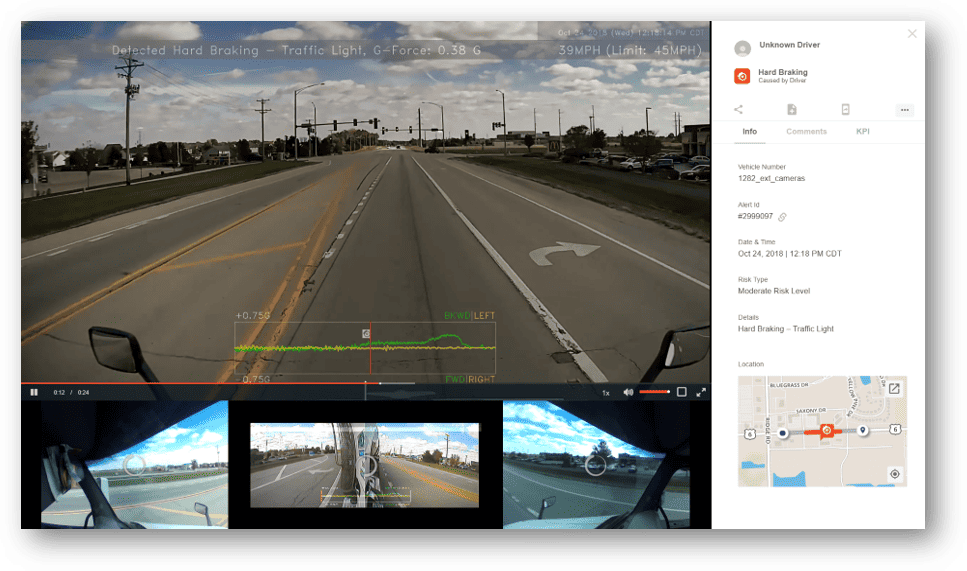
Driver•i event review of following distance alert
Exterior cameras help surface risks outside the cab, including activity in blind spots and conflicting traffic near stops. For school fleets, that outside-the-bus view supports student loading and unloading awareness and clearer incident reconstruction when something happens at the curb.
How AI-Powered School Bus Camera Systems Work
An AI-powered school bus camera system processes video on the device and in the platform so insights arrive while they still matter. Edge AI recognizes objects, road context, and driving behaviors from interior and exterior cameras. The system can deliver immediate audio coaching in the cab, then package event video, GPS location, and related telematics for managers.
GPS and route context help you understand where an event occurred and what conditions surrounded it. That combination supports proactive safety—spotting patterns across routes and drivers—rather than waiting until after a serious collision to reconstruct what happened. The goal is actionable fleet safety insight, not automated trip planning that claims to cut travel time without operational proof.
Benefits of AI-Powered School Bus Camera Systems
AI-powered school bus camera systems help you protect students and drivers while making safety operations more efficient:
- Fewer missed moments: Analyzing 100% of drive time surfaces risks that trigger-only recording can miss.
- Faster incident and claims review: HD video with location context helps you investigate quickly and exonerate drivers when they did the right thing.
- Objective coaching: Specific events replace vague feedback, so training sessions stay fair and focused.
- Stronger safety culture: Positive recognition and scorecards highlight safe habits, not only violations.
- Compliance documentation support: Searchable video and event history help you document safety program activity and respond to audits or parent inquiries.
- Clearer exterior context: Multi-camera views support loading-zone and roadway investigations where cameras are lawfully used.
What to Look for in School Bus Camera Systems
When you evaluate school bus camera systems, use a practical checklist:
- HD multi-camera coverage on supported configurations, including exterior views that reduce blind spots and, where available, up to 360° visibility
- 100% drive-time AI analysis, not only shock- or G-force-triggered clips
- High alert accuracy with fewer false positives, so coaches trust the queue
- Real-time driver feedback plus positive recognition, not penalty-only monitoring
- Fast video access for authorized managers on desktop or mobile
- GPS and telematics context tied to events for investigation and route insight
- Integration readiness with the fleet, safety, and reporting tools you already use
- Privacy-aware workflows that emphasize event alerts and controlled access—not constant live monitoring of drivers and students
Confirm that cameras, AI detection, coaching workflows, and training processes fit how your transportation department actually operates day to day.
How Netradyne Supports School Bus Fleet Safety
Netradyne is an AI-powered fleet safety platform built to protect drivers and improve fleet performance through Vision AI. Driver•i fleet camera systems capture multi-view, high-definition video; the Netradyne platform analyzes 100% of driving time and turns that video into coaching and operational insight.
Alerts are built for accuracy teams can trust—up to ~99%* alert accuracy based on internal validation across more than 30+ billion miles analyzed. Drivers receive real-time in-cab coaching when risk rises. GreenZone Score and DriverStars put weight on positive behaviors, so high performers become examples in school bus safety training. Based on customer data, a 50-point GreenZone improvement has been associated with a 13–15% reduction in accidents per million miles (APMM). Individual results and conditions may vary.
On supported hardware—such as multi-camera Driver•i configurations with Hub-X expansion—you can extend coverage for blind spots and surrounding traffic. That exterior context helps school fleets review roadway and stop-area events with fuller video evidence.
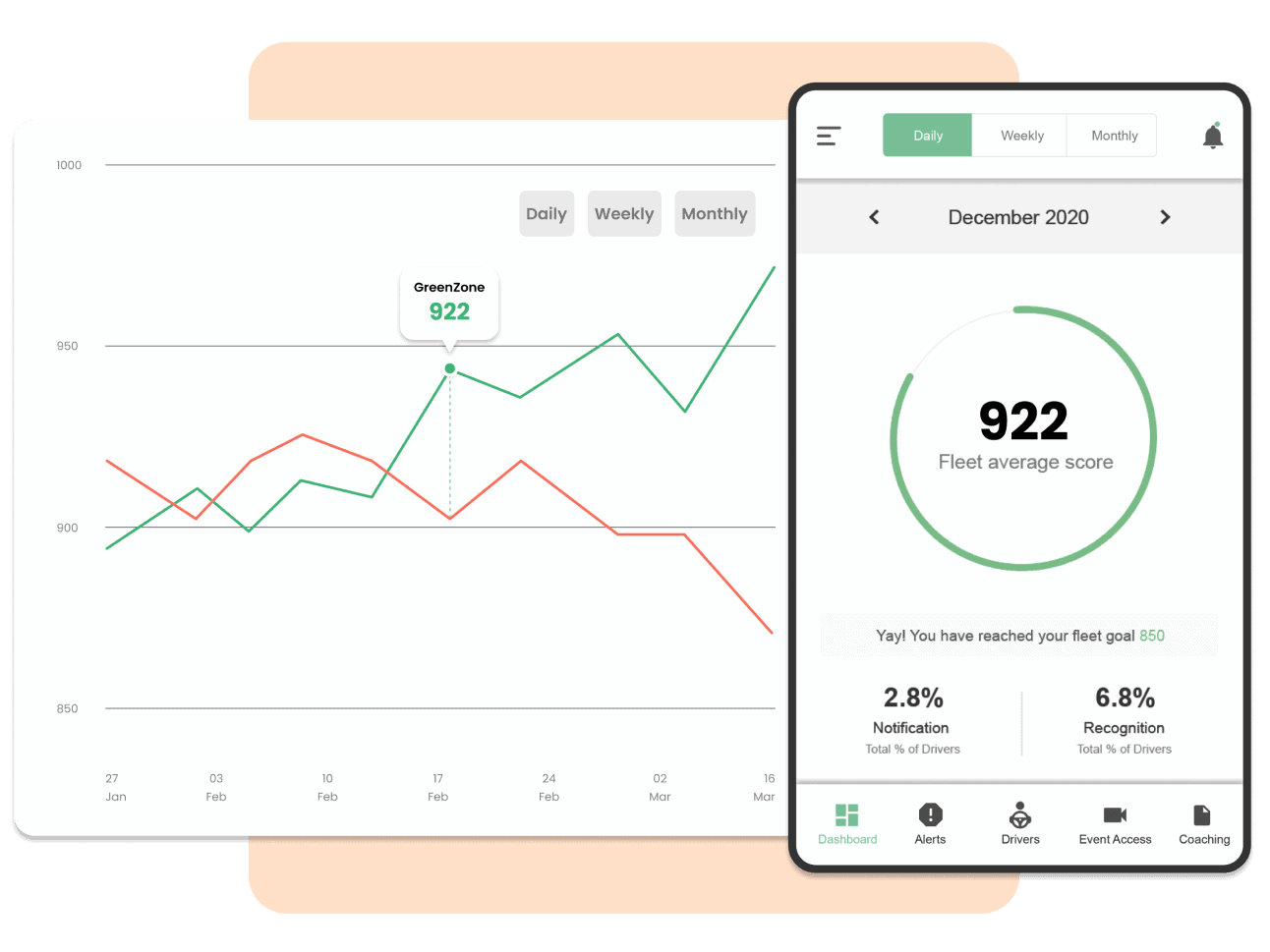
*Individual results and conditions may vary. Based on customer data.
Final Thoughts
AI-powered school bus camera systems give transportation teams full-context video and coaching—not only after-the-fact clips. Used well, they help you protect students and drivers, respond to incidents with clear evidence, and build a recognition-based safety culture.
Explore how Netradyne supports school transportation fleets, and book a demo to see the platform on your routes.
School Bus Camera System FAQs
1. What types of school bus cameras should fleets use?
School buses have significant blind spots and frequent pedestrian exposure at stops, so fleets typically need more than a single road-facing camera. Look for multi-camera systems that cover the driver, the cabin as appropriate for your policy, and exterior angles. Driver•i multi-camera configurations, including quad and Hub-X expansions on supported vehicles, can provide broad exterior visibility for investigation and coaching.
2. Do fleet managers constantly watch live school bus camera feeds?
No. With Netradyne, fleet managers do not maintain a constant live view of the inside or outside of every bus. Managers receive alerts for high-level events and can review the captured video for those moments. Drivers and passengers are not continuously watched through the cameras.
3. Do school bus cameras record all the time?
Many AI-powered platforms analyze 100% of drive time so risky and positive behaviors are not limited to a narrow trigger window. That does not mean supervisors stream every minute of video. Instead, the system reviews driving continuously, then prioritizes events, alerts, and searchable video for authorized follow-up.
4. What triggers a school bus camera alert or video review?
Triggers vary by platform. AI-powered systems can flag behaviors and roadway risks—such as distraction, drowsiness, seat belt issues, following distance, harsh events, and other detected conditions—rather than relying only on a sudden impact. Managers then review the associated video and coaching context. Separate stop-arm or illegal-passing programs, where authorized by state law, may use exterior cameras for enforcement workflows that differ from driver-coaching alerts.
5. How can you tell if a school bus camera system is working?
Operational systems typically show device health, connectivity, and event activity in the fleet platform. You should see regular alert and video availability, GPS-linked events, and confirmation that cameras are online. Ask vendors how they notify you about obstruction, offline devices, or failed uploads so gaps do not go unnoticed.
6. What features matter most in school bus camera systems?
Prioritize HD multi-camera coverage, 100% drive-time analysis, accurate alerts, real-time coaching, positive driver recognition, fast authorized video access, GPS context, and clean integration with your existing systems. Those capabilities support student and driver protection without turning your program into continuous live monitoring.


Want to protect drivers & reduce costs?
That’s not a trick question. See for yourself with a demo.