Medicab of Rochester Cuts Stop Sign Violations 83% with Netradyne
.avif)

Company Summary
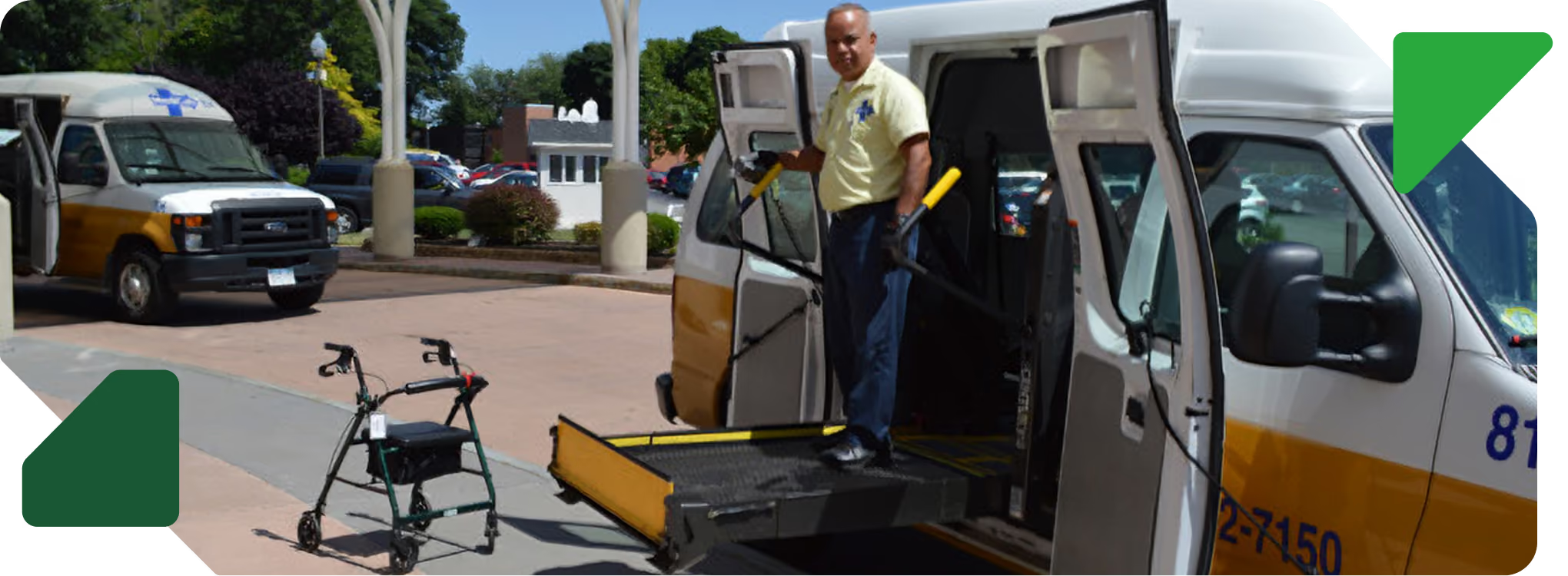
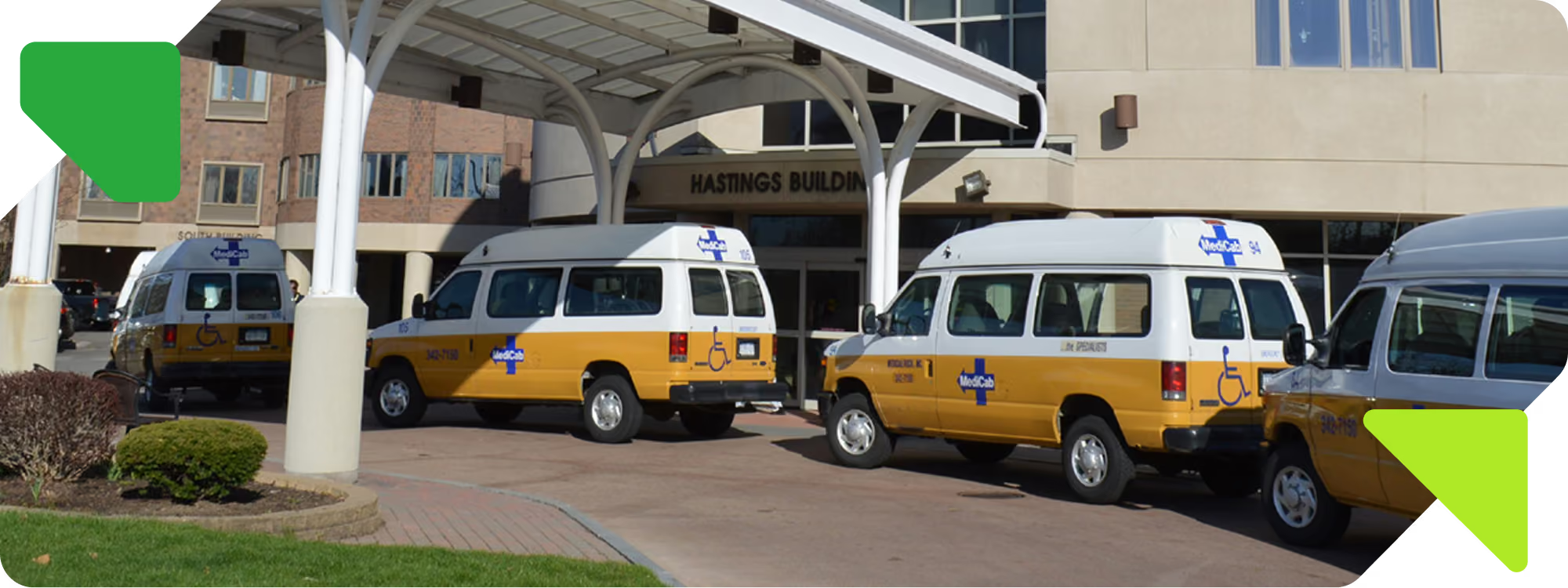
Medicab of Rochester is a non-emergency medical transportation (NEMT) provider based in Rochester, New York. Operating a fleet that is evenly split between wheelchair-accessible vans (ambulances) and sedans (used for taxi and delivery services), the company transports passengers to and from medical appointments across city streets and expressways throughout the region. Many of its drivers have been with the company for decades, including one with more than 40 years of service.
In an industry defined by thin margins, rising insurance costs, and the responsibility of transporting vulnerable passengers, Medicab has little room for preventable risk. Every incident carries financial consequences and the potential to disrupt essential transportation for the communities it serves.
Challenge
For Medicab of Rochester, the move to an AI-powered camera system began with an insurance letter. At the end of the year, the company's longtime carrier declined to renew its policy.
The stakes were significant. Insurance was already one of Medicab's largest operating expenses, totaling more than half a million dollars annually, and renewal was expected to increase costs by at least 15 percent. Director of Operations, Jim Ingalls, had concerns beyond cost. Many of Medicab's drivers had been with the company for decades, and in-cab cameras were unfamiliar territory. He wasn't sure how a long-tenured team would react to having cameras in their vehicles.
"I was strapped trying to find another insurance company, which is not easy here in New York State. The stipulation was that we needed a camera system installed in our vehicles."
- Jim Ingalls, Director of Operations
Solution
Ingalls evaluated the leading camera systems before selecting Netradyne. What stood out was the combination of responsive support, strong capabilities, and a price that fit a tight-margin operation.
Deployment was straightforward. Netradyne arranged a third-party installer, one already familiar to Ingalls because they had installed Medicab's earlier GPS tracking system, and cameras went into all vehicles in roughly three days. Bringing them in one at a time kept the fleet operational throughout the rollout.
Driver buy-in was equally important as the installation. Ingalls introduced the technology in phases, activating the road-facing cameras first before enabling the driver-facing cameras during one-on-one meetings with each driver. During those initial conversations, drivers were provided the transparency around what the system captured, how it worked, and why Medicab was implementing it. The goal was to replace uncertainty with trust from the very first conversation.
Those conversations quickly shifted from explaining the technology to using real driving data as a coaching tool.
Because Netradyne analyzes 100% of drive time, it immediately surfaced behavior patterns that had previously gone unnoticed. One stood out above all others: very few drivers were making complete stops at stop signs. Ingalls brought the finding to his drivers directly, then turned to other risky behaviors such as speeding and distracted driving. With real data in hand, every coaching session had clear direction.
Netradyne reinforced coaching conversations with automated self-coaching modules for drivers who logged repeated events. At the same time, the GreenZone® Score in the Driver-i App gave every driver a simple way to measure improvement across every mile driven, recognizing safe decisions alongside risky ones. Drivers also earned DriverStars for positive driving behaviors, such as creating additional following distance when another vehicle merged into their lane.
As drivers became more comfortable with the platform, coaching evolved into engagement. Drivers began checking their scores daily, comparing performance with their peers, and taking ownership of improving their driving. Habits that had gone unnoticed for years started correcting themselves.
"I had to take the boogeyman aspect out of it and get all the drivers on board, which actually went surprisingly well. I talked to them one at a time, and I think that's what really drove it home."
- Jim Ingalls, Director of Operations
Results
The impact was immediate. Within the first half of 2026, the behaviors identified during those early coaching conversations declined dramatically, while Medicab's fleet-wide GreenZone Score climbed well beyond the company's target and remained there.
Key results:
- 83% decrease in stop sign violations since April 2026
- 65% decrease in severe alerts since April 2026
- 58% decrease in distracted driving since April 2026
- Fleet-wide GreenZone Score averaging approximately 930, well above Medicab's target of 850 and up from initial scores in the 600s and 700s following deployment in early 2026
The operational benefits extended beyond safer driving.
Shortly after implementation, one Medicab driver was stopped at a red light when another vehicle rear-ended the cab just as the light turned green. Ingalls immediately shared the video footage with the other driver's insurance carrier, allowing the driver to be exonerated within a week. The vehicle was repaired and returned to service far sooner than the weeks-long disputes the company had experienced in the past. For a fleet where every parked vehicle represents lost revenue, getting vehicles back on the road quickly makes a meaningful difference.
Next Steps
Medicab is already looking at how AI can further reduce risk.
Ingalls hopes future capabilities will allow the platform to recognize when a wheelchair has not been properly secured and prompt drivers to check tie-downs before the vehicle begins moving. Improper wheelchair securement remains one of the largest liability risks in non-emergency medical transportation, and an in-cab reminder could provide valuable support for newer drivers while reinforcing best practices across the fleet.
That forward-looking potential was one of the reasons Medicab chose Netradyne.
"The prevention aspect of the whole camera system, to me, is actually very important. It's great that we can exonerate our drivers and our company, but preventing accidents in the first place is what matters most."
- Jim Ingalls, Director of Operations


¿Quiere proteger a los conductores y reducir costos?
Esa no es una pregunta engañada. Véanlo usted mismo con una demostración.