What Is Hydroplaning? A Guide for Commercial Drivers
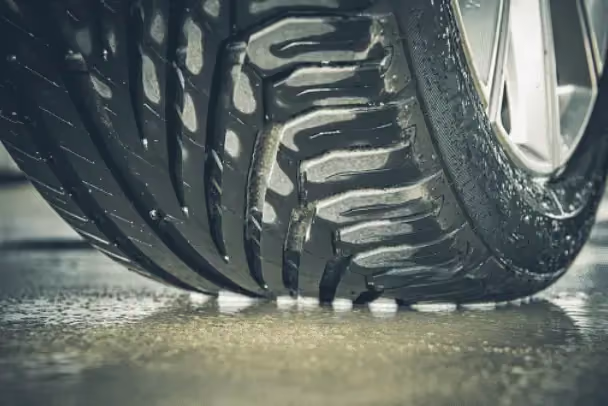
Driving on wet roads is one of the more dangerous parts of the job. It doesn't take much water to create a hazard. So what is hydroplaning? It's when a film of water slips between your tires and the road.
When that film builds up, your tires lose traction and the vehicle skims across the surface. You lose most of your steering and braking control. This guide covers the basics, how to stay safe, and how technology helps fleets manage wet-weather risk.
What is hydroplaning? (Hydroplaning meaning)
So what is hydroplaning, exactly? It's when a thin film of water gets between your tires and the road. Your tires lose grip, and the vehicle slides across the water instead of the pavement. It's sometimes called aquaplaning, and the two terms mean the same thing.
When it happens, the vehicle can feel like it's floating or veering on its own. You may sense a sudden loss of control. Because the wheels spin against water instead of gripping pavement, the engine revs often rise and the speedometer reads higher than your actual speed.
What causes hydroplaning?
Hydroplaning is caused by wet or even damp roads. It only takes a thin layer of water to break traction. The risk peaks in the first 10 minutes of light rain, when fresh rain mixes with road oils to create a slick film.
Speed is a major factor. The risk climbs sharply at around 35 mph or more, and puddles or standing water make it worse. Your tires' tread scatters water away from the road, but heavy water can overwhelm it and break the tires' grip.
Vehicle weight matters too. A fully loaded truck carries far more momentum than a car and needs a much longer distance to slow down safely. FMCSA's road safety campaign notes a large truck at 65 mph can take up to two football fields to stop. Wet pavement stretches that even further.
What to do if you start hydroplaning
You'll often feel it before you see it. The steering suddenly goes light and the back end may drift. Your engine revs climb, and the speedometer reads high as the wheels spin.
If this happens, don't overcorrect. Ease off the gas to let the vehicle slow gradually, and stay calm. Keep a firm grip on the wheel and avoid sudden steering or braking. In a prolonged skid, gently steer the way the vehicle is sliding to help the tires realign.
How to avoid hydroplaning
You can lower your risk with a few consistent habits:
- Drive slower in wet conditions. Reducing speed gives your tires more time to channel water and keep contact with the road.
- Disable cruise control on wet roads. Manual speed control lets you react faster if the tires start to slip.
- Watch the road surface. Look ahead for puddles and standing water, and choose center lanes where water is less likely to pool.
- Drive in the tracks of vehicles ahead. The vehicle in front helps displace water, leaving a clearer path for your tires.
- Maintain your tires. Worn tires can't channel water and hydroplane at lower speeds. Check tread and pressure often, and replace bald tires.
Stay safe with Netradyne
The most reliable way to avoid hydroplaning is to stay alert and drive carefully in wet conditions. Many fleets add technology as a second line of defense.
Netradyne's Driver•i platform runs video AI on a device inside the vehicle, reviewing driving as it happens instead of only saving triggered clips. When it spots risk, it delivers real-time in-cab audio coaching so drivers can self-correct in the moment.
The platform also watches for distraction and drowsiness, and it warns drivers when they follow too closely or a collision looks likely. It recognizes safe driving too, reinforcing the habits that keep drivers out of trouble.
Timely alerts change what drivers do. A peer-reviewed Purdue University study reviewed about 20,000 in-cab alerts to commercial trucks. It found 21% of trucks slowed by at least 5 mph within 30 seconds of a dangerous-slowdown warning.
The effect isn't limited to trucks. A randomized trial by the AAA Foundation tested weekly smartphone-based feedback for everyday drivers. It found speeding dropped 11–13% and hard braking dropped 16–21%.
Netradyne's own results point the same way. Based on customer data, fleets that raise their GreenZone score by 50 points see a 13–15% reduction in accidents per million miles.** Driver•i also reaches roughly 99% alert accuracy, validated across more than 25 billion miles of Netradyne driving data.*
To see how these pieces fit into a broader program, explore Netradyne's fleet safety solution.
*Individual results and conditions may vary. **Based on customer data.
Hydroplaning FAQs
At what speed does hydroplaning happen? Risk rises sharply at about 35 mph or more on wet roads, according to SafeMotorist. It can also occur at lower speeds with standing water or worn tires.
How do you know if you're hydroplaning? The steering feels suddenly light, the vehicle drifts even with the wheel held steady, and the engine revs climb with a falsely high speedometer reading.
Can hydroplaning happen when the road is only damp? Yes. A thin film of water is enough. Risk is highest in the first 10 minutes of light rain, when water mixes with road oils, SafeMotorist notes.
How do commercial fleets reduce wet-weather risk? Through defensive-driving training and habits, well-maintained tires, and in-cab alerting technology that helps drivers slow down and self-correct.
Staying safe on wet roads
Wet conditions call for extra caution behind the wheel. If you start to hydroplane, stay calm and follow a few simple steps rather than reacting suddenly. With lower speeds, good maintenance, and steady attention, hydroplaning is largely avoidable.
Driver and road safety is core to Netradyne's mission. If your fleet wants to build safer wet-weather habits, see how in-cab coaching and driver recognition can support your team.


Want to protect drivers & reduce costs?
That’s not a trick question. See for yourself with a demo.