How the KR Trans Fuels and its subsidiaries Turned Driver Safety into a Culture Across India's Most High-Stakes Fleets

KR Trans Fuels Pvt. Ltd
Company
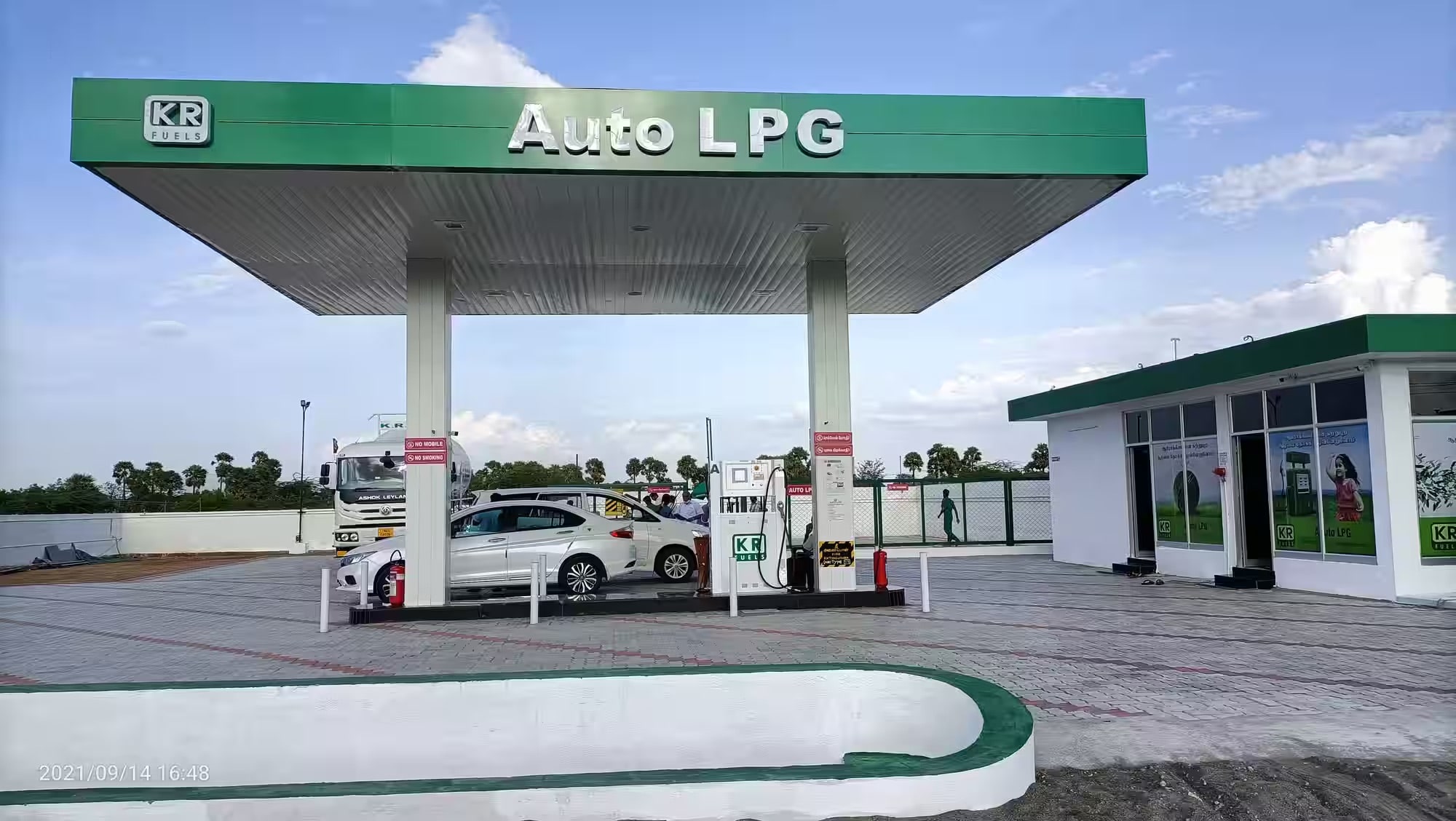
KR Trans Fuels Pvt. Ltd., KR Gases Pvt. Ltd., and KRT Carriers operate across three of India's most demanding transport environments — LPG fuel distribution, ammonia gas haulage, and intercity passenger transit. The three companies share common ownership and a unified commitment to safety. Their operations are vertically integrated: the group runs its own ammonia bottling and manufacturing facility and recently expanded into LPG conversion kit manufacturing through its subsidiary, K.R. Trans Energy, under the brand name VIBUH. Each entity serves a distinct purpose in solving India's transport and mobility challenges.
Challenge
For a fleet transporting ammonia, propylene, and LPG, the consequences of a road incident extend far beyond vehicle damage. An LPG leak can trigger a fire with effects that extend far beyond the immediate vicinity. An ammonia spill is acutely toxic and dangerous, with no margin for delayed response. For KRT Carriers, the responsibility is equally direct: every bus carries passengers whose safety depends entirely on the driver's alertness, trip after trip.
Leadership understood that safety policy alone is not enough. Human behaviour on the road is unpredictable. Even an experienced, disciplined driver can experience fatigue on a night haul or reach for a phone out of reflex. The companies had already deployed GPS tracking, mandatory rest protocols, and strict no-phone policies — but without real-time visibility, they could only respond to incidents after they occurred.
Manual monitoring created additional gaps. Without an objective, verifiable performance baseline, it was difficult to distinguish a consistently safe driver from one whose habits were quietly drifting. When incidents did occur, the absence of footage left the company exposed to third-party claims with no way to establish fault.
What leadership needed was a system that could deliver real-time in-cab feedback, generate bias-free performance data, surface risk before it became an incident — and, critically, be introduced to drivers as a tool that worked in their favour.
Solution
After evaluating multiple providers, the companies selected Netradyne's Driver•i® platform in January 2025. The rollout was deliberate: a small pilot, a structured review of driver concerns with the Netradyne team, and then a full fleet deployment. By June 2025, Driver•i® was installed across all vehicles in all three entities.
In-cab audio alerts gave drivers real-time feedback on speeding, following distance, distraction, and drowsiness — at the moment. The GreenZone® Score system evaluated each driver's complete day of driving, producing an objective, bias-free performance score reviewed monthly at the individual level and reported to senior management.
From day one, leadership was transparent with drivers about how the system worked. The scores were objective. Strong performance was rewarded through monthly financial incentives tied directly to Netadyne’s GreenZone® scores. The result was a fleet that engaged with the programme rather than resisted it.
“It monitors drivers very precisely and in a completely legitimate way. Everything is transparent. After we started using it, many incidents were reduced.”
— Suresh Kumar | MD & Owner, KR Trans Fuels, KR Gases & KRT Carriers
Results
Across all three entities, the six months following full deployment produced consistent, measurable improvements in driver performance with each operation reflecting the specific demands of its environment.
- 64% reduction in driver distraction events
- 65% reduction in drowsiness alerts
- High driver responsiveness to real-time in-cab alerts
- 2,660 DriverStars™ earned across the fleet
KR Gases: The Benchmark for In-Cab Compliance
KR Gases — which operates the highest-risk vehicles in the group, including ammonia tankers recorded the strongest in-cab compliance numbers of any entity. Every speeding alert resulted in an immediate corrective action: a 100% correction rate across its fleet. On following distance, drivers responded to 1.2-second alerts 96% of the time, with all vehicles maintaining a correction rate above 90% for the full measurement period.
KR Trans Fuels: Steepest Improvement Over Time
Operating the largest fleet in the group, KR Trans Fuels showed the most dramatic improvement trajectory across the period. Driver distraction, the fleet's most prevalent alert category dropped 64% in three months. Phone-use incidents that once ran at 20 to 30 per day fell to one or two. On following distance, 92% of 1.2-second alerts resulted in a corrective action.
KRT Carriers: Protecting Passengers in Complex Conditions
KRT Carriers operates in one of the most demanding driving environments of the three: urban and semi-urban intracity routes, with stop-start traffic, pedestrians, and unpredictable road conditions. Despite these challenges, drowsiness alerts saw a significant decline over the measurement period, with a 65% reduction from peak levels—highlighting improved driver alertness and responsiveness in high-pressure conditions.
Video Evidence: From Dispute to Resolution
When a two-wheeler collision resulted in a complaint against a KR Trans Fuels tanker and its driver, the safety team retrieved Driver-Initiated Recording footage and submitted it to the police. The footage clearly established that fault lay with the other vehicle, ensuring the driver was not wrongly held responsible.
The case was subsequently closed, with both the driver and the company cleared based on objective video evidence accepted by the authorities.
A Safety Culture Built on Recognition, Not Penalty
Across all three entities, 90 to 95 percent of drivers are now operating at a consistently high safety standard. The GreenZone® Score system — transparent, objective, and directly tied to monthly recognition has created a feedback loop that drivers engage with by choice. When scores dip, drivers ask why. When scores improve, recognition is visible to everyone.
“Around 90 to 95 percent of operations are running smoothly. The drivers understood our intention, rectified their mistakes, and have taken this system in a very positive way. The real credit goes to the drivers.”
— Saravana Kumar | Safety Coordinator, KR Trans Fuels


Wilt u chauffeurs beschermen en de kosten verlagen?
Dat is geen moeilijke vraag. Overtuig uzelf met een demo.