From Individual Detections to a More Complete View of Risk
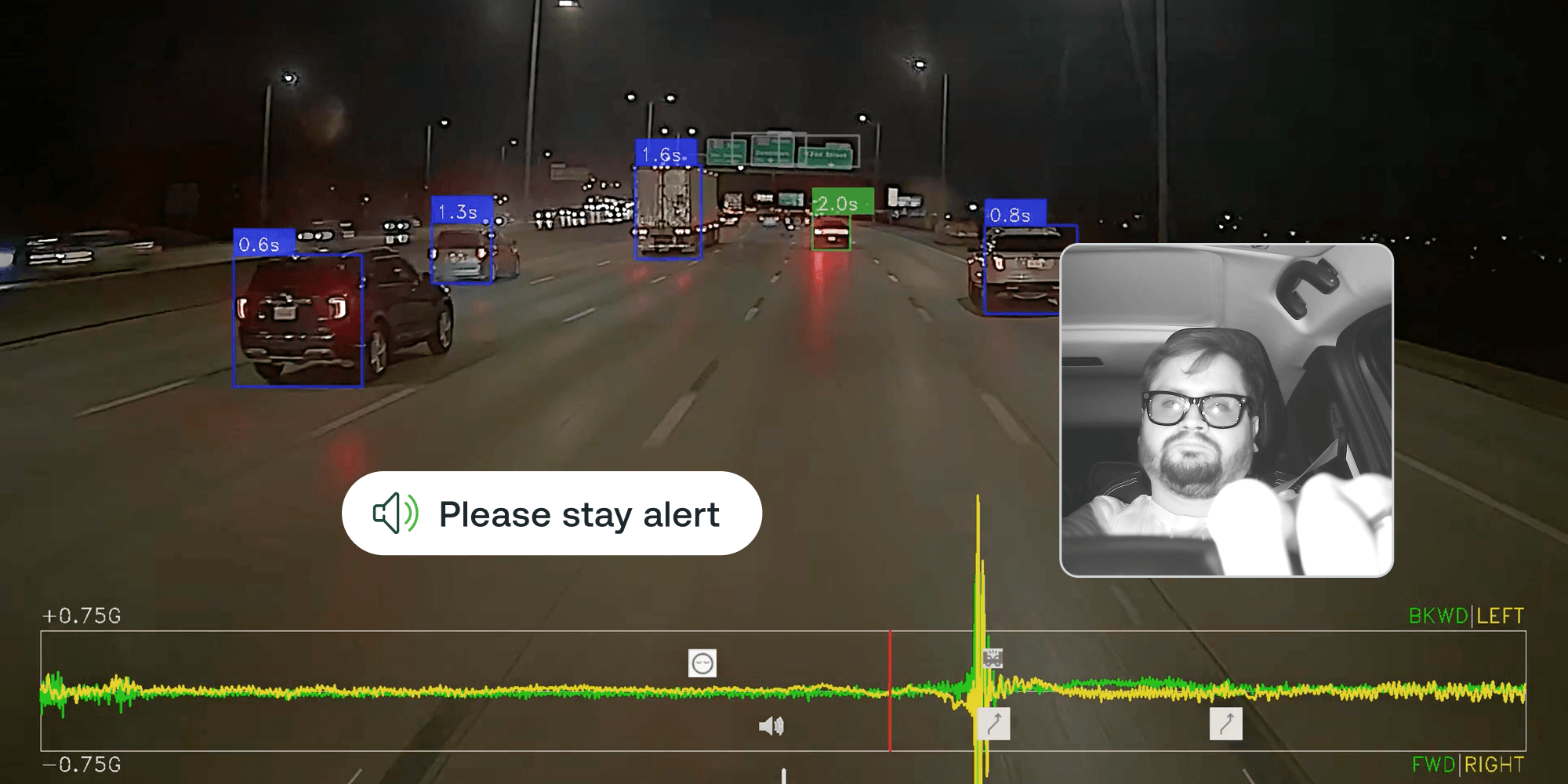
A distracted driver on an empty highway is one risk. A distracted driver approaching a pedestrian is another. Drowsiness on a clear afternoon calls for one response. The same signals late at night, on a route where conditions are worsening, call for a different one.
Fleet safety teams see detections every day. The greater opportunity is knowing how those signals connect, so managers can focus on the moments that carry the most risk. Netradyne Intelligence does that by combining driver behavior, vehicle data, road conditions, and the surrounding environment in real time at the edge.
Built on 30+ billion miles and 150 billion minutes of AI-vision analysis, it answers four questions together: What is the driver doing? What is the vehicle doing? What is happening on the road? What does that combination mean right now? The result is clearer priorities for safety teams and in-cab correction at the moment it matters.
Risk rarely comes from a single signal
Traditional safety systems often organize risk into individual events such as speeding, distraction, drowsiness, following distance or hard braking. Those detections are useful, but driving does not happen one event at a time. Risk develops through combinations. A driver looks away while following another vehicle too closely. Speed remains unchanged as rain reduces visibility. Signs of drowsiness develop during an overnight route. Each signal tells us something. Together, they can tell us much more.
That is the principle behind sensor fusion: combining independent observations to create a more complete understanding than any one signal can provide on its own. For fleet safety, it means moving from detection and reporting to prevention in the moment.
Start with what is happening inside the vehicle
The driver is one of the most important sources of real-time safety context. Netradyne interprets behaviors and conditions such as distraction, following behavior and signs of drowsiness throughout the drive.
That understanding is not limited to identifying risk. Netradyne has recognized more than 210 million moments of positive driving through DriverStars, helping fleets see when drivers are making the right decisions as well as when intervention may be needed.
With Driver Drowsiness Detection, that understanding can go deeper for fleets with greater fatigue exposure. Camera-based detection identifies visible drowsiness cues and alerts drivers in real time. Advanced Driver Drowsiness Detection adds the dedicated Fatigue Sensor, which directly measures eye-based signals including changes in blink behavior, eye closure and microsleep. It also adds haptic seat vibration to reinforce audio alerts with a physical cue the driver can feel. Purpose-built infrared sensing supports low-light driving, prescription glasses and supported non-polarized sunglasses.
But knowing what is happening inside the cab is only one part of the equation. The next question is what is happening around that driver at the same time.
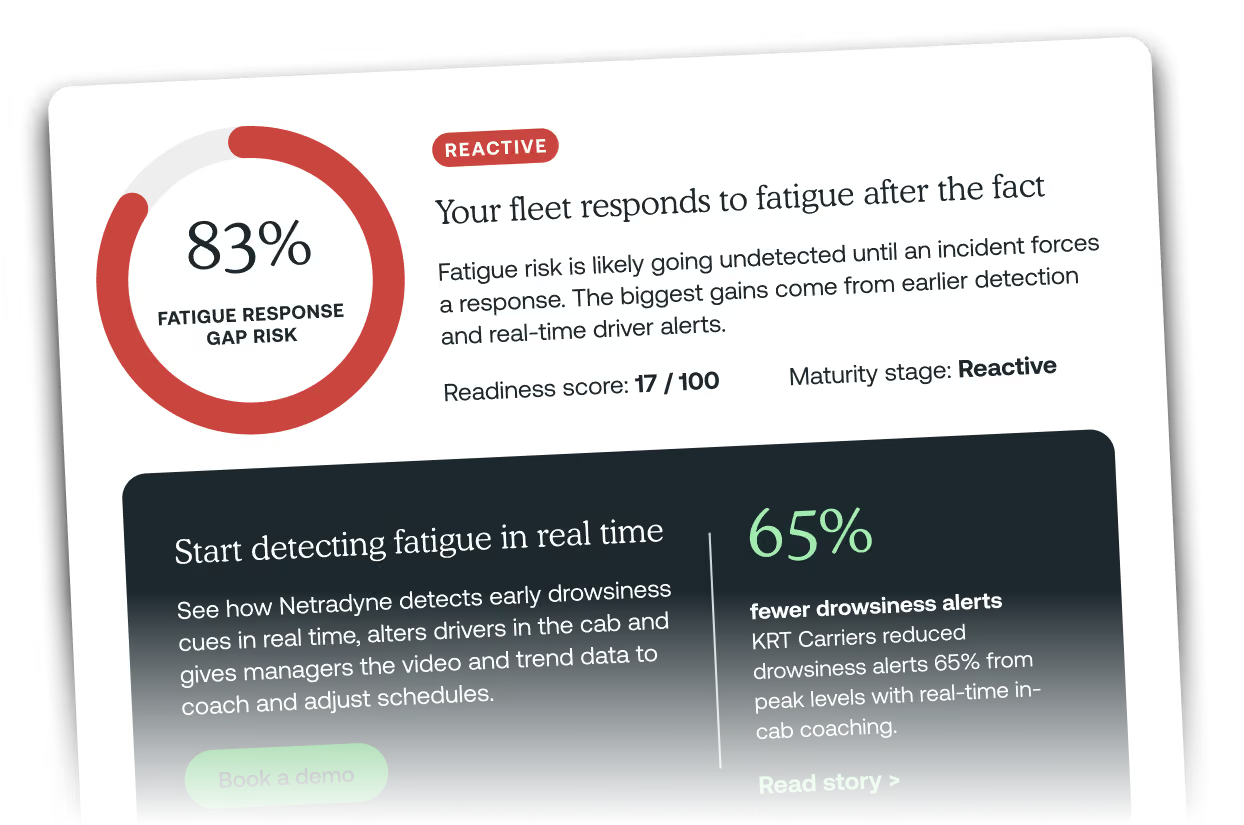
How ready is your fleet to respond to fatigued drivers?

Understand what is happening outside
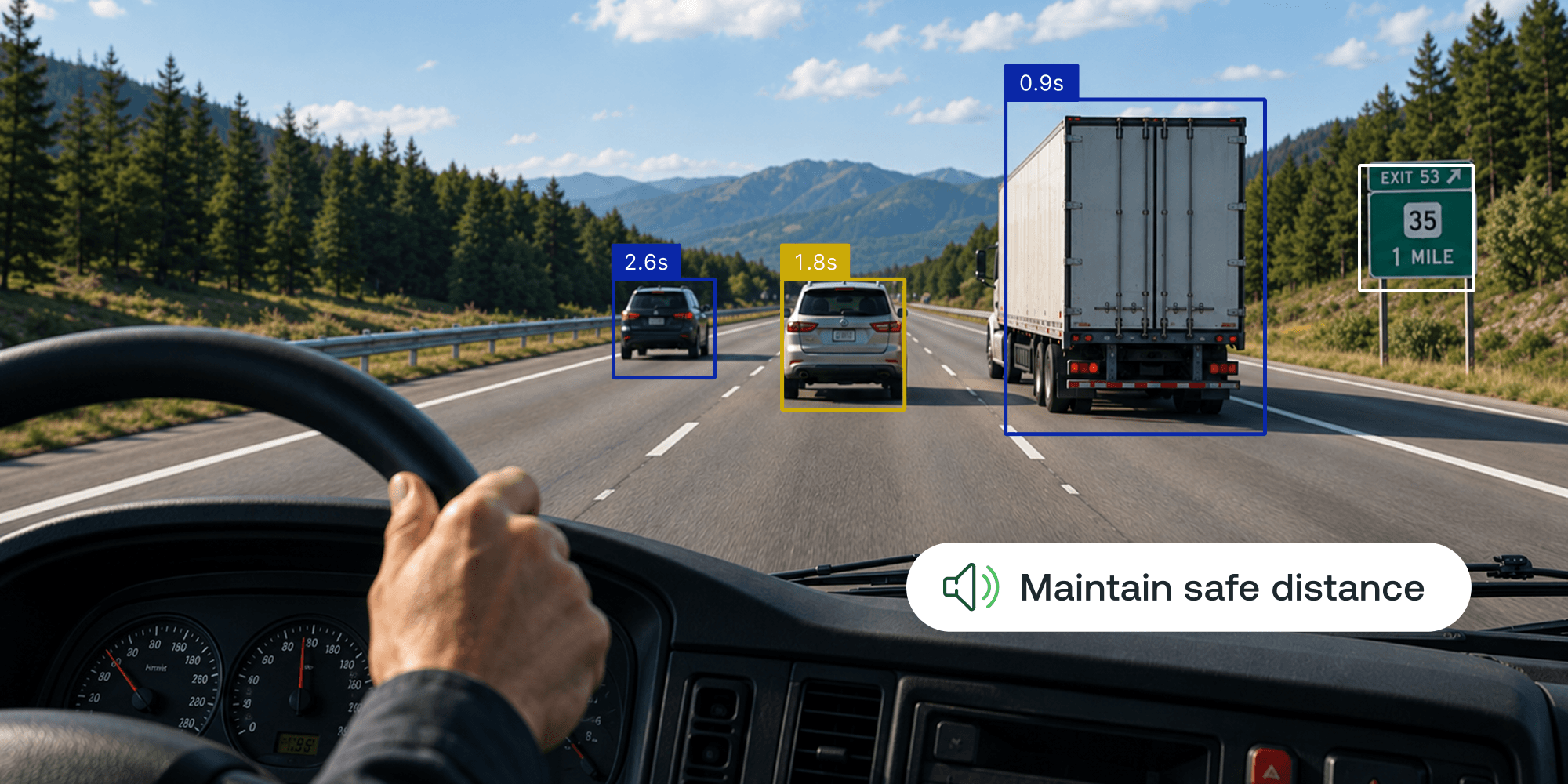
Every drive produces a stream of information about the physical environment. Netradyne’s edge intelligence can interpret road signs, traffic signals, lane markings, vehicles, pedestrians and cyclists, along with conditions such as rain, snow and fog. Processing this information at the edge, in the vehicle makes it possible to respond while the driving is happening, not only after the fact.
Location specific information adds another layer. Through the geospatial capabilities of Netradyne Intelligence, observations can be associated with where and when they occurred. A single hard-braking event may reflect a driver response. Repeated hard braking from many vehicles at the same intersection may indicate something about the location itself. We map the physical world so that individual edge observations become collective intelligence across location and time.
Add what the vehicle is telling us
Vehicle Data Service adds another layer of real-time context by showing what the vehicle itself is doing. Signals such as speed, RPM, throttle, braking, turn indicators, ABS, cruise control, gear position, seat belt status, vehicle stability and distance to the vehicle ahead help explain how a situation is unfolding.

A hard brake by itself tells you what happened. Combined with following distance, driver attention, vehicle speed and road conditions, it begins to explain why the risk was developing in the first place. By bringing vehicle data together with driver behavior and environmental context, Netradyne can build a more complete picture of risk in the moment.
Sensor fusion makes context actionable
The purpose of combining signals is not to create more alerts. It is to create better ones. Netradyne Edge Intelligence has already powered more than 495 million in-cab coaching events, turning perception into feedback while drivers can still respond.
Netradyne already applies this principle in advanced and compound detections. Detecting a pedestrian near the vehicle is useful. Detecting driver distraction is useful. When those risks occur together, the combination can indicate greater immediate risk and support earlier intervention. Following distance means something different when paired with distraction. Speed means something different when the road is wet.
This is why context matters. A system capable of evaluating multiple signals together can begin to distinguish between something that happened and something that requires action now. The goal is not simply to explain the last incident, but to create more opportunities to prevent the next one.
Geospatial intelligence adds another dimension
The same shift from isolated signal to context is happening outside the vehicle. Active Weather powered by Netradyne Intelligence connects weather information with vehicle location, route exposure and road-level observations. The question moves from Is there a storm? to Which vehicles are affected, what conditions are they encountering, and where might action be needed?
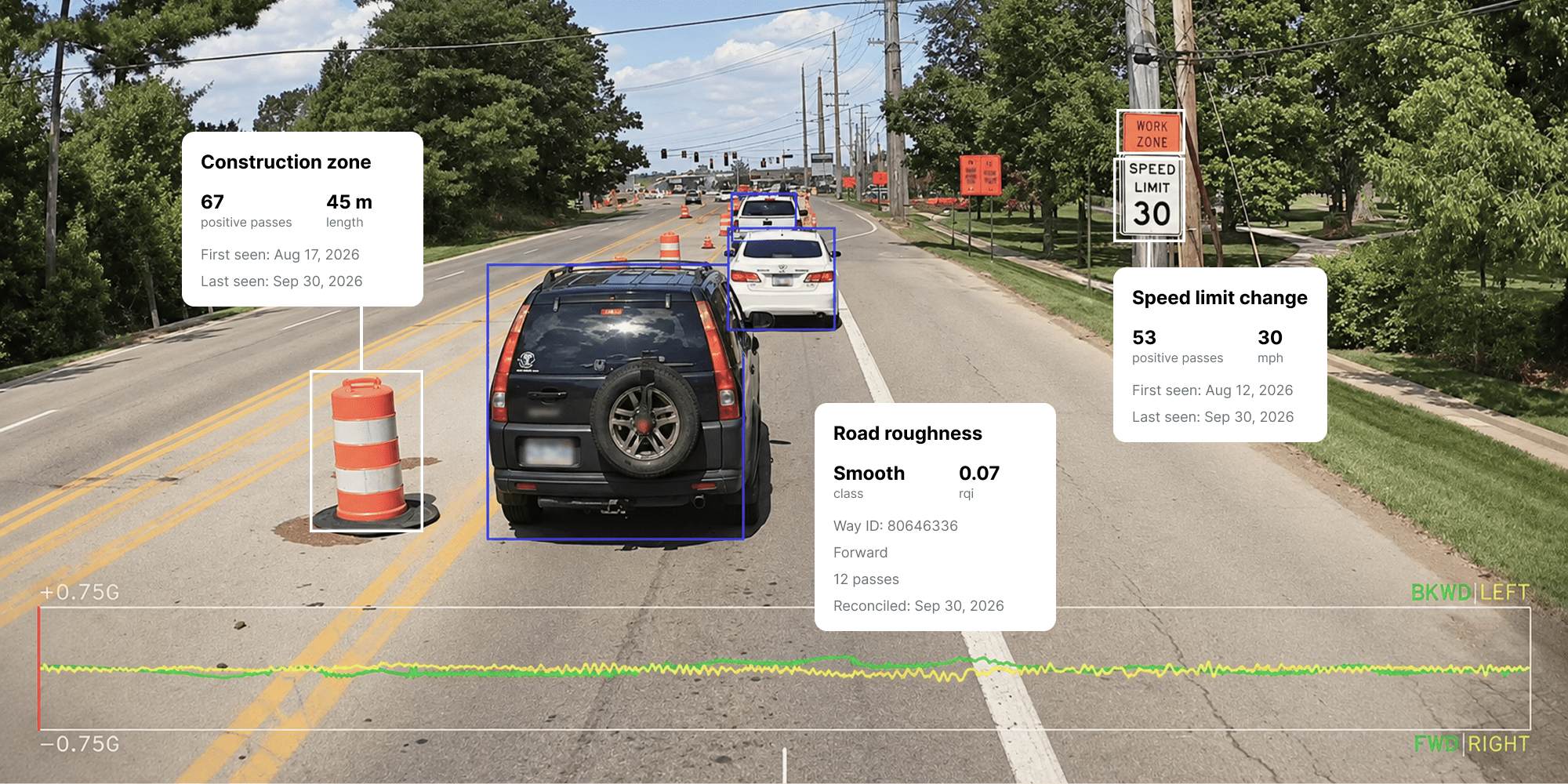
Geospatial intelligence extends that idea further. If vehicles repeatedly encounter hard braking at the same intersection, deteriorating road conditions along the same corridor or temporary construction at the same location, those observations can become part of a broader understanding of risk. One vehicle perceives an event. Across vehicles, locations and time, the system can begin to understand a pattern.
From individual detections to a dynamic risk profile
Fleet risk spans four connected domains: the driver, the road and environment, the vehicle, and the trip or route. Each is useful independently. The real technical opportunity comes from connecting them.
Risk should not be treated as static because driving conditions are not static. Edge intelligence interprets signals where the driving is happening. Geospatial intelligence adds knowledge across location and time. Vehicle data adds operating context. Fleet-scale intelligence helps identify patterns that one vehicle or one event cannot reveal alone. Together, those layers move fleet safety toward something more valuable than event detection alone: fuller scene understanding.
The prevention window is the point
There will always be value in knowing what happened after an incident. But the more consequential opportunity is understanding risk before the outcome is decided. That requires technology capable of seeing more than one signal, understanding how those signals interact and acting while the driver can still do something about it.
It is why Netradyne analyzes the driving environment at the edge. It is why we are expanding dedicated sensing inside the cab. And it is why vehicle data, road observations and geospatial context increasingly belong in the same intelligence architecture.
The future of fleet safety is not another isolated detection. It is understanding the driver, vehicle and physical world together, then turning that understanding into the right intervention at the right moment. That is the foundation of Netradyne Intelligence, and it is how fleet technology moves from documenting risk to helping prevent what happens next.
To learn more about Netradyne Intelligence and how we help leading fleets reduce incidents, reach out to our team. →

Viltu vernda ökumenn og draga úr kostnaði?
Þetta er engin gildra. Sjáðu það með eigin augum með kynningu.
How ready is your fleet to respond to fatigued drivers?