The Riskiest 10 Minutes on American Roads

You might think the most dangerous time for fleets is rush hour. The roads are packed with drivers, either racing to get to work on time or heading home after a stressful day.
Or you might think it’s in the middle of the night, when drivers may be exhausted or otherwise unsafe to be on the roads.
But you’d be wrong.
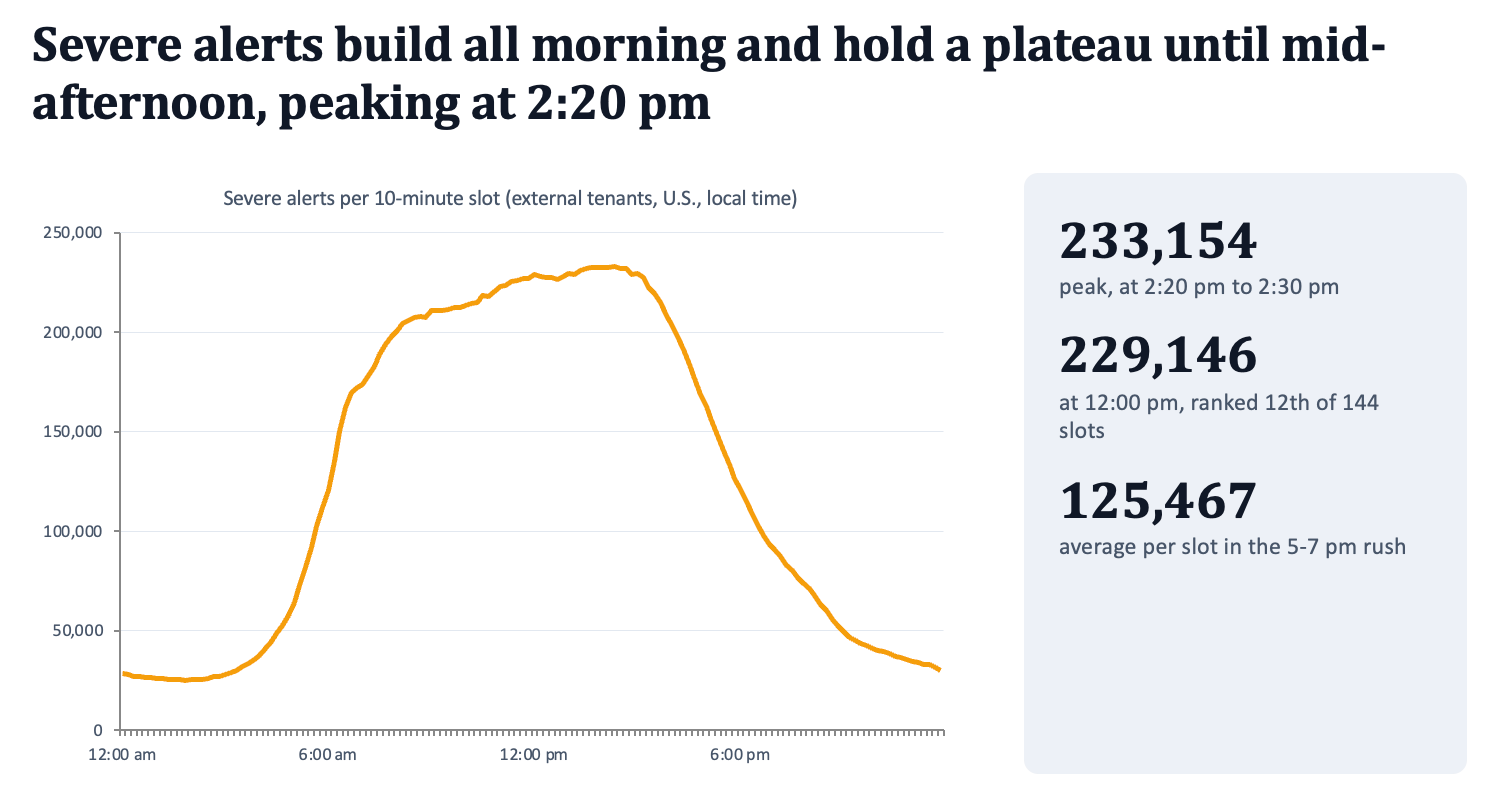
According to data from Netradyne, the highest volume of Severe driving alerts among monitored U.S. fleets occurs between 2:20-2:30 p.m., local time.
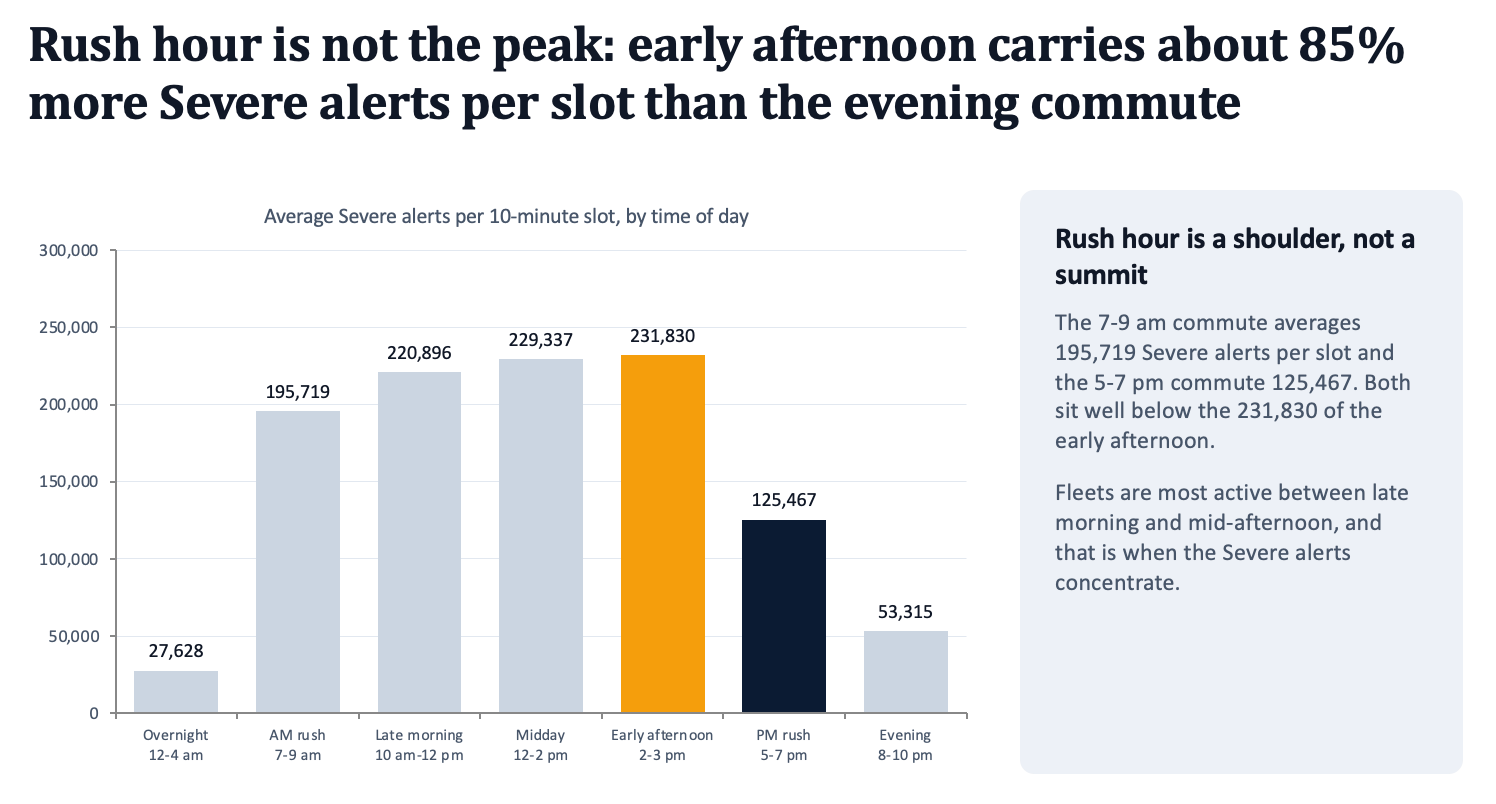
In fact, alerts remain elevated throughout the middle of the day and into the afternoon—a sustained period of elevated alert activity that doesn’t align with either the morning or evening commute.
What is the data showing us?
Netradyne analyzed 18.3 million Severe on-road alerts from monitored U.S. fleets, dividing each day into 144 ten-minute windows based on local time. They tracked twelve risky on-road behaviors in monitored fleet vehicles (not all U.S. drivers, and not crashes) including speeding, following distance, traffic light adherence and drowsiness.
That single 2:20-2:30 p.m. slot produced more Severe alerts (233,154) than any of the day's other 143 ten-minute windows. And the entire time window from 11:40 a.m. to 3:20 p.m. sits within 3% of that peak.
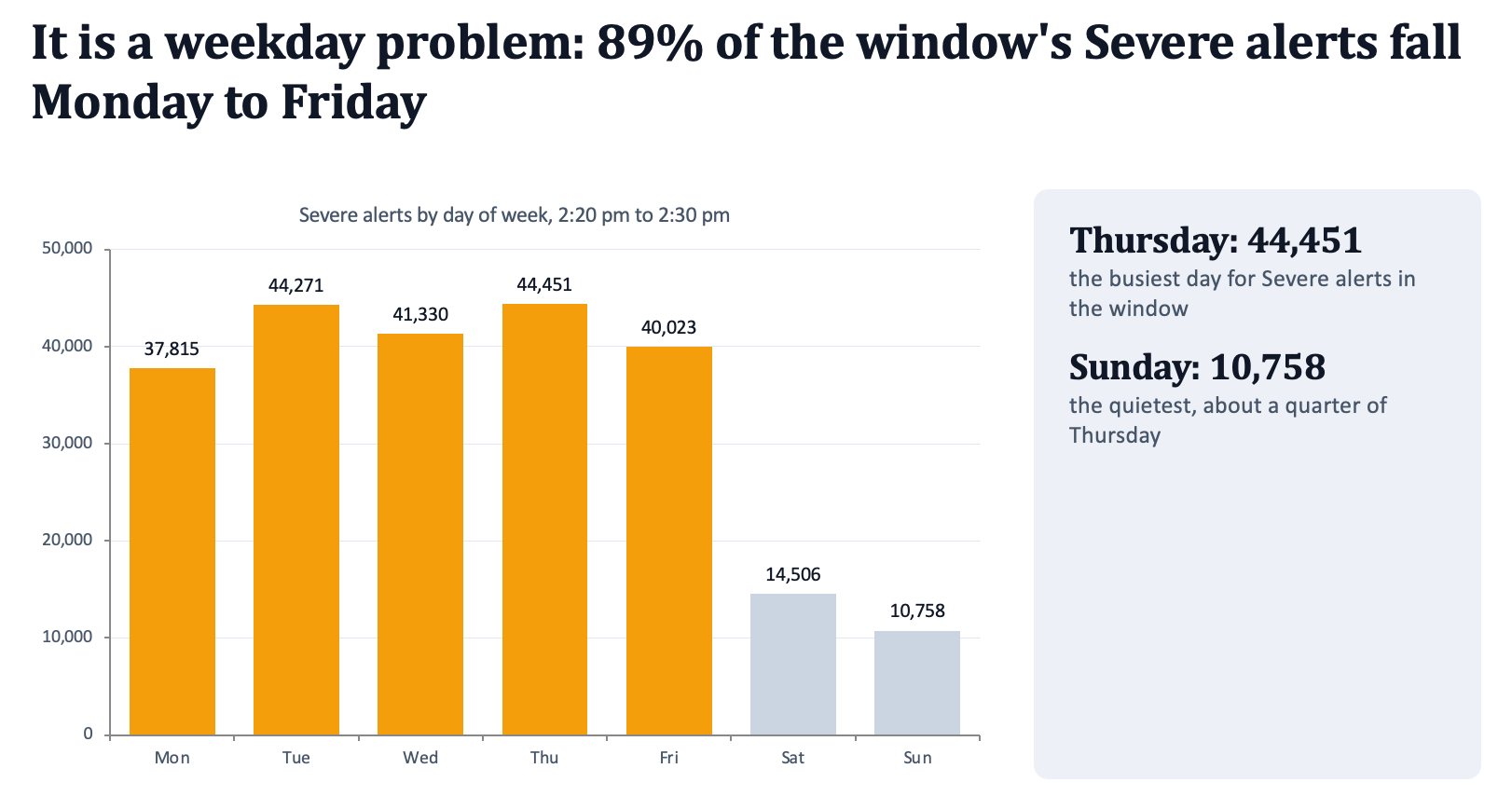
The pattern is particularly pronounced during the workweek, which reflects the demands of commercial fleet operations. Nearly 90% of Severe alerts in the peak window occurred Monday through Friday. Thursday recorded the most, with 44,451 alerts and Sunday had the fewest, at just 10,758—roughly one-quarter of Thursday's total.
What’s happening in the middle of the day?
There are several phenomena at play that may explain why severe driving alerts may be concentrated during midday.
By midday, fleets are fully deployed. Traffic is flowing fast enough for speed and following distance to have a real impact. And drivers have been on the road for hours, navigating traffic and keeping up with demanding schedules. They may be grabbing a quick bite, checking their phones, or rushing to make their next delivery.
These are familiar, everyday pressures that can make it harder for anyone to stay focused behind the wheel. And they present a significant opportunity for fleets to give drivers additional support when they need it most.
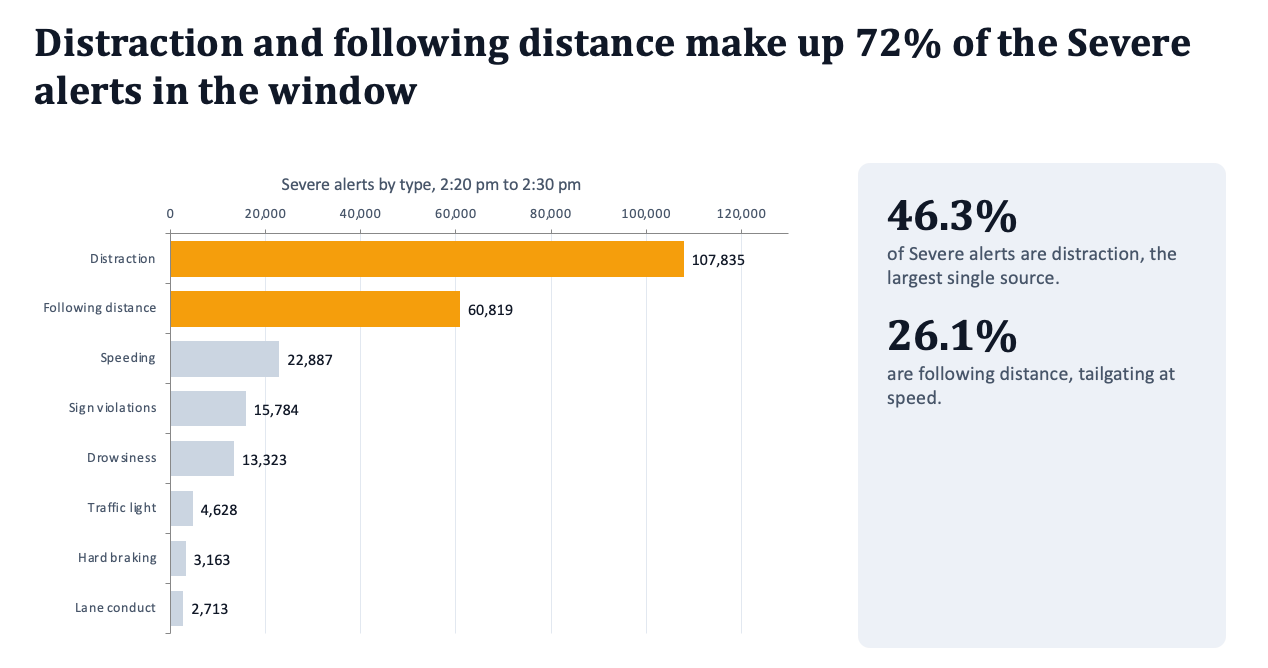
Distraction accounts for nearly half (46.3%) of all Severe alerts in the 2:20–2:30 p.m. window, with 107,835 alerts. Following distance is the second-largest contributor, accounting for 26.1% (60,819 alerts), while speeding adds another 22,887 Severe alerts.
What can fleets do?
These figures provide valuable insights for fleet managers—the primary one being that midday deserves the attention usually saved for rush hour.
There are several practical steps fleets can take:
- Focus coaching on midday risks. Target coaching and in-cab alerts toward the 11:40 a.m. to 3:20 p.m. stretch, paying particular attention to distraction and following distance.
- Recognize safe driving. Identify drivers who consistently demonstrate safe behaviors during midday hours when alert volumes are highest and reinforce those habits through recognition and positive feedback.
- Look for patterns within your own fleet. Analyze driving data by time of day to identify when and where risky behaviors occur, then adjust safety programs accordingly.
Ultimately, the findings suggest fleets should examine when they focus their safety efforts, not just which behaviors they target. While these findings reflect total alert volume, further analysis of risk per mile or driving hour could help determine whether these patterns hold after accounting for differences in driving activity throughout the day.
Methodology
Netradyne divided each day into 144 ten-minute slots based on local time, analyzing alerts from Netradyne devices on U.S. roads between November 1, 2025 and September 15, 2026, with most data from May–September 2026. The analysis includes eligible customers across both North American data clusters and customer-visible alerts. They ranked twelve on-road behaviors by severity, excluding positive Driver Star recognition and off-road maneuvers such as backing.


Vous voulez protéger les conducteurs et réduire les coûts ?
Ce n'est pas une question trompeuse. Voyez par vous-même avec une démo.