Alex Cameron | Sr. Product Marketing Manager
Hoe Full-Context AI de Veiligheidsresultaten van Wagenparken Verandert
Wagenparkleiders bevinden zich vandaag de dag meestal in een van drie situaties.
Sommige commerciële wagenparken hebben camera's geïnstalleerd, maar besteden uren aan het sorteren van ruis en het doorzoeken van clips om te begrijpen wat er werkelijk is gebeurd. Andere evalueren nog steeds of videoveiligheid daadwerkelijk risico's zal verminderen zonder weerstand van chauffeurs en operationele vertraging te veroorzaken. En sommigen gebruiken Netradyne, zien resultaten, maar willen begrijpen wat er onder de motorkap gebeurt.
Voor wagenparken die al een programma draaien, zijn de vragen geëvolueerd:
- Waarom duurt beoordeling nog steeds zo lang?
- Waarom coachen we zoveel, maar zien we geen gedragsverandering? Waarom voelt het nog steeds reactief aan in plaats van preventief?
- Waarom voelt het nog steeds reactief aan in plaats van preventief?
Voor wagenparken die nog steeds evalueren, zijn de vragen:
- Zal dit daadwerkelijk incidenten voorkomen, of alleen documenteren?
- Zullen chauffeurs het vertrouwen, of wordt het weer een punitief systeem?
- Als er iets gebeurt, kunnen we snel genoeg bewijzen wat er is voorgevallen om er toe te doen?
AI is verschoven van buzzword naar basislijn in wagenparkbeveiliging. De meeste leveranciers kunnen veelvoorkomende gebeurtenissen zoals afleiding, bumperkleven, te hard rijden en rollende stops detecteren. Die detectie is belangrijk en kan helpen bij vrijpleiting en claims.
Maar echte veiligheidsresultaten komen neer op iets basalers: hoe vaak het systeem gelijk heeft in de echte wereld waar scènes rommelig zijn, randgevallen constant voorkomen, en kleine contextuele aanwijzingen bepalen of iets gecoacht, genegeerd of erkend moet worden als goed rijden.
Twee dingen maken het verschil: waar de intelligentie draait (snelheid van informatie) en wat het evalueert (vertrouwen).
Wanneer intelligentie op het apparaat draait, krijgen chauffeurs feedback op het moment zelf, niet uren of dagen later na het downloaden en beoordelen. En wanneer het systeem de volledige scène evalueert, niet alleen een enkele trigger, kan het een echte overtreding scheiden van een situatie die er alleen maar uitziet als één.
Die combinatie is wat de resultaten van Netradyne aandrijft: minder valse alarmen, minder tijd verspild aan sortering, positieve prestatiecoaching die chauffeurs waarderen, en een programma dat risico voorkomt in plaats van het alleen vast te leggen.
Waarom volledige context meer alarmen verslaat
Rijscènes zien er vaak simpel uit totdat ze dat niet zijn. Een stopbord is niet altijd voor de rijstrook van de chauffeur. Een regel of beperking geldt niet altijd voor elke voertuigklasse. Een rood-licht-moment is niet altijd een grote overtreding.
Wanneer een systeem die details mist, betalen wagenparken de prijs op drie manieren:
- Het vertrouwen van chauffeurs daalt wanneer alarmen oneerlijk of verkeerd aanvoelen in context
- Managers besteden meer tijd aan beoordeling om te bepalen wat er werkelijk gebeurde en welke actie te ondernemen
- Coaching wordt minder consistent omdat het systeem niet betrouwbaar onderscheid maakt tussen ernst en uitzonderingen
Het praktische doel is niet minder detecties. Het doel is betere detecties: consistent, en gebaseerd op scènedetails zodat alarmen en coaching overeenkomen met wat er werkelijk gebeurde.
Hoe Netradyne anders gebouwd is
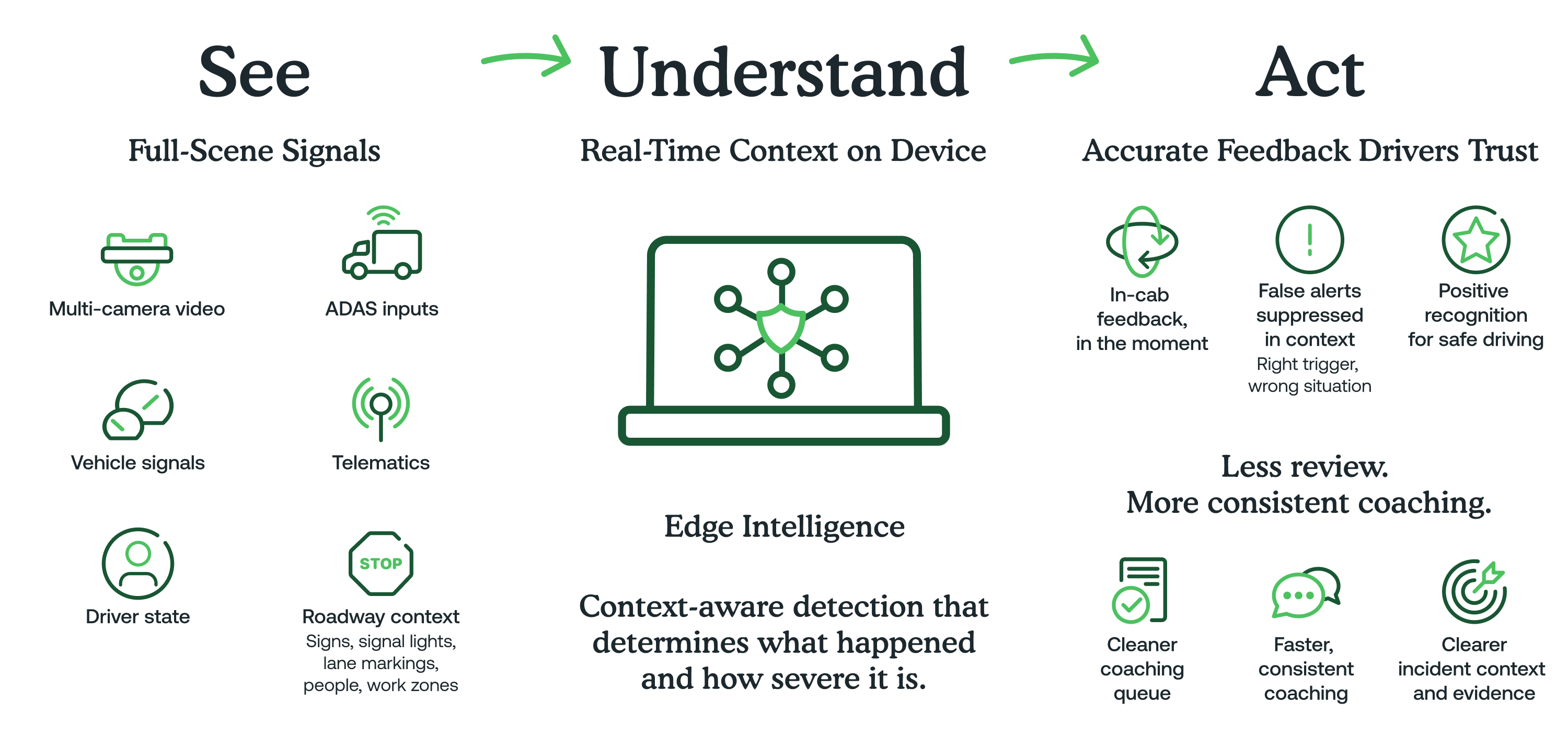
Netradyne voedt het Driver•i apparaat en het Intelligent Driver Monitoring System (IDMS) aan met Netradyne Edge Intelligence ontworpen voor real-time interpretatie van rijscènes.
Op hoog niveau doet Netradyne's Edge Intelligence drie dingen:
- Zie de volledige scène met hoge betrouwbaarheid
Het systeem kan wegcontext detecteren en interpreteren, inclusief borden, verkeerslichten, rijstrookmarkeringen, mensen, en zelfs tijdelijke of constructieborden. Het combineert dat met voertuigsignalen en chauffeurtoestand om een completer beeld te bouwen van wat er gebeurt. - Interpreteer context en ernst direct—aan de rand
Gebeurtenissen die identiek lijken in een log of alarmstroom zijn zelden identiek in de echte wereld. Netradyne's edge-gebaseerde AI evalueert context zoals het gebeurt; wie rijdt, voertuigdynamica, verkeerscondities, en omgevingsfactoren - zodat het systeem in real-time bepaalt of een gebeurtenis onmiddellijke interventie, een coachbaar moment, of geen actie vereist. Beslissingen worden genomen op het voertuig, niet minuten of uren later in de cloud, wat snellere, meer gepaste reacties mogelijk maakt die risico voorkomen voordat het escaleert. - Versterk veilig rijden, niet alleen risicovolle momenten
Netradyne markeert niet alleen risico. Het identificeert ook positief rijgedrag en patronen die coachingprogramma's ondersteunen die gebouwd zijn op vertrouwen. GreenZone Score meet algehele prestatie met zowel veilig als risicovol gedrag, en DriverStars bieden positieve erkenning om te versterken wat chauffeurs goed doen; op het moment en over tijd.
Real-world voorbeelden waar detail de uitkomst verandert
Deze scenario's zijn gewoon, en ze zijn precies waar nauwkeurigheid en context zich in de praktijk tonen:
- Stopborden met dubbelzinnige plaatsing
Stopborden zijn niet altijd netjes gepositioneerd voor een enkele rijstrook. Netradyne onderscheidt of een bord van toepassing is op de rijstrook van de chauffeur versus aangrenzend verkeer, waarbij het coachen van chauffeurs voor het verkeerde bord wordt vermeden. - Stopbord uitzonderingen in gecontroleerde situaties
Overweeg een kruispunt met vier stopborden waar een agent het verkeer regelt en een chauffeur doorwuift. Een basisaanpak detecteert het stopbord, monitort snelheid, en markeert een rollende stop als snelheid nooit onder een drempel daalt. In dat scenario volgt een chauffeur wettige aanwijzingen en wordt nog steeds gemarkeerd. Netradyne herkent gecontroleerde-verkeer context en onderdrukt het valse alarm, waardoor de coachingstroom uitgelijnd blijft met wat er werkelijk gebeurde en het vertrouwen van chauffeurs beschermt. - Beperkingen die gelden voor sommige voertuigen, niet anderen
Sommige beperkingen zijn voorwaardelijk. Bijvoorbeeld, een "Geen U-bocht" bord met een "Geen Vrachtwagens" plaatje is bedoeld voor vrachtwagens, niet personenauto's. Netradyne interpreteert die toepasbaarheid zodat een legale personenauto U-bocht niet wordt gemarkeerd waar de beperking bedoeld is voor vrachtwagens. - Grote versus kleine rood-licht gebeurtenissen
Niet elke rood-licht gebeurtenis is gelijk. Netradyne evalueert signaaltiming en voertuigpositie in real-time om grote, bekeuring-waardige overtredingen te scheiden van kleine, coachbare momenten. Dit vereist lage-latentie edge processing om te interpreteren wat veranderde en wanneer, niet alleen de aanwezigheid van een rood-licht trigger.
Wat dit betekent voor wagenparkprogramma's
Voor wagenparken vertalen deze details zich in operationele resultaten die ertoe doen:
- Hoger chauffeurvertrouwen omdat alarmen overeenkomen met real-world situaties en niet "technisch getriggerd, praktisch verkeerd" zijn
- Meer consistente coaching omdat ernst en uitzonderingen met grotere nauwkeurigheid worden behandeld
- Minder beoordelingslast omdat managers minder tijd besteden aan het valideren van context en meer tijd aan coaching
De data ondersteunt dit: wagenparken die GreenZone Score met 50 punten verbeteren zien 13–15% minder ongelukken per miljoen mijlen.*
Wat dit betekent voor het bedrijf
Voor chauffeurs: duidelijkere, eerlijkere feedback die zelfcorrectie ondersteunt en frustratie vermindert door onjuiste of lage-waarde alarmen, plus erkenning van positief gedrag, niet alleen overtredingen.
Voor veiligheidsleiders: hoger-vertrouwen coaching gebouwd op nauwkeurige context, en programma's die schalen omdat chauffeurs het systeem vertrouwen en managers niet begraven zijn in beoordeling.
Voor operatieleiders: betere helderheid over wat er gebeurde in complexe real-world scenario's die service en risico beïnvloeden, en snellere interne afstemming wanneer vragen opkomen.
Voor risico- en verzekeringsteams: sterkere incidentdocumentatie met duidelijkere context, en groter vertrouwen dat veiligheidsinterventies gebaseerd zijn op nauwkeurige, consistente detectie.
Het Netradyne verschil
Wagenparkveiligheid verbetert niet omdat een systeem meer dingen detecteert. Het verbetert wanneer het systeem de juiste dingen detecteert, in de echte wereld, met de context die bepaalt wat gecoacht moet worden en hoe ernstig het is.
Dat is wat Netradyne levert: Edge Intelligence die de volledige rijscène begrijpt, valse alarmen onderdrukt in context, en veilig rijden versterkt zodat wagenparken chauffeurvertrouwen verdienen en vermijdbare incidenten verminderen.
Klaar om het verschil te zien dat context-bewuste detectie maakt? Book Demo
* Individuele resultaten en omstandigheden kunnen variëren. Gebaseerd op klantdata.


Wilt u chauffeurs beschermen en de kosten verlagen?
Dat is geen moeilijke vraag. Overtuig uzelf met een demo.