The missing link between fuel data and driver performance
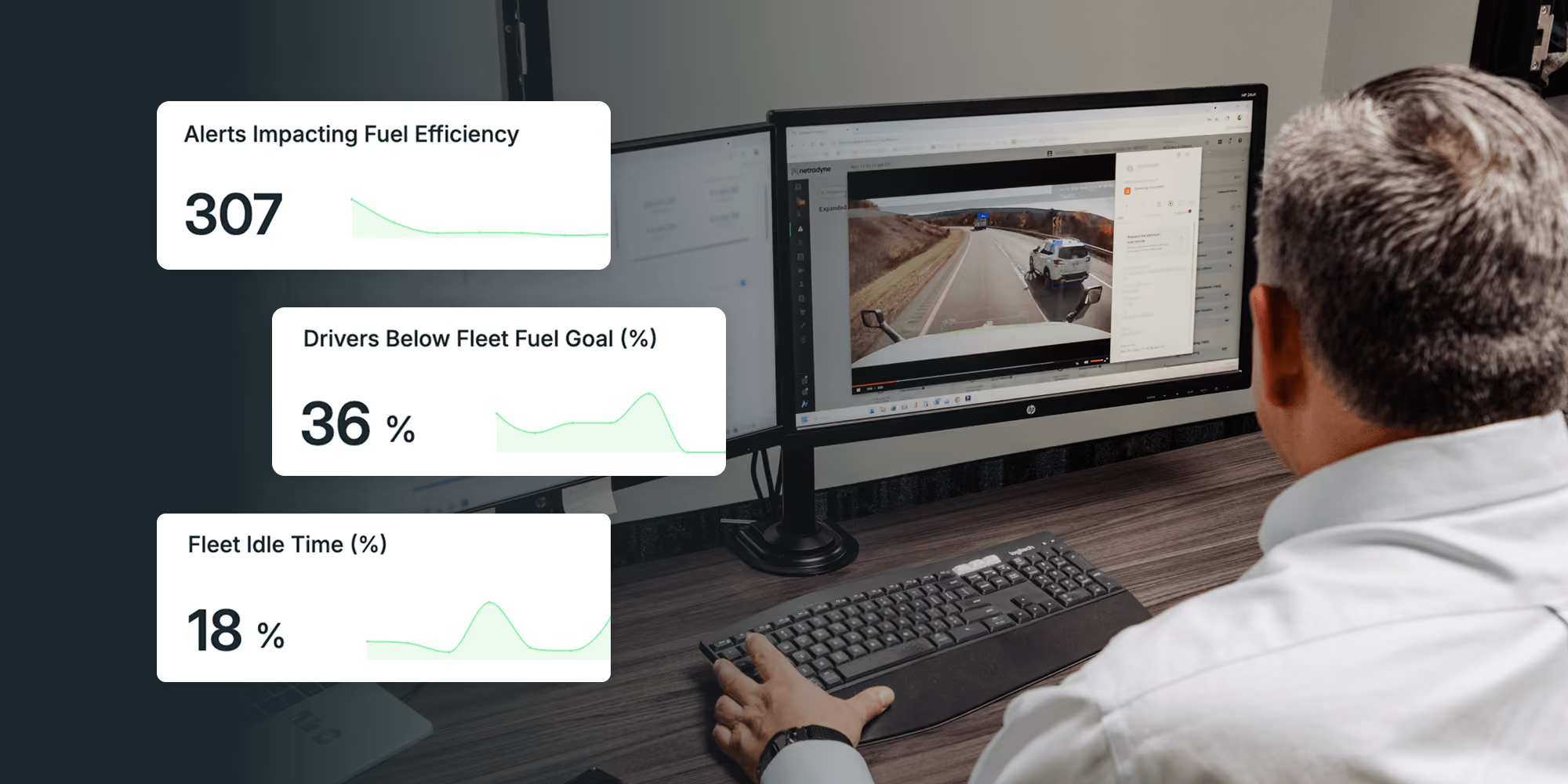
Most fleets track fuel use at the vehicle level. While it's typically the second largest operational expense, raw fuel use data alone doesn’t show managers how to translate those numbers into actionable insights, or how to connect them to driver behaviors that affect fuel use, which limits how useful they are for actually improving fuel efficiency. And those inefficiencies are more than just a line on a budget report — behind every hard stop is a driver whose habits, wellbeing, and development a fleet manager is responsible for.
Driver behavior can impact fuel efficiency by up to 15%. Other studies show smoother driving habits can boost highway fuel economy by 15-30% and improve stop-and-go efficiency by up to 40%. Fleet owners can now get visibility into which drivers and specific habits are driving up fuel use, and, just as importantly, how to convert those insights into improvements.
The fleets seeing the biggest gains are those finding ways to connect fuel data directly to the habits behind the wheel and using fuel efficiency insights to drive cost savings.
Why driver behavior is the untapped lever
Fuel efficiency depends on various factors, including vehicle type, load, terrain, weather, and traffic. But the factor fleet leaders can influence the most is driver behavior.
Consider four common habits that impact MPG:
- Hard braking: Every sudden stop wastes momentum, requiring more fuel to get back up to speed.
- Hard acceleration: Rapid acceleration from full stops consumes more fuel than steady, moderate acceleration.
- Unauthorized idling: A heavy-duty truck can burn nearly a gallon of fuel per hour while parked.
- Speeding: For every 5 mph over 50, a truck’s fuel economy drops by about 7%. That can add up.
Fleet managers already know these behaviors affect efficiency. The challenge is having visibility to measure them at scale, distinguishing between driver and vehicle factors, and engaging drivers to motivate improvement in these areas. What’s worth naming explicitly: these same habits — hard braking, aggressive acceleration, speeding — are also among the leading contributors to road incidents. Improving fuel efficiency and improving safety aren’t separate goals. They’re the same goal, approached through the same driver.
Netradyne’s own data reveals a strong correlation between safe driving behaviors and fuel efficiency — a 10-point increase in GreenZone score correlated to ~5-6% better fuel efficiency
for a fleet that recently deployed Netradyne’s Driver·i system. The same behaviors that reduce
risk — smooth acceleration, controlled speed, proper following distance — directly improves MPG.
From unhelpful data to clear insights
Traditional telematics solutions provide fuel consumption data, but usually in the form of reports that managers must dig through after the fact. That isn’t useful for real-time decision-making or driver engagement.
The Netradyne Fleet Management solution takes a different approach. Powered by advanced edge-AI and real-time analysis of driver behavior over the course of an entire trip, it turns raw data into actionable insights that are easy to access for both managers and drivers.
With a unified dashboard, fleet leaders can:
- Monitor fleet-wide fuel efficiency and idling trends.
- Drill down into groups or regions to compare performance.
- Identify the most and least fuel-efficient drivers.
- Watch video behind specific incidents, such as hard braking, to gain context.
- Differentiate between driver-related inefficiencies and issues that point to vehicle maintenance.
Instead of working through tedious or one-off reports, managers get a clear, connected view of how driving behaviors, vehicle performance, and operating conditions affect fuel use, such as the ability to classify driving environments (city vs. highway vs. mountainous terrain) to adjust scoring and coaching accordingly.
Driver Fuel Score: making the invisible visible
At the heart of this visibility is the Driver Fuel Score. Unlike a simple tally of alerts, the Fuel Score goes deeper, factoring in nuances like speed consistency, braking intensity, and acceleration patterns to provide a holistic view of how efficiently a driver operates.
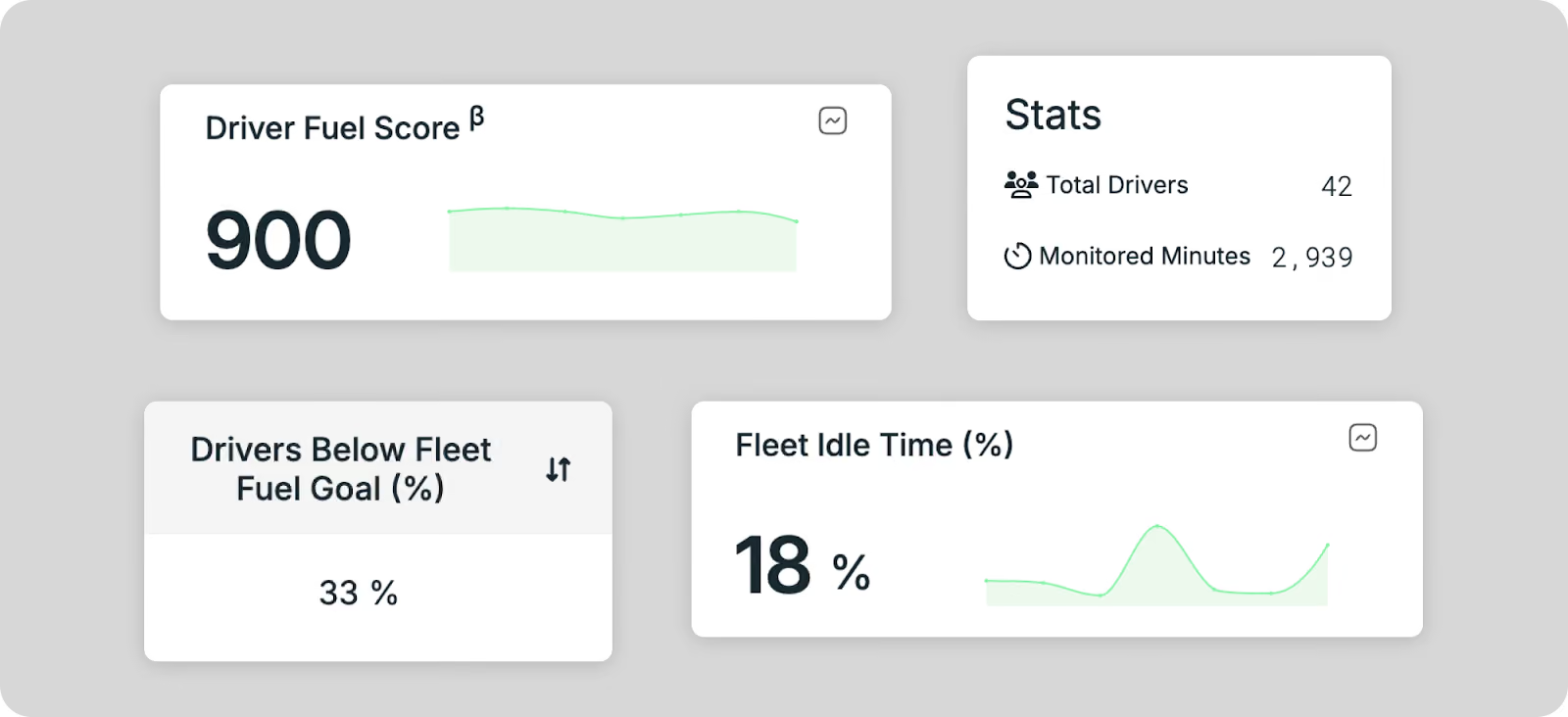
Each driver receives an individual score, which rolls up to group and fleet-level scores. That makes it easy to see both top performers and those who need more support.
For drivers, the score is more than just a number. Through the Driver•i app, they can see specific behaviors affecting their fuel efficiency. When drivers can see their impact, they can improve it — and when they feel informed rather than monitored, they tend to. That distinction matters: a driver who understands what’s being measured and is a driver who feels trusted, not tracked.
Coaching for fuel-efficient behavior
Visibility is only half the equation. The real opportunity lies in turning insights into better habits behind the wheel.
Netradyne extends its proven positive coaching model to fuel efficiency. Managers can recognize efficient behaviors, guide targeted coaching, and gamify progress. Drivers who need more help don’t just hear “you’re wasting fuel.” They see exactly where, when, and how they’re doing it, with recognition and support for progress along the way.
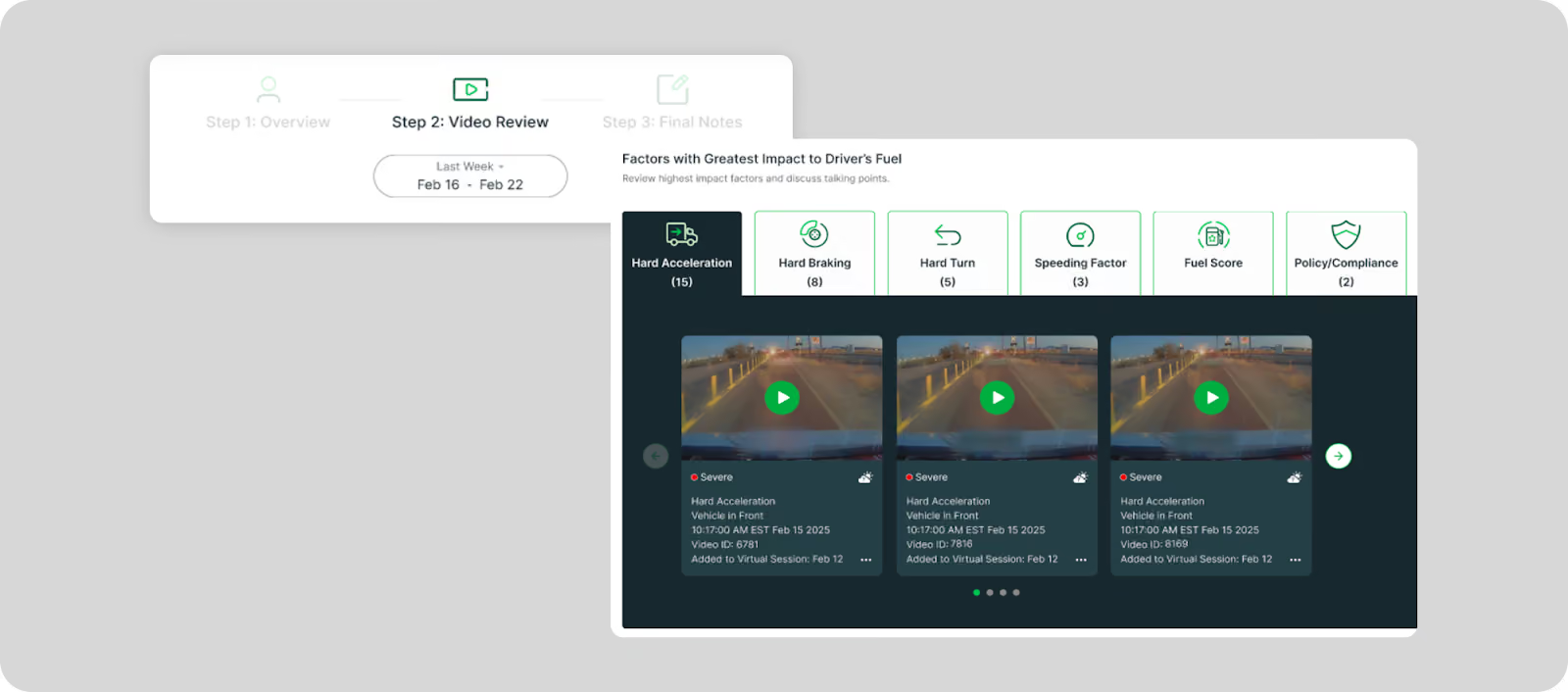
Fleets that prioritize rewards over punishment see stronger engagement, better morale, and more lasting performance gains. And a driver who feels recognised and supported — rather than blamed and surveilled — is also a safer one. That’s the link Netradyne is built on: the same coaching model that reduces fuel waste is the one that brings drivers home.
The bottom-line impact
Idling alone costs fleets thousands per truck each year. Long-haul trucks often idle for up to 6 hours per day, or more than 1,800 hours per year. As an example, with diesel fuel prices at $3.75 per gallon, idling a heavy-duty truck — which consumes about 0.8 gallons of fuel per hour — adds up to more than $5,400 per truck per year. Multiply that across hundreds of trucks, and the financial stakes are enormous.
The human stakes are just as real. Every hour a truck idles unnecessarily is an hour a driver is fatigued, distracted, or disengaged — and fatigue and distraction are among the most significant contributors to road incidents. Fuel waste and safety risk often share the same root cause.
For a fleet spending $10 million on fuel annually, even a 10% improvement in efficiency can unlock $1 million in savings.
By connecting fuel data directly to driver performance, Netradyne helps fleets capture those savings systematically with continuous improvement fueled by visibility, context, and coaching.
Ready to see how fuel scoring and coaching can transform your fleet?
Discover how the Netradyne Fleet Management solution connects driver behavior to real-world fuel savings and recognition-based coaching. Schedule a demo to see the fuel scoring feature in action.


Искате да защитите шофьорите и да намалите разходите?
Това не е трик въпрос. Вижте сами с демонстрация.