How to prevent backing incidents in waste & recycling fleets
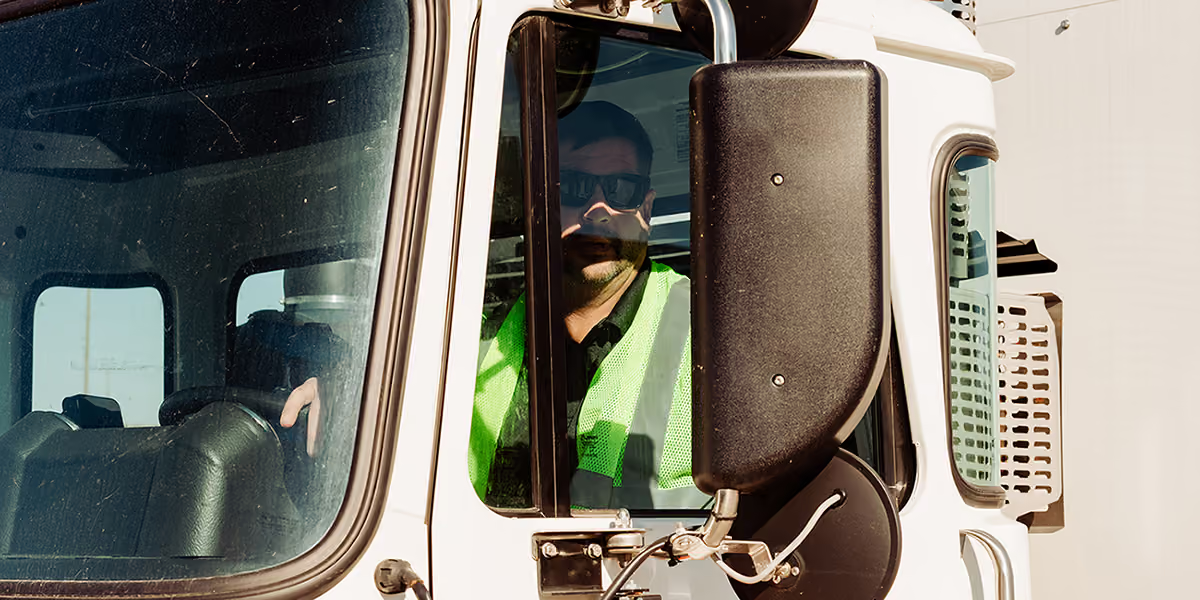
Backing incidents are among the most common, and most expensive, claim types in waste and recycling. They happen in tight residential areas, busy city streets, in alleys, at transfer stations, and at waste facilities. Most are low speed, most are preventable, and almost all of them get reported the same way: "I didn't see anything behind me."
Many waste and recycling trucks have cameras around the vehicle, but the incidents keep happening. The fleets making real progress on backing claims have moved past asking “what did the camera record?” and started asking “what can our system actually do to prevent the next incident?”
Why backing is where waste fleets get hurt most
A typical route involves dozens of backing actions per shift. Drivers reverse into cul-de-sacs, alleys, around parked cars, and into containers at transfer sites. The conditions stack against them with narrow streets, mailboxes inches from the truck path, kids on bikes, recyclables on the curb, cars parked at angles, and blind spots that even the best mirror can't cover.
While most backing incidents aren't catastrophic — a mailbox, a fence, a clipped mirror — the volume makes them a leading driver of fleet insurance costs which are rising sharply across the commercial transport industry. Liability insurance premium costs rose by 18.6 percent to 10.2 cents per mile from 2021 to 2024, outpacing consumer inflation by 5.4 percentage points. The rare incidents involving a cyclist, a pedestrian, or a child are the ones that define a company's year.
Backing is also where the gap between driver intent and driver awareness is widest. Drivers know they need to look. They just can't physically see everything that matters in the half-second a maneuver demands.
The limits of rear cameras alone
A rear camera is only useful when a driver looks at the monitor at the precise moment something enters the path, and mirrors miss the six-foot zone closest to the rear bumper. Side cameras typically only cover lane-change angles, and even high-end multi-camera systems fall back to passive video the moment the driver's attention shifts.
Video recording from rear cameras has clear value for claims defense, exoneration, and insurance disputes. But it documents what happened, it doesn't change what happens next. The fleets that have meaningfully reduced their backing claims have done it by adding proactive layers to their safety programs: full visibility around the entire vehicle, real-time in-cab alerts, and driver coaching that puts behavior change at the point of decision, not the point of review.
What prevention actually requires
A prevention-first backing strategy comes down to three things waste and recycling fleets care about most:
1. 360° visibility around the entire vehicle
Single-camera setups leave blind spots, particularly along the sides and rear where most backing incidents originate. A multi-camera system, which supports up to eight external cameras with Side Vision Assist and Rear Vision Assist, closes the high-risk approach angles that mirrors and a single rear cam can't cover. Visibility isn't optional in residential and transfer-station environments and it's the foundation every other part of your safety program depends on.
2. AI alerts that intervene in the moment
Edge AI interprets what the camera sees, right in the cab. While the truck is in reverse, on-device intelligence is continuously evaluating questions a driver doesn't have the bandwidth to evaluate at the same time:
- Is the path clear, or is there a person, vehicle, or fixed object in the truck's way?
- Is the truck reversing faster than is safe for the maneuver?
- Is the driver showing signs of distraction or fatigue?
- Has the spotter positioned themselves where the AI expects them to be?
When the AI sees a risk, the system delivers a real-time in-cab audio alert, not a flagged event in a manager's dashboard tomorrow morning. Because the analysis runs on the vehicle itself, there's no upload lag and no wait for review. The driver responds before the incident, not after the report.
3. Driver coaching that turns alerts into habits
Detection handles the moment while coaching builds the habit. The most effective backing programs pair real-time alerts with structured coaching that turns flagged events into specific, repeatable lessons, and reinforce them with positive recognition through tools like GreenZone® Score and DriverStars when drivers get it right. That cycle of in-the-moment alert, post-shift context, and recognition is what moves a fleet from "we caught it" to "it didn't happen again.”
Creating a better prevention and documentation strategy
None of this means documentation has lost its value. Rumpke Waste & Recycling, a family-owned operator with more than 2,700 vehicles across the Midwest, has used Netradyne footage to exonerate drivers in disputes with law enforcement, in courtrooms, and in insurance claims, including a lawsuit that was dropped outright after footage showed the opposing driver running a stop sign while texting.
The cultural impact was just as important. As Timothy Bath, Rumpke's Senior Vice President of Hauling, put it:
"One driver who hated the cameras at first thanked us the day after a hit-and-run. He realized we weren't trying to punish him, we were trying to protect him." — Timothy Bath, SVP of Hauling, Rumpke Waste & Recycling
How to get driver buy-in
Multi-camera systems can feel like surveillance, especially to long-tenured drivers. If drivers don't trust the system, they tune out the alerts, rendering them virtually useless.
The fleets seeing the strongest backing-claim reductions pair the technology with a recognition model. Netradyne's GreenZone® Score and DriverStars reward the behaviors that matter most around the truck: smooth deceleration, mirror use, attentiveness, safe following. Drivers see their own scores improve in real time. Managers coach with context, not gotchas.
Rumpke's 12-month results captured the shift. Across their fleet, severe alerts (distracted driving, traffic-light violations) dropped 30%, and moderate alerts, including the harsh-braking and high-g-force events that often precede a backing miss, dropped 36%.
"We're not about catching people doing something wrong. We're about helping them get better every day." — Timothy Bath, Rumpke Waste & Recycling
Why waste & recycling fleets choose Netradyne
Netradyne brings 360° camera coverage, real-time on-vehicle AI, in-cab alerts, GreenZone® scoring, and fleet-wide reporting into a single platform. The same system that helps a driver avoid the backing incident also documents it cleanly if it happens, supports exoneration, and feeds the coaching that prevents the next one.


هل تريد حماية السائقين وخفض التكاليف؟
هذا ليس سؤالًا خادعًا. شاهد بنفسك مع العرض التوضيحي.