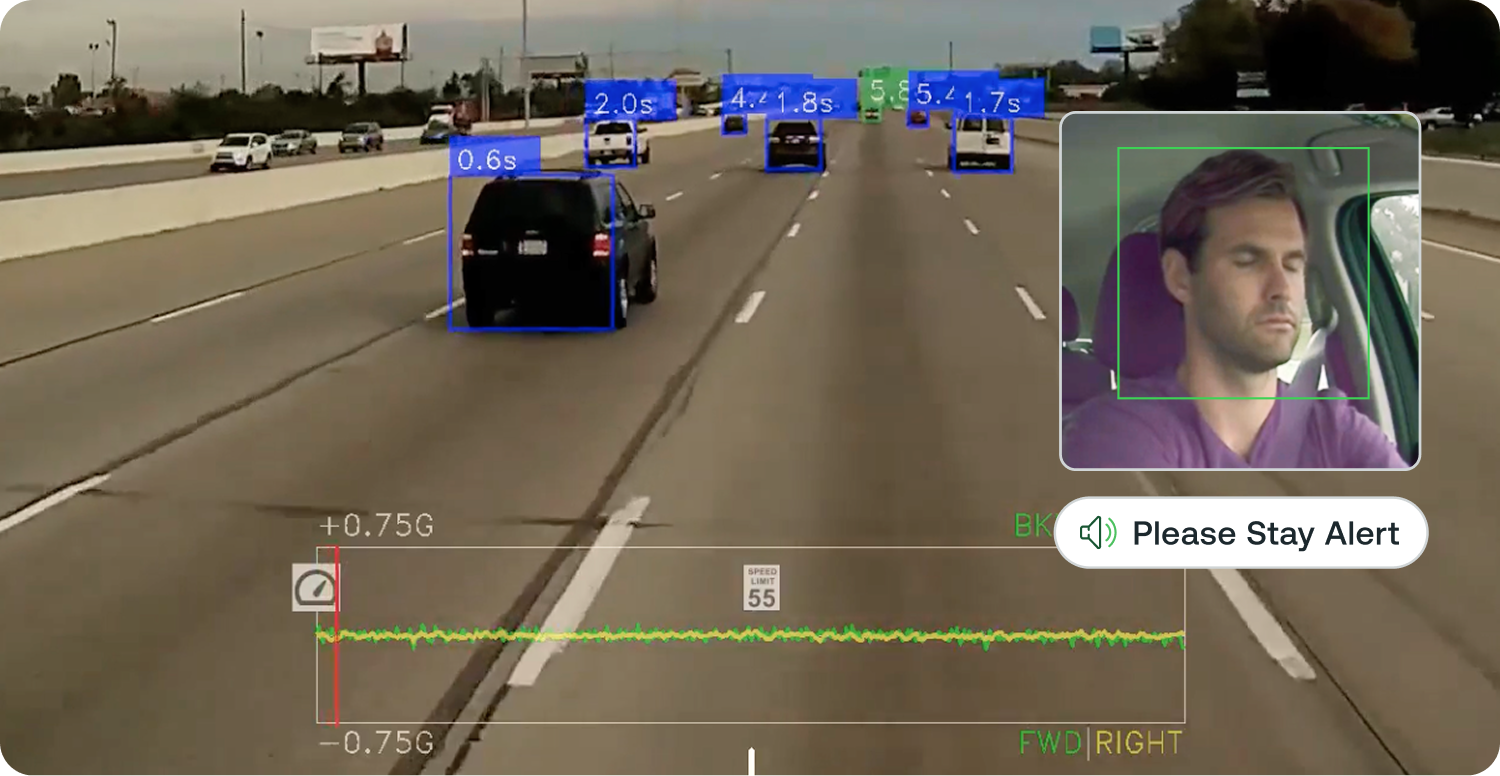
Every fleet manager knows the feeling. A driver who's been with the company for years. A clean record. One moment of distraction—and suddenly there's a collision, a claim, and a conversation nobody wanted to have.
Distracted driving is one of the most common, and most preventable, causes of accidents on U.S. roads, and the stakes for commercial fleets are especially high.
With drivers spending hours behind the wheel daily, the odds of a distraction event aren't a matter of if—they're a matter of when.
The good news: distracted driving is also one of the most preventable risks in your fleet. With the right strategy and the right technology, you can stop incidents before they happen—and respond decisively when they do.
Why distracted driving is a fleet problem, not just a driver problem
It's tempting to frame distracted driving as an individual failure. But when it's happening consistently across your fleet, it's a systems problem—one that demands a systematic solution.
The real culprits are often structural: demanding delivery schedules that pressure drivers to check messages on the go, fatigue from long shifts that degrades attention, and inadequate visibility into driving behavior until after an incident occurs.
Many traditional camera systems record continuously but only surface footage when a trigger is met, meaning safety teams see a fraction of what's actually happening, and a short clip rarely tells the whole story.
By the time you know there's a problem, the damage is already done.
Best practices for preventing distracted driving
Build awareness before getting behind the wheel
Prevention starts in the cab—before the engine turns on.
Structured pre-trip protocols that reinforce distracted driving policies set expectations and create accountability.
Make it part of onboarding, refresher training, and team safety meetings. Drivers who understand why distraction is dangerous—not just that it's against policy—are far more likely to stay engaged on the road.
Move from reactive to proactive coaching
Traditional fleet safety models wait for an incident to happen before coaching begins. That's backwards.
Real-time in-cab alerts help drivers self-correct in the moment—before a distraction event becomes a near-miss or collision. When a driver receives an instant, context-specific alert, they can course-correct immediately, without manager involvement.
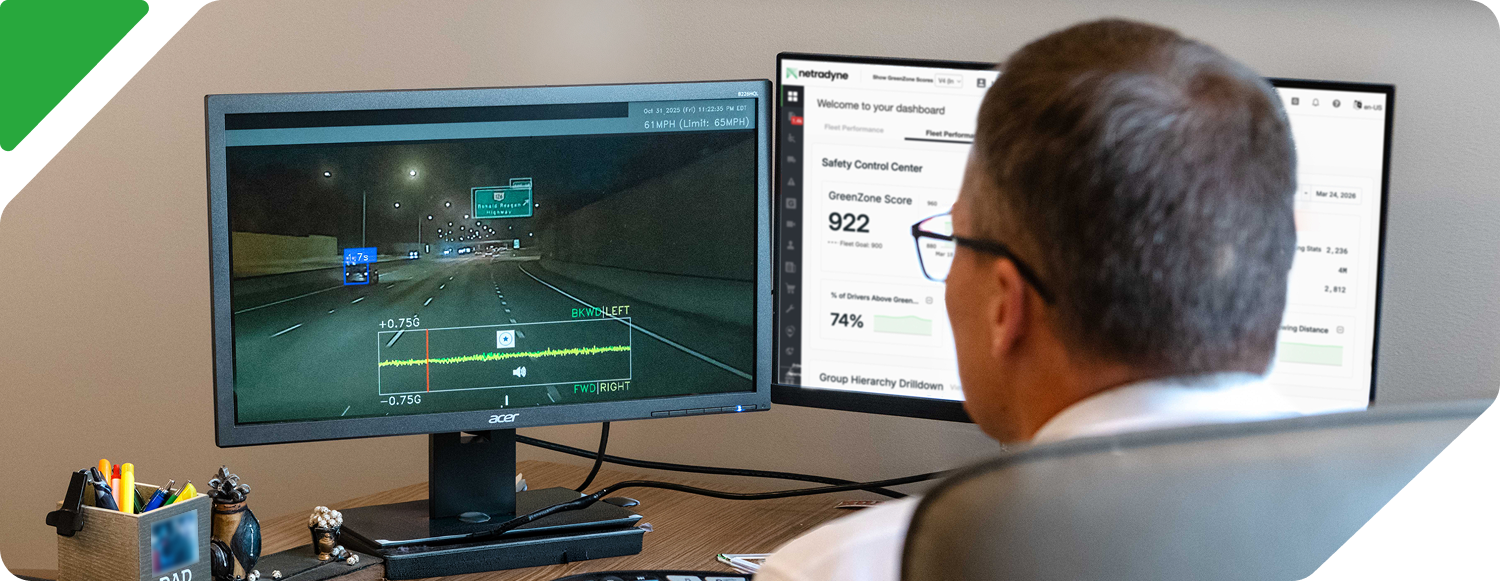
This is where AI-powered fleet safety changes the game. Netradyne analyzes 100% of drive time—not just triggered clips—so safety teams can identify distraction patterns early and coach proactively, not reactively.
Recognize safe behavior, not just mistakes
Many programs over-index on negative events.
The result? Driver disengagement, resentment, and turnover—exactly the opposite of a safety culture.
Recognition-based coaching works. When drivers receive positive reinforcement for attentive, distraction-free driving—through tools like the GreenZone® Score and DriverStars—they stay engaged and motivated to improve.
"Many times the habits are so ingrained that the drivers don't think they're driving distracted until we show them the videos. With these alerts we have definitely seen an improvement in behavior change."
Karen Smerchek
President at Veriha Trucking
Create accountability through visibility—not surveillance
There's a critical difference between a safety platform that builds trust and one that erodes it. Drivers don't want to feel watched. They want to feel protected. When the purpose of monitoring is clearly framed as protection—exonerating good drivers, coaching with fairness, and rewarding safe performance—adoption follows.
Transparency is key. Drivers who understand how the GreenZone® Score works, what behaviors improve it, and how recognition programs reward consistent safety performance become active participants in the fleet's safety culture. This approach can lead to 2-3X higher driver engagement and retention compared to punitive systems.
Extend safety beyond the cab
Distraction doesn't only happen on highways. Backing incidents, parking lot collisions, and yard accidents account for a significant share of fleet claims—and they're often tied to distraction or limited visibility.
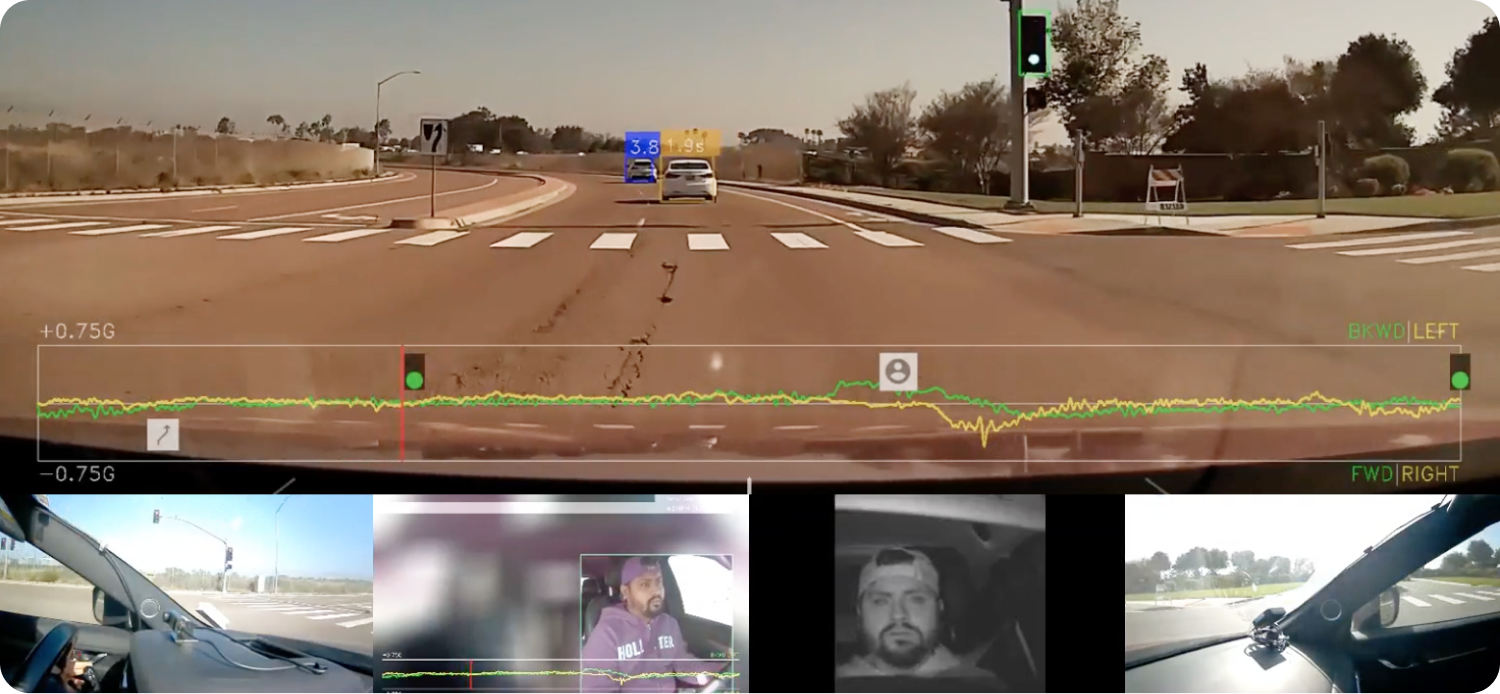
360° AI visibility ensures that distraction detection and coaching extend to every part of a driver's day, not just highway miles.
How to respond if an incident happens
Even the best prevention programs can't eliminate every incident. When distracted driving does lead to a collision or complaint, how you respond determines the outcome—financially, legally, and operationally.
Step 1: Secure the video immediately
In the hours following an incident, footage is your most valuable asset. Don't wait. Retrieve and preserve video from the time of the event and the critical minutes before it. Without full context, you're working blind—and so are your insurers and legal team.
Netradyne captures 100% of drive time, so the full picture—what the driver was doing, road conditions, other vehicles—is available and defensible.
Step 2: Establish the facts before anyone else does
The narrative around an incident forms fast. Third-party claims, witness statements, and opposing counsel will all move quickly. Your ability to establish what actually happened—with clear, contextual video evidence—determines whether you're in control of the story or reacting to someone else's version of it.
Video evidence that shows a driver was attentive and responding appropriately can shut down a fraudulent claim before it escalates into a nuclear verdict. Netradyne customers have exonerated drivers with footage that showed, definitively, that their driver did everything right. When the video evidence can be presented directly to responding law enforcement officers, it helps them write the accident narrative around what happened, not error-prone witness recollections.
Step 3: Conduct a root cause analysis, not just an incident review
After the immediate response, dig deeper. Was the distraction visual, manual, or cognitive? Was this driver's distraction pattern visible before the incident? Were there missed coaching opportunities? Did route pressures or scheduling contribute to fatigue and distraction? Use the data to fix the systemic issue, not just document the event.
With 100% drive time analysis, safety teams can go back and identify leading indicators—not just report on what happened.
Step 4: Close the loop with the driver
How you handle the coaching conversation after an incident shapes your safety culture. If the driver makes a mistake, use the footage to coach with specificity and empathy—not blame.
If the driver was exonerated, make sure they know it. Drivers who feel treated fairly become your most credible safety advocates.
The cost of getting this wrong
The financial stakes of distracted driving extend well beyond repair costs. A single serious accident can trigger insurance premium increases, DOT scrutiny, and legal exposure that runs into the millions. Nuclear verdicts—jury awards that reach 10 million dollars or more—are increasingly common in commercial fleet litigation, and distracted driving is among the most damaging allegations a plaintiff's attorney can make.
Fleets that rely on fragmented data, trigger-only clips, or punitive coaching programs aren't just creating safety risk—they're creating liability exposure every day their drivers are on the road.
Make distracted driving prevention a competitive advantage
The fleets winning on safety aren't just avoiding accidents—they're reducing costs, retaining drivers, earning insurance incentives, and building a reputation that attracts customers and talent. Based on our data, a 50-point improvement in GreenZone® Score correlates to a 13-15% reduction in accidents per million miles driven.
That's not a compliance outcome. That's a business outcome. Safety saves lives and money.
Netradyne's trust-based platform gives safety teams the complete picture they need to prevent distracted driving before it becomes an incident—and respond decisively when they need to.
From real-time in-cab alerts to 100% drive time analysis to defensible video evidence, it's the end-to-end solution that protects your drivers and your fleet.
Ready to take distracted driving from your biggest risk to your biggest win? Book a demo


Want to protect drivers & reduce costs?
That’s not a trick question. See for yourself with a demo.