Netradyne Intelligence, Expanded: New Collision Management Agent and MCP Connector
Resolve incidents faster with an agent tailored for your fleet and connect trusted fleet context into the AI tools your team already uses.
Modern fleets have more visibility than ever. What we hear consistently from customers is that the bottleneck sits between insight and action, and it shows up in two places.
In the highest-stakes moments, incident response remains one of the most manual workflows in the fleet. Assembling evidence, coordinating handoffs, tracking follow-up — all of it done by hand, across systems, under time pressure. And in the everyday work, recurring questions about driver performance, risk, and fuel efficiency still mean logging in, pulling reports, and rebuilding the same analyses, no matter how capable the AI tools on your team's desk have become.
Today, we're expanding Netradyne Intelligence with two new capabilities: the Collision Management Agent and the MCP Connector.
Each puts Netradyne Intelligence to work in its own way. The Collision Management Agent consistently executes one defined, mission-critical workflow, helping fleets standardize and keep incident response moving around the clock. The MCP Connector powers the AI tools and workflows your team builds itself, giving authorized users secure, fleet-specific context across driver performance, risk trends, and fuel efficiency in AI tools they already use like Claude and ChatGPT.
Move from collision detected to an incident response without waiting on other teams
When a potential collision is detected, the clock starts, and the first minutes belong to the driver. A driver who is hurt or shaken shouldn't have to be the one who starts the response. The sooner your team knows, the sooner someone can reach that driver, confirm they're okay, and get help moving toward the scene.
Incident response speed carries real financial weight. Travelers' analysis of 2022–2024 claims found that attorney involvement climbed from 39% when losses were reported within nine days to 73% when reporting took more than 25 days. Netradyne shortens that window, packaging video and full event context at the point of incident so teams report early, preserve evidence, and control claim costs.
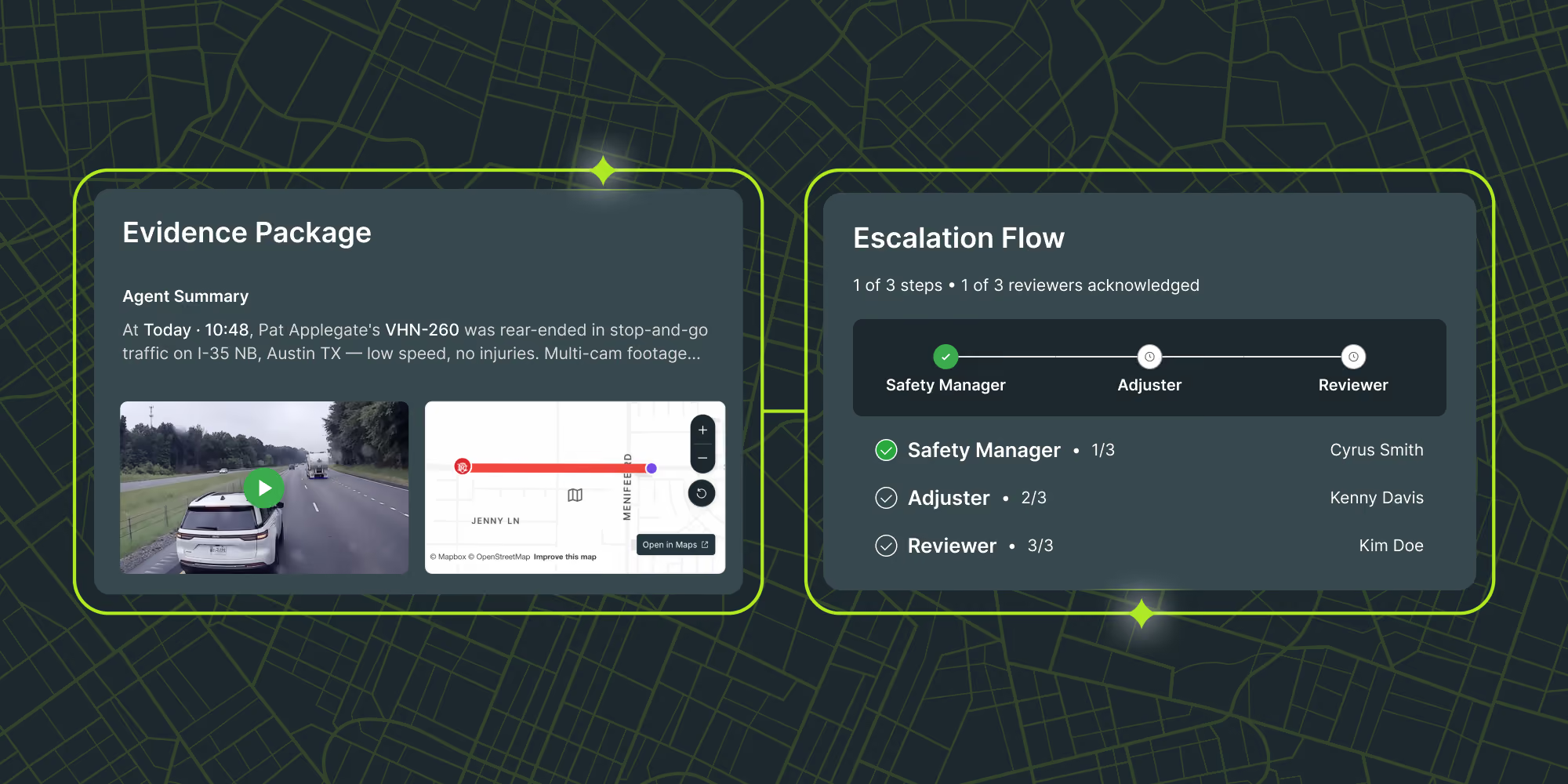
The Collision Management Agent turns each fleet's incident response process into immediate action and consistent follow-through. Fleets define the triggers, impact severity, evidence requirements, recipients, and escalation paths up front, so every incident begins with the right process.
Without delay, the agent brings relevant video, the First Notice of Loss report, trip timeline, driver history, and supporting context into a single shareable record. It automatically routes the response package to the right stakeholders, escalates when needed, and keeps outstanding follow-up visible, so the people who need the information have it the day it happens instead of days later.
The result is a faster, more consistent investigation, with less time spent collecting evidence, coordinating handoffs, and tracking next steps, and more time for the judgment calls only fleet teams can make.
Expand Netradyne Intelligence into the AI tools your team already uses
Fleet teams already lean on AI tools every day. But getting fleet-specific answers still takes the long way around: log into the dashboard, pull the report, export, paste, and rebuild the facts with every new question. Answers come back generic or a step behind, and every exported file is one more thing to track. Think of tools like ChatGPT and Claude as highly capable fleet analysts. They reason well, and with a secure connection to your fleet data, they work from your fleet's specific safety and performance context.
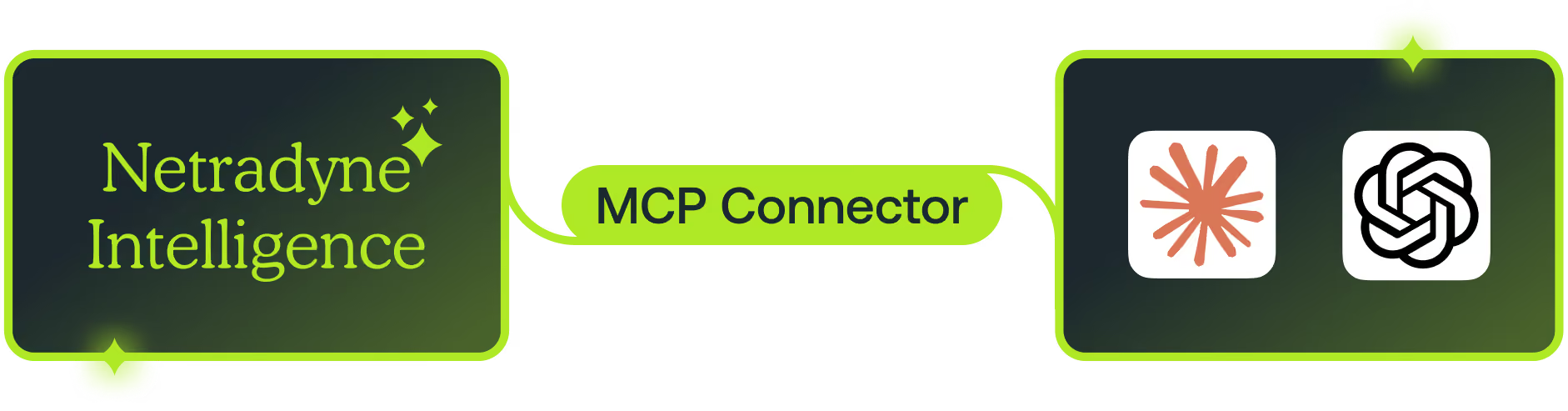
The MCP Connector is that connection: a secure bridge that gives authorized team members access to fleet-specific insights powered by Netradyne Intelligence. Now AI tools answer questions and build workflows like they're part of the fleet team.
Teams can ask questions in plain language and build workflows in the AI tools they already use for fleet safety and performance:
- Driver performance: “Which drivers need coaching today, why, and what specific behavior should each improve?”
- Risk trends: “What safety risks increased this week, which behaviors are driving them, and where should I focus first?”
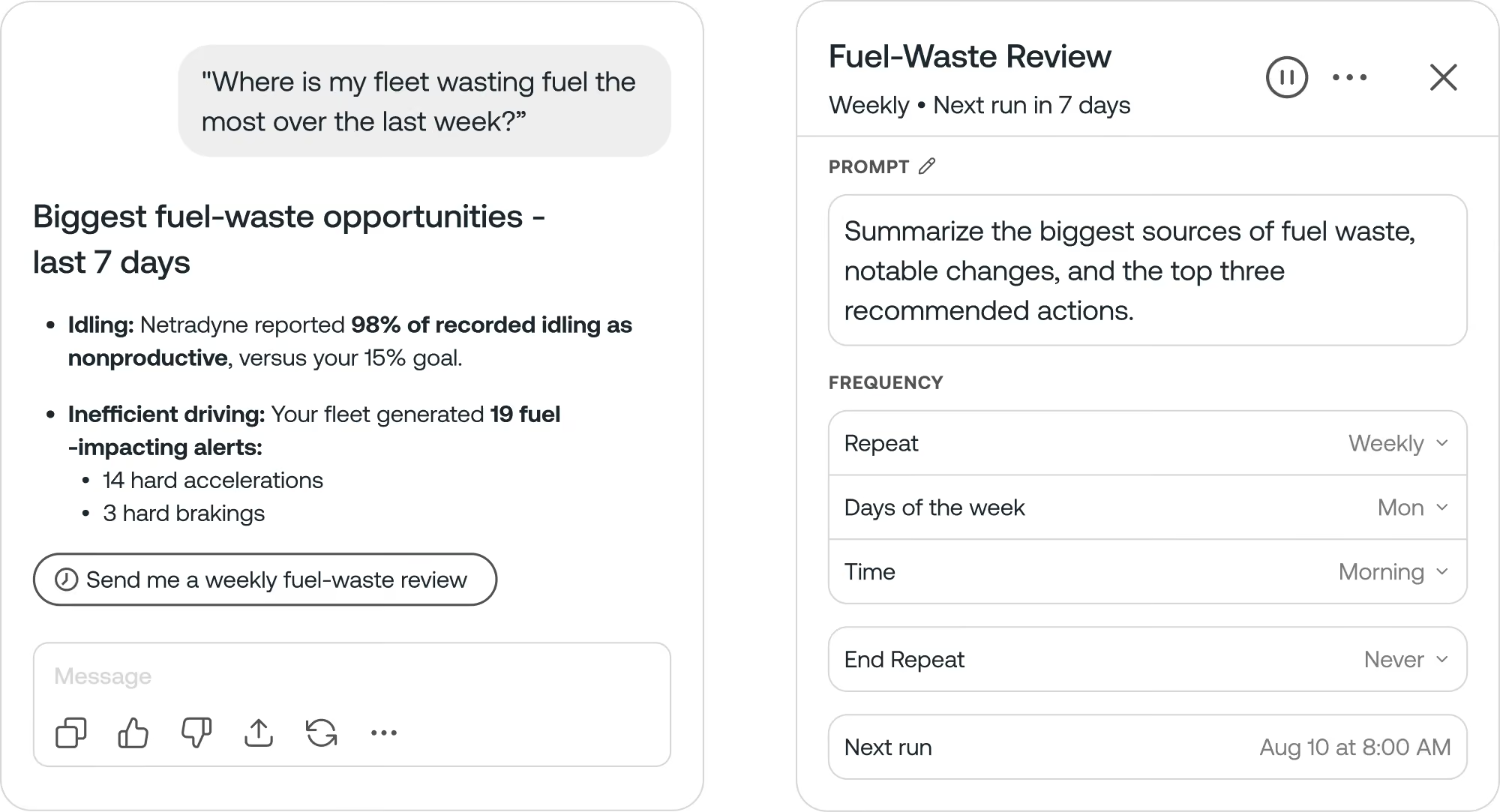
- Fuel waste: “Where are we wasting the most fuel, and which drivers or vehicles should I address?”
- Executive-ready presentations: "Build an executive-ready summary of safety, driver performance, and fuel efficiency trends and next actions."
- Workflow automation: "Every Monday, rank my highest-risk drivers, build their coaching assignments, and flag the fuel-efficiency outliers for review."
Taken together, teams can scale their operations by moving beyond manually pulling data and rebuilding the same analyses. They can get fleet-specific answers faster, turn recurring work into repeatable workflows, and spend more time acting on the drivers, vehicles, and risks that need attention.
One intelligence layer. More ways to execute.
Netradyne Intelligence, built on more than 30 billion miles and 150 billion minutes of real-world driving, powers the Collision Management Agent and MCP Connector. The agent turns real-time collision detections into consistent incident response around the clock, while the secure connector extends that intelligence into the AI tools fleets already use to ask questions and build workflows. Together, they help fleet teams reduce manual work and make better use of their data. Rather than stopping at visibility into safety and performance, teams can execute faster, act more consistently, and spend more time on the work that requires their judgment.
Availability
The Collision Management Agent and MCP Connector are available now. Reach out to your Netradyne representative to learn more.


Want to protect drivers & reduce costs?
That’s not a trick question. See for yourself with a demo.