Wiley Sanders Truck Lines Cuts Claims Costs Nearly 60% with Netradyne
.avif)

Company Summary
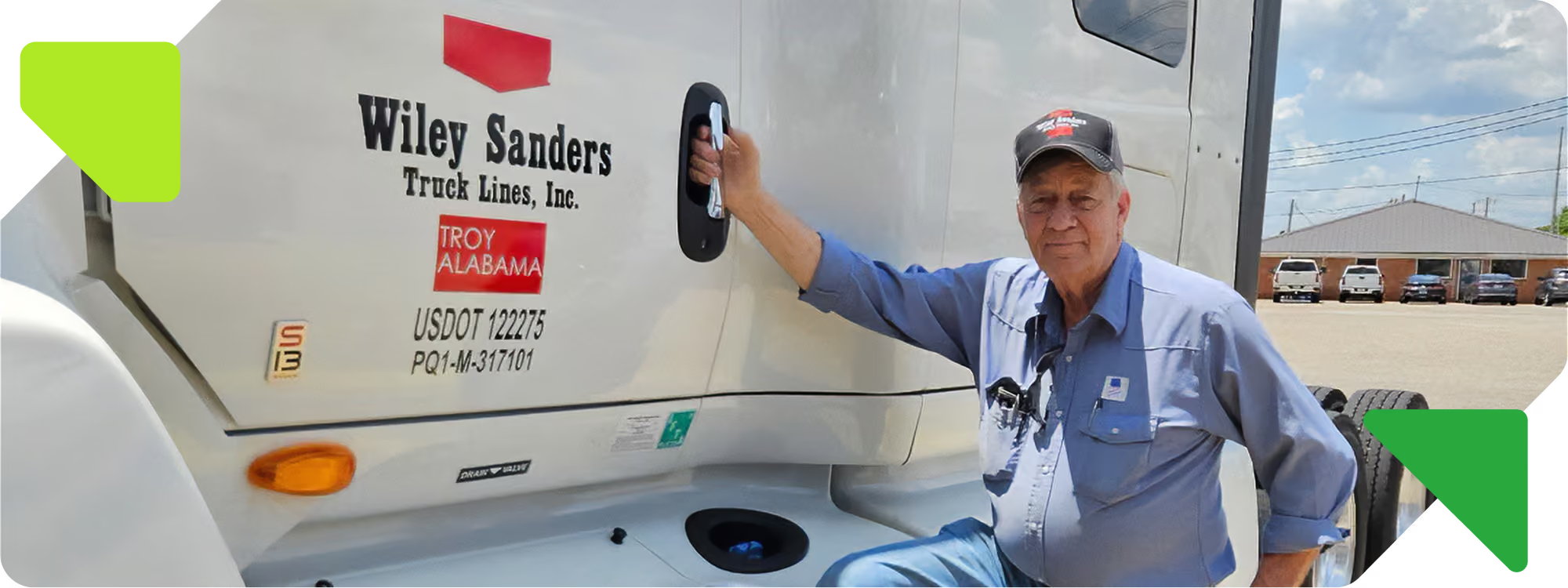
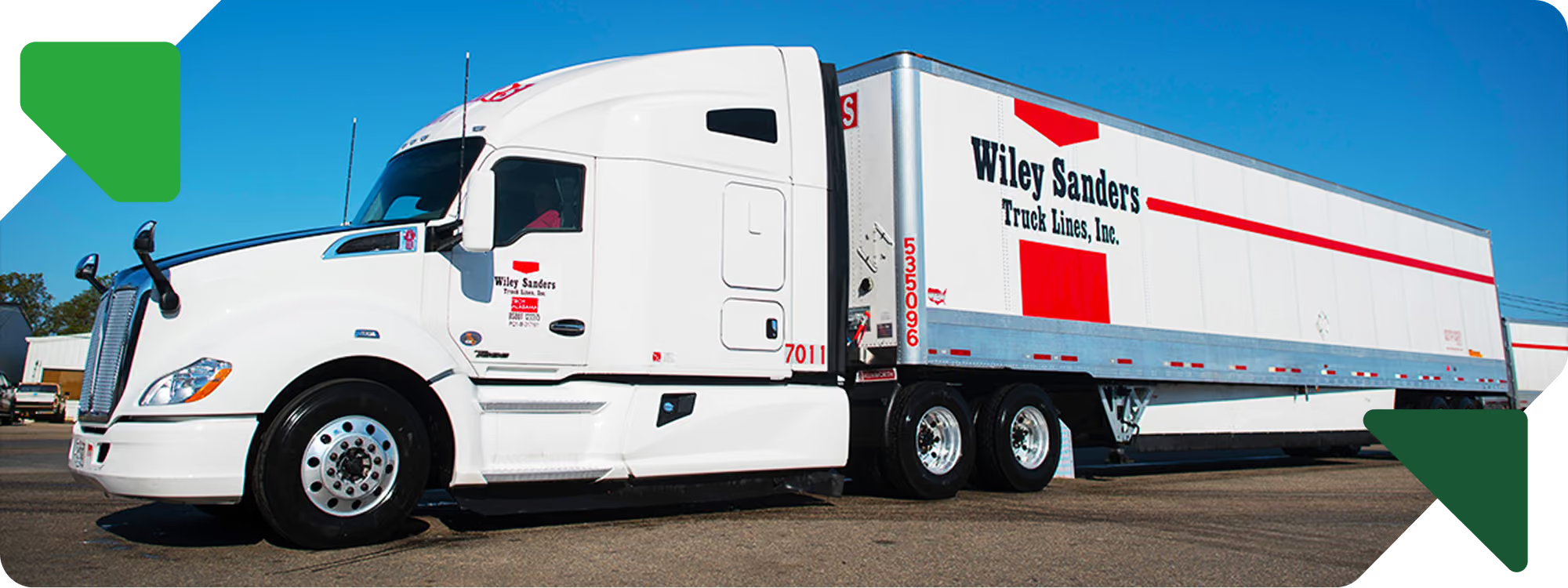
Founded in 1959, Wiley Sanders Truck Lines is an over-the-road carrier headquartered in Troy, Alabama, running more than 400 trucks across van, bulk, and dump divisions. The company hauls dry-van and tanker freight across 48 states, with roughly half its loads moving products for a related family of manufacturing and recycling companies.
Wiley Sanders trucks spend significant time on highways and in unfamiliar jurisdictions, where a disputed collision can quickly become a costly legal battle. For a fleet this size, defensible evidence and driver performance sit close to the bottom line.
Challenge
For years, Wiley Sanders faced a costly, recurring collision: a passenger vehicle cutting sharply into a truck's corner, what Doug Kitchens, Director of Safety, Recruiting, and Risk Management, calls a "NASCAR" event, clipping the truck and triggering a claim. Rear-end collisions were another common problem.
Without video evidence, these incidents often became a "he said, she said" dispute: the other motorist claimed the truck crossed the line, the driver said the car cut in, and the company often ended up defending claims it believed were not its fault.
Wiley Sanders carries a $500,000 retention on its truck liability, making every contested claim a significant financial exposure.
The company had used camera systems for years, most recently SmartDrive through Omnitracs, offering only a narrow forward view and no way for drivers to join their own coaching. Over time, Kitchens grew less confident the system provided the evidence needed in litigation.
Wiley Sanders needed a solution to prevent recurring collisions, give drivers a more active role in their own performance, and provide full context to defend disputed claims. Meeting Netradyne at a trucking conference showed Kitchens a path beyond passive documentation toward safety intelligence.
"We were paying exorbitant money just to get out of cases because we landed in the wrong jurisdiction."
— Doug Kitchens, Director of Safety, Recruiting, and Risk Management
Solution
Wiley Sanders moved from a limited, event-based camera system to AI-powered safety intelligence, protecting drivers in the moment and providing full context when incidents occur.
Wiley Sanders began with a trial in late 2025, giving Netradyne technology to a mix of top-performing and average drivers. Within 90 days, GreenZone® scores were climbing and even skeptical drivers said the system was making them better. That feedback secured the owner's commitment, and Wiley Sanders rolled out Driver•i Quad Vision dash cams fleetwide that captured the side-clip collisions the previous system missed.
Analyzing 100% of drive time, Netradyne shifted the technology's role from documenting incidents to preventing them, with real-time following-distance and collision-warning alerts that let drivers self-correct before a risk becomes a collision.
The GreenZone Score and Driver•i app became the center of Wiley Sanders' safety program, with drivers checking scores daily and coaching moving from conversation to video specific to each driver.
Full-context video also let the safety team evaluate drivers fairly, distinguishing genuine risk from appropriate reactions to other motorists. In one case, another vehicle cut in front of a truck and braked hard, forcing the driver to brake hard too. Rather than penalizing the driver, the team reviewed the footage, recognized the collision had been avoided, and reclassified the alert as a DriverStar, proof the system protects drivers rather than just monitoring them.
That built trust, even with skeptical veterans; multiple drivers later told Kitchens the app had made them better drivers. Rather than punitive oversight, the cameras became the center of a driver-led program built on transparency and self-improvement.
Recognition reinforced that shift. Wiley Sanders introduced monthly awards for the top 10 GreenZone scores, the top 10 DriverStars, and the five most improved drivers.
Sustained adoption took consistent follow-through. A weekly report flagged drivers who had not yet downloaded the app, and Kitchens stayed personally involved, positioning the camera as the driver's "wingman."
"When you get the driver's involvement, it's priceless. Without that, you're not going to have the success that we've had."
— Doug Kitchens, Director of Safety, Recruiting, and Risk Management
Results
Combining risk prevention, full-context video, and driver recognition has strengthened both sides of Wiley Sanders' safety program: reducing risk before incidents occur and protecting the fleet when disputed collisions still happen.
Key results:
- 60% year-over-year reduction in incurred claims over a seven-month period using Netradyne
- An estimated $500,000 in avoided litigation expense from five dismissed cases alone
- Attorneys withdrew representation in five liability matters after reviewing Netradyne video
- Fleetwide average GreenZone Score of 920, reflecting consistent safe-driving performance across the fleet
In each dismissed case, an attorney approached Wiley Sanders over a NASCAR-style collision, the safety team produced the footage, and a letter followed withdrawing representation. The claims simply went away.
Kitchens also reported early improvement in the fleet's CSA Crash Indicator. The insurance carrier, already familiar with Netradyne, viewed the move favorably and renewed on terms Kitchens considered favorable.
"We could have paid for our cameras with Netradyne five times over with the savings we've had."
— Doug Kitchens, Director of Safety, Recruiting, and Risk Management
Next Steps
Wiley Sanders is continuing to build on the program, exploring expanded camera coverage down the sides of its trucks and evaluating additional lenses.
The company is also planning a compliance and fleet management evaluation next year, one Kitchens expects to be easier since drivers already use the Driver•i app.
Looking ahead, Kitchens sees room to keep building.
"We're in the early stages, but expanding the technology, and the views down the sides of the truck, are areas I see us getting to as we continue to have success."
— Doug Kitchens, Director of Safety, Recruiting, and Risk Management

هل تريد حماية السائقين وخفض التكاليف؟
هذا ليس سؤالًا خادعًا. شاهد بنفسك مع العرض التوضيحي.